
Strange Elephantine Island Boomerangs Tour
Oct 24 • Aswan, Egypt
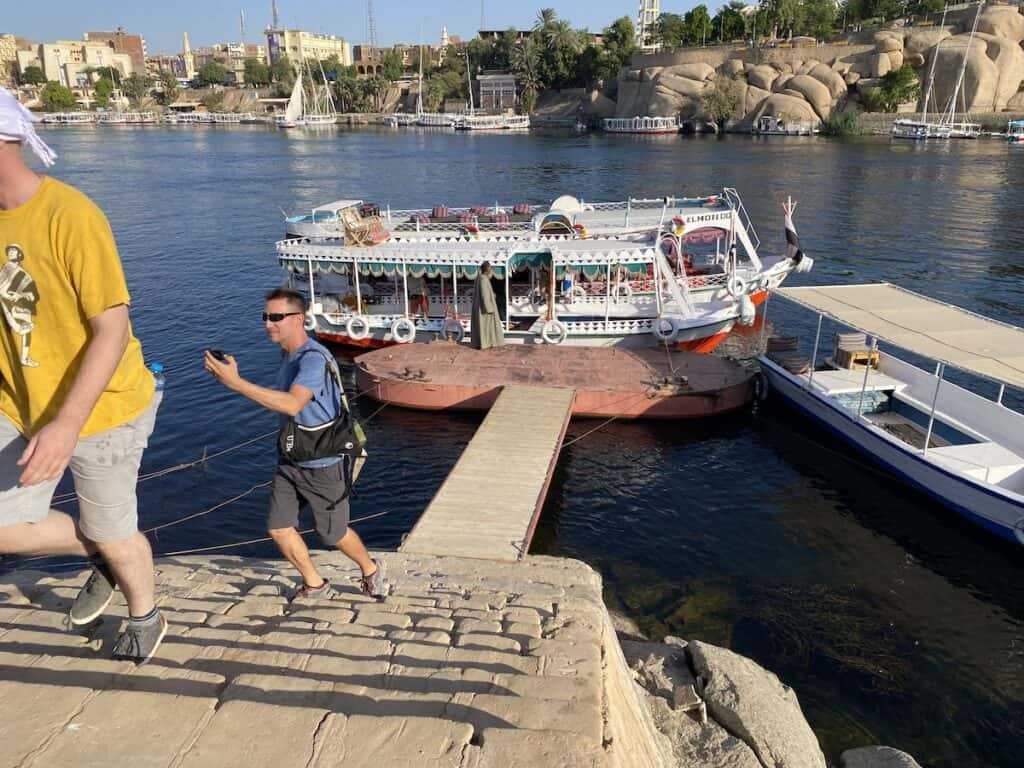
A short boat ride from the docks in Aswan brings you to Elephantine Island, a quiet stretch of ruins in the middle of the Nile. Among the scattered stones are a few things you don’t expect to see in ancient Egypt. Curved wooden objects that look like boomerangs. A massive granite box hollowed from a single block of stone that looks oddly like a precision granite phone booth.
Elephantine Island isn’t about one famous monument. It’s the kind of place where the interesting discoveries are scattered across the ground, waiting for you to notice them.
Elephantine Island Quick Facts
- Access: Regular tourist boats run from Aswan to the island
- Location: Nile River at Aswan, southern Egypt
- Distance from shore: Short boat ride from the Aswan riverfront docks
- Main ruins: Temple of Khnum, ancient settlement remains, and stone structures
- Artifacts: Curved wooden objects often described as boomerangs
- Stonework: Granite blocks and unfinished pieces scattered across the site
- Notable object: Large precision-cut granite box located among the ruins
Why Elephantine Island Matters
Elephantine Island marks the southern gateway of ancient Egypt. Just beyond Aswan began Nubia, a region rich in gold, ivory, and trade routes that connected central Africa with the Nile valley.
Because of this position, Elephantine became a frontier town, trading hub, and religious center. Temples once covered parts of the island, including the Temple of Khnum, the ram-headed god believed to control the Nile’s floodwaters.
Excavations have uncovered layers of settlements stretching back thousands of years. Walking through the ruins today you encounter temple walls, house foundations, scattered granite blocks, and reconstruction work from ongoing archaeological digs.
Among these ruins are a few objects that immediately catch the eye. A group of curved wooden artifacts on display resembles boomerangs, and nearby lies a large precision-cut granite box carved from a single block of stone.
The Elephantine Island Boomerangs
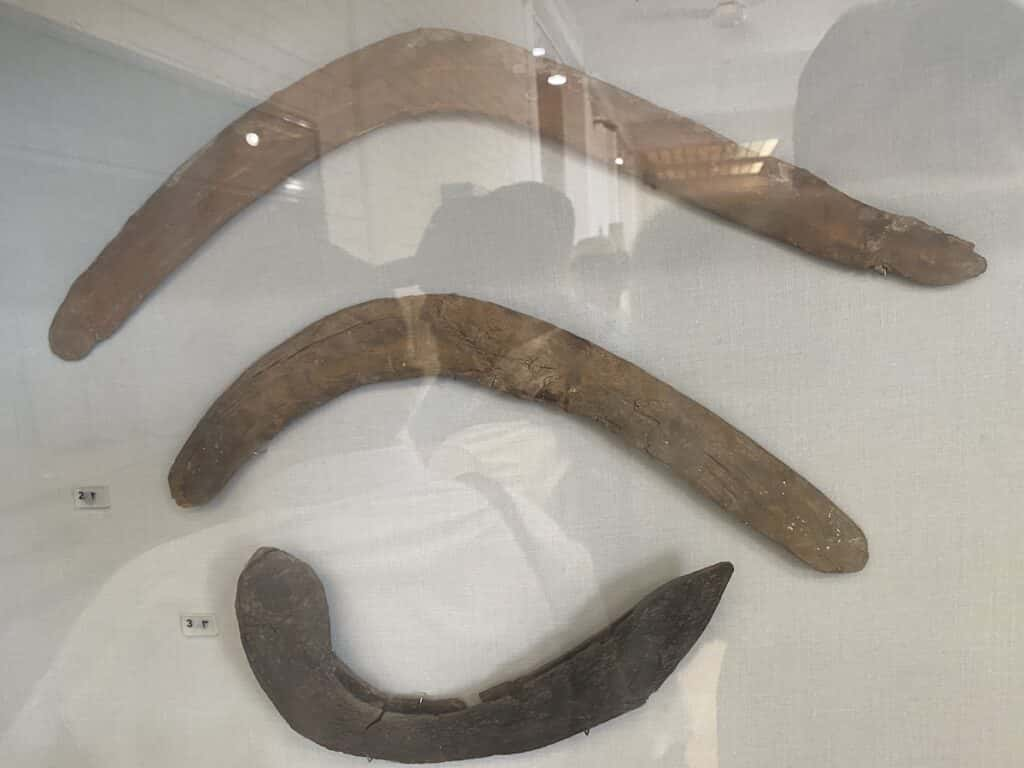
Inside a small museum building on Elephantine Island are several curved wooden objects that look strikingly similar to boomerangs. The pieces are displayed alongside other artifacts recovered from the island’s excavations.
Ancient Egyptians used curved throwing sticks for hunting birds along the Nile marshes. Tomb paintings show hunters tossing these sticks into flocks of birds to knock them down. The tools were typically carved from wood and shaped with a slight curve to improve their flight.
The objects on display here resemble those hunting sticks, although their shape also reminds many visitors of the returning boomerangs associated with Australia. Egyptian throwing sticks usually did not return after being thrown. Their purpose was simply to strike a target.
Seeing these artifacts in person raises interesting questions about how these tools were made and used. The design is simple but clearly intentional, suggesting that ancient craftsmen understood how shape affected the way the object moved through the air.
The Granite Box

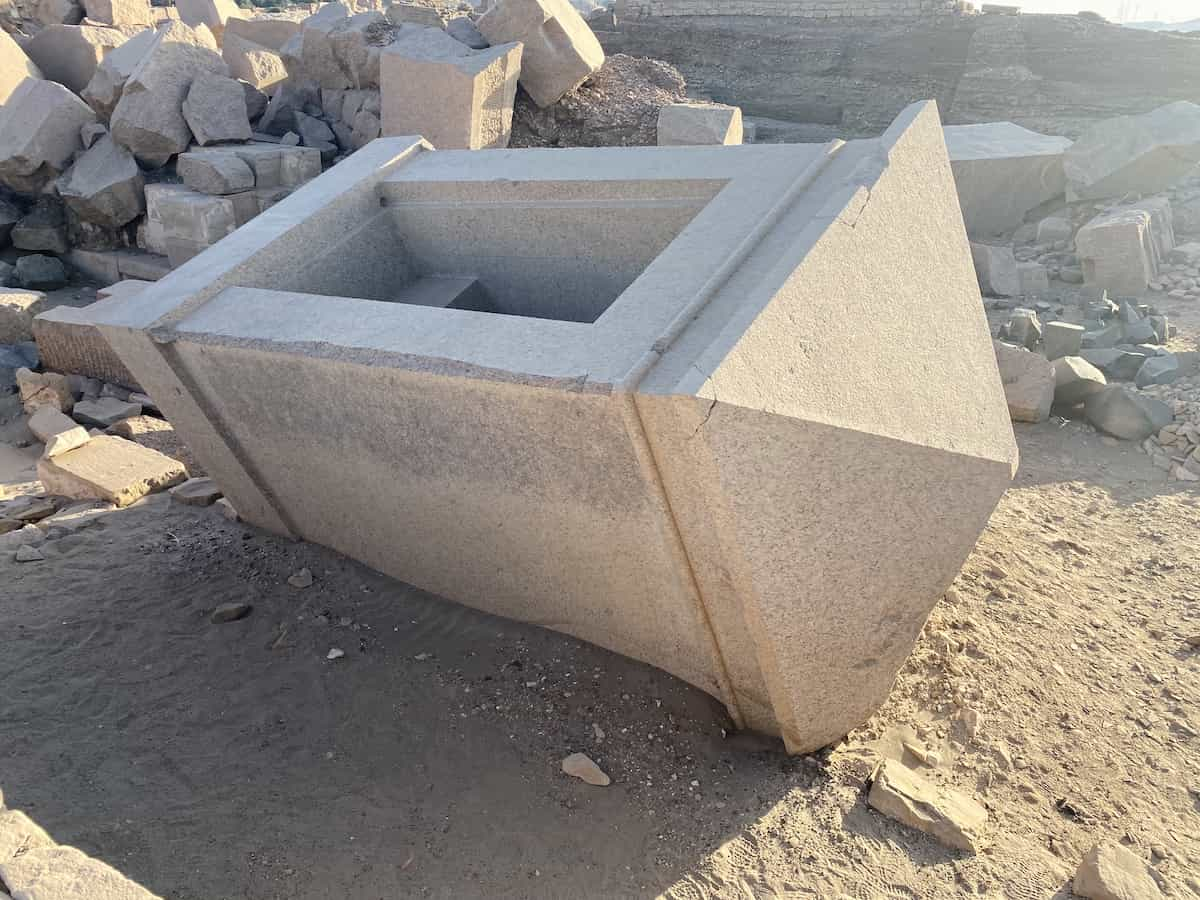

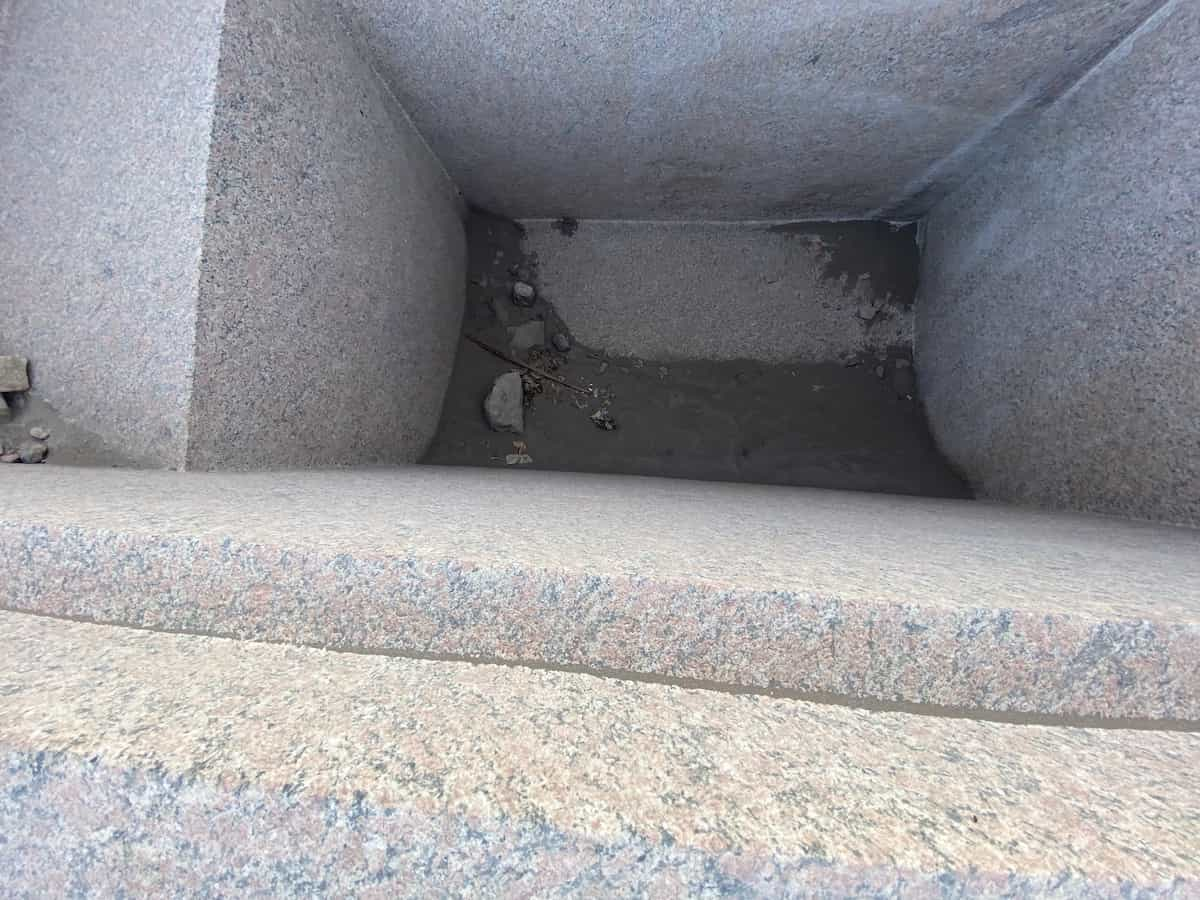
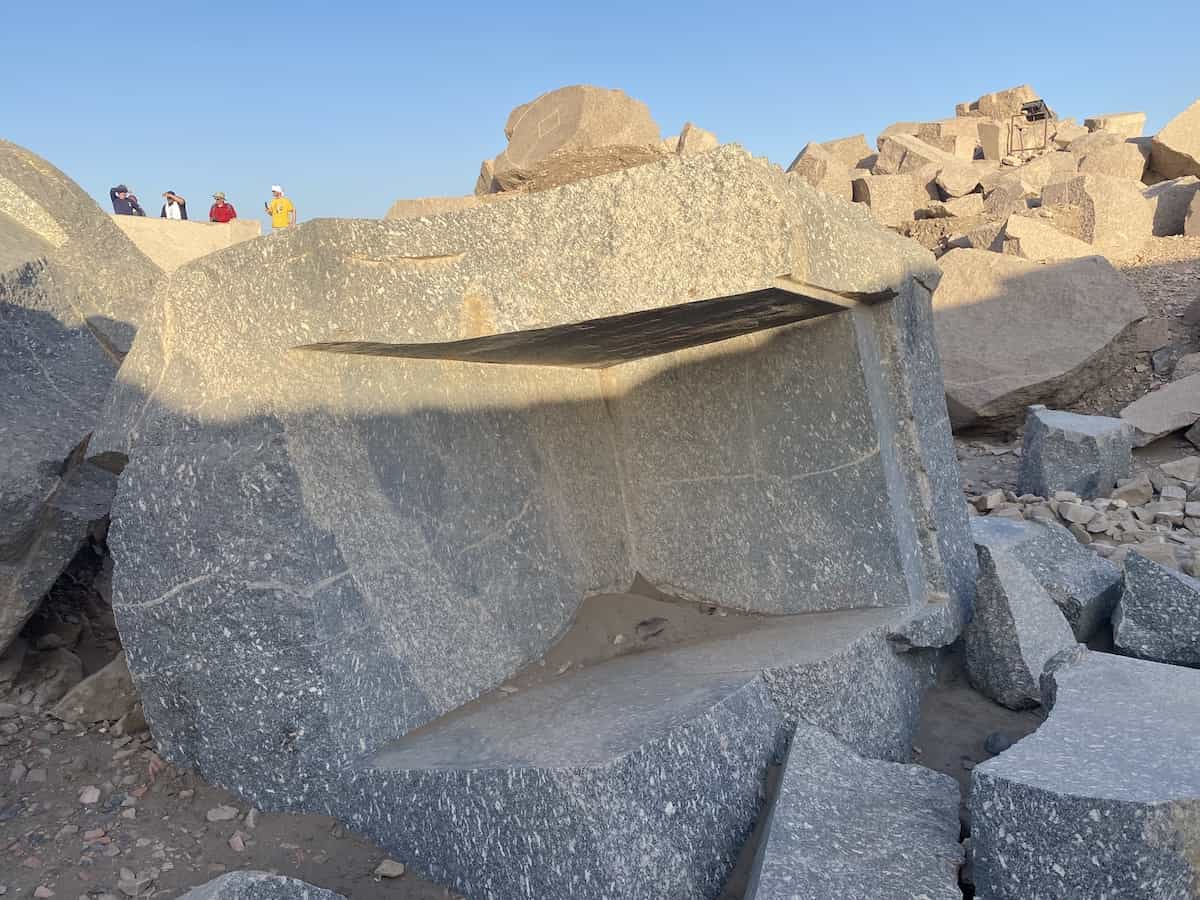
Near the ruins on Elephantine Island is a large granite box carved from a single block of stone. The block has been hollowed out to form a deep rectangular chamber with straight interior walls and sharp corners. A curious feature to note are the protuding rounded trim that cover the outside edges of the box They are strangely precise and make constructing the box significantly more complex.
Step inside and the space feels surprisingly like a stone phone booth. The walls rise closely around you, and the cavity is just large enough for a person to stand inside.
Along the rim of the opening are small carved recesses that may have held fittings or a lid. The upper section forms a sloped stone cover attached to the main body of the box.
Granite is one of the hardest stones used in ancient Egyptian construction, so hollowing out a cavity like this required controlled cutting and grinding to shape the interior surfaces.
The original function of the object is not clear. It may have been part of a shrine installation, a stone container associated with temple activity, or another structure connected with the temples that once occupied the island.

The Temple of Khnum
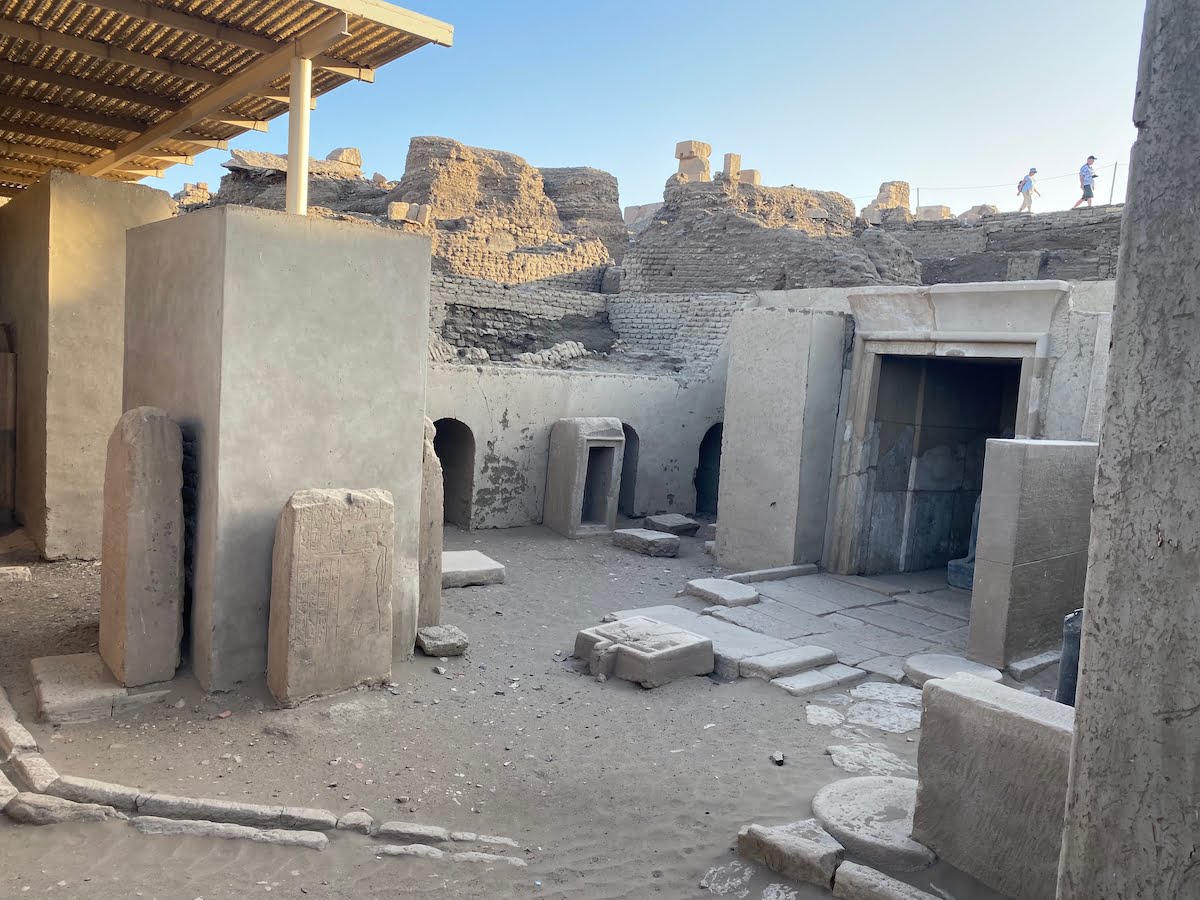
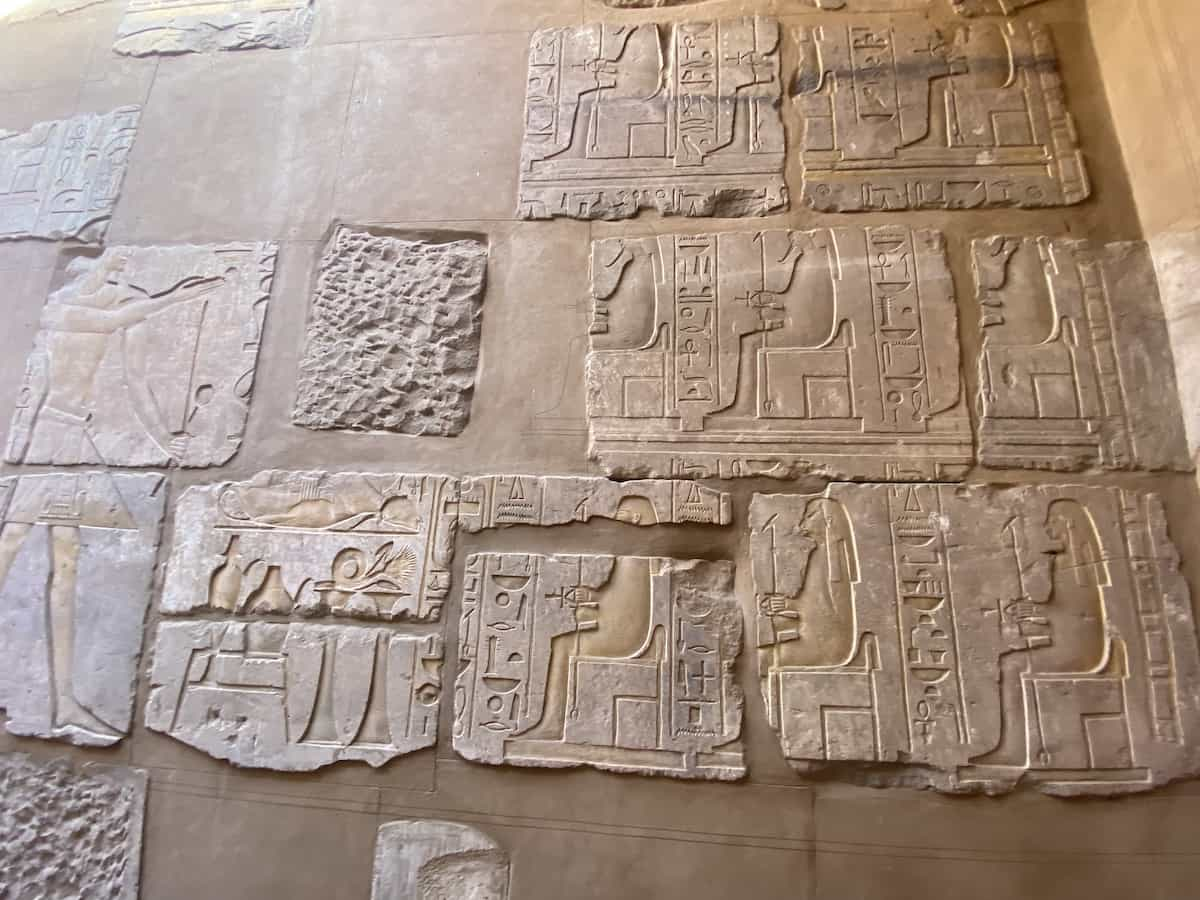
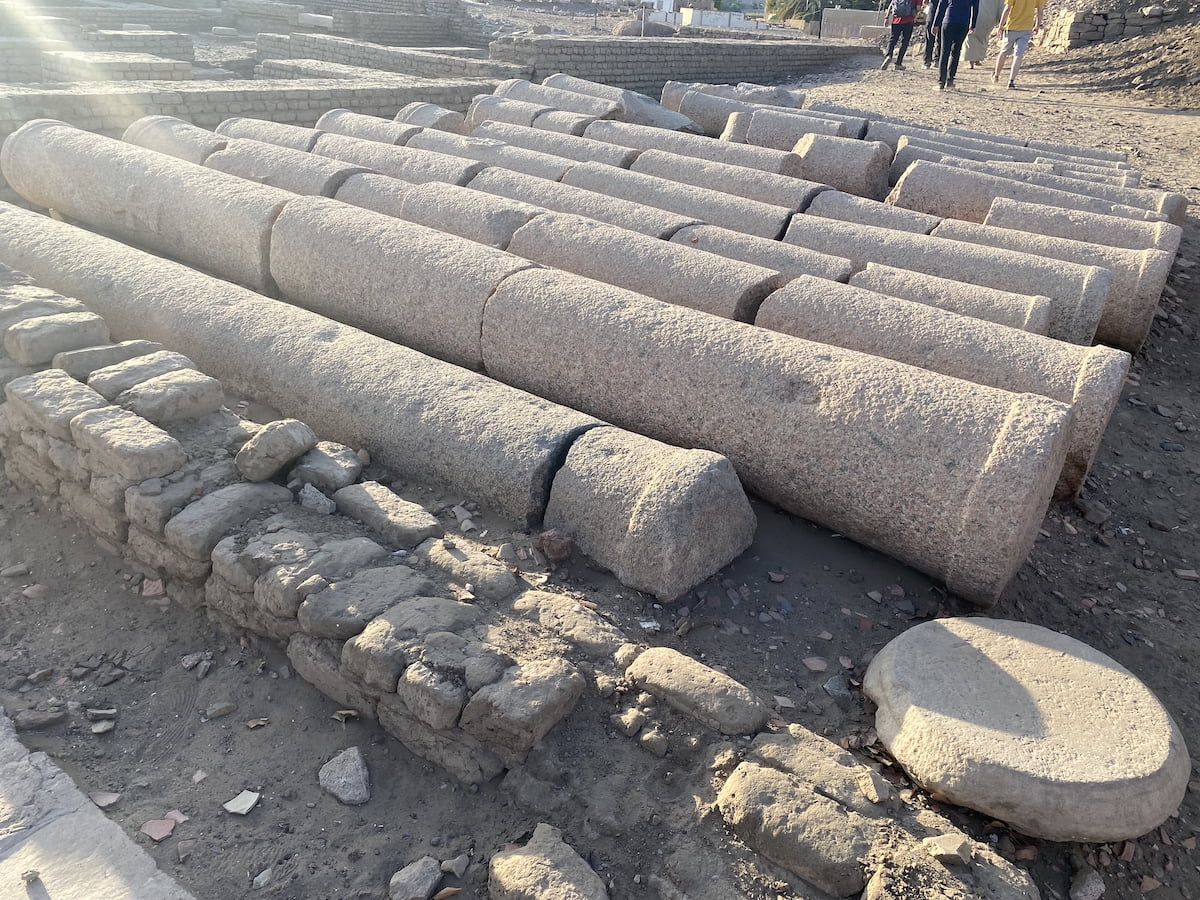
One of the main structures on Elephantine Island is the Temple of Khnum. Khnum was the ram-headed god believed to control the waters of the Nile and the yearly flood that made agriculture possible in ancient Egypt.
The temple complex on the island went through several rebuilding phases over thousands of years. What visitors see today are reconstructed walls, columns, and foundations that mark the layout of the original temple structures.
In ancient times this temple played an important role in the religious life of the region. Priests here performed rituals connected with the Nile flood, which determined crop success and food supply across Egypt.
Today the remains of the temple stand among the surrounding ruins, offering a glimpse into how important Elephantine Island once was as both a religious center and a frontier town along the Nile.
Exploring the Ruins of Elephantine Island
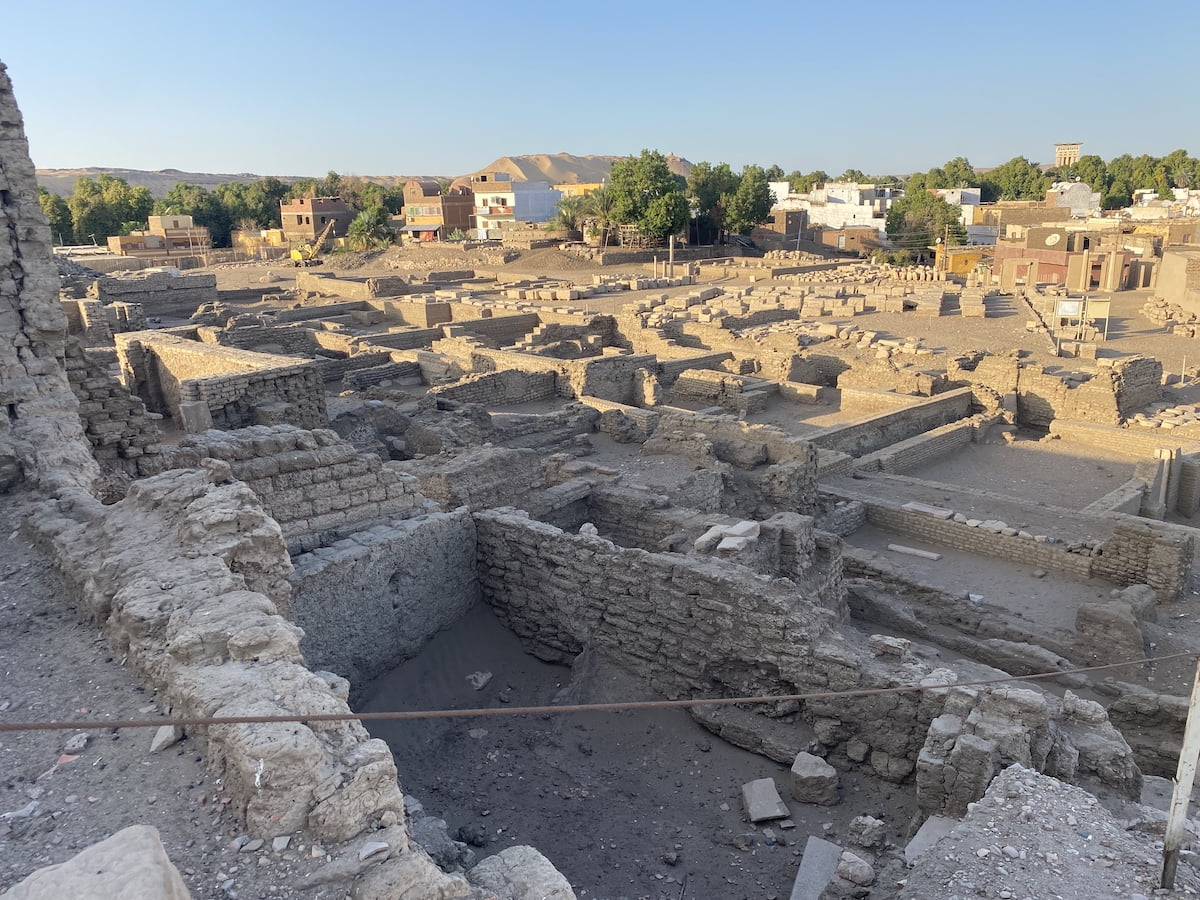
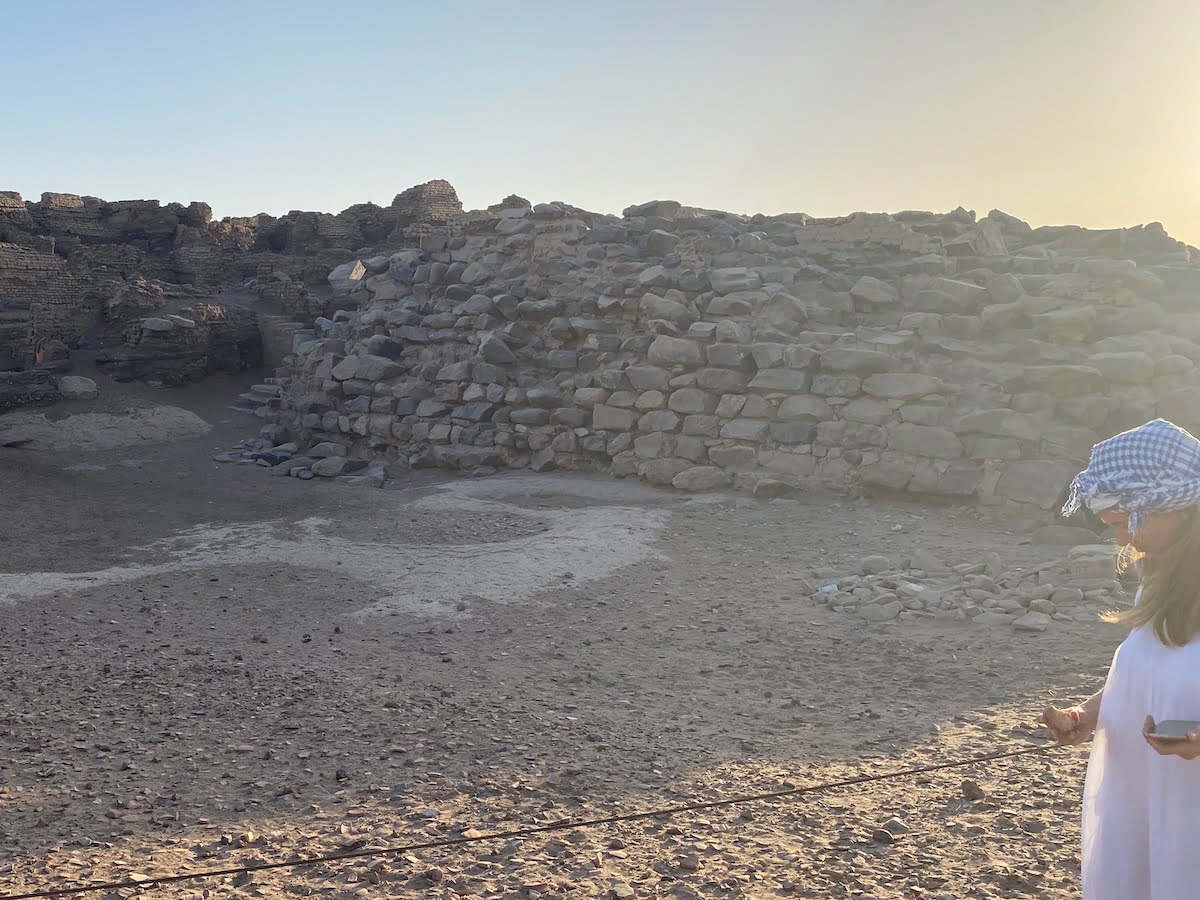
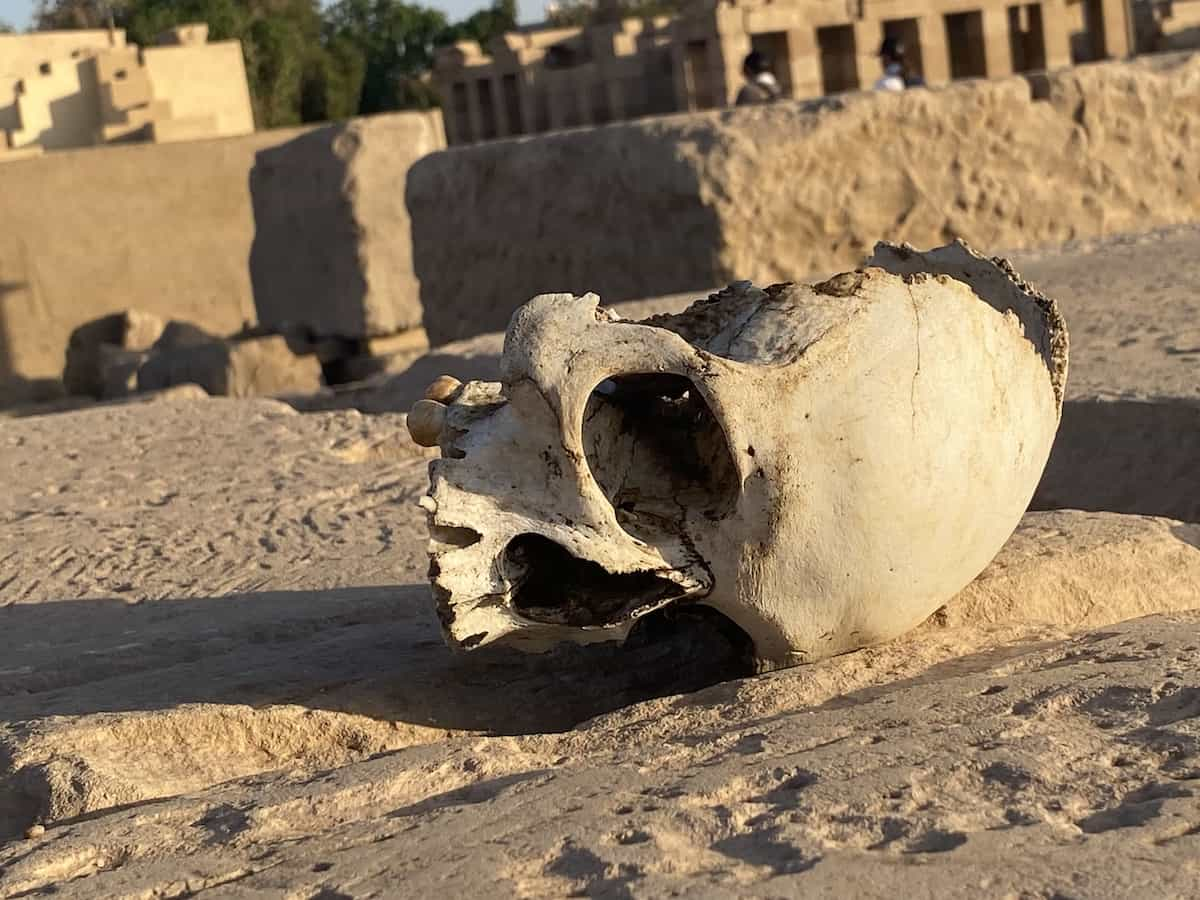
Much of Elephantine Island looks like an open excavation area. Low stone walls outline ancient houses and courtyards, while scattered blocks and rubble mark structures that once stood here. Archaeologists have uncovered settlement layers on the island dating back more than 3,000 years, revealing how the town developed around the nearby temples.
This part of the island was a working community connected to the temple complex. Priests, traders, soldiers, and officials lived here while managing activity along Egypt’s southern frontier.
Walking through the site today feels a bit like wandering through a giant archaeological puzzle. Some walls have been rebuilt by fitting original stones back together, while other sections remain piles of blocks waiting to be studied and reassembled.
Why Is It Called Elephantine Island?
The name “Elephantine” likely comes from the Greek word for elephant. Ancient visitors may have thought the island resembled an elephant tusk when viewed from the Nile.
Another explanation points to the large rounded granite boulders along the shoreline. From a distance, some of these rocks resemble elephants standing in the water.
The island also played a role in trade with Nubia to the south, where ivory was a valuable commodity. Because of this connection, the Greek name Elephantine may have been linked to the ivory trade that passed through the area.
Whatever the exact origin, the name has remained associated with the island for thousands of years.
Boat Ride Back to Aswan
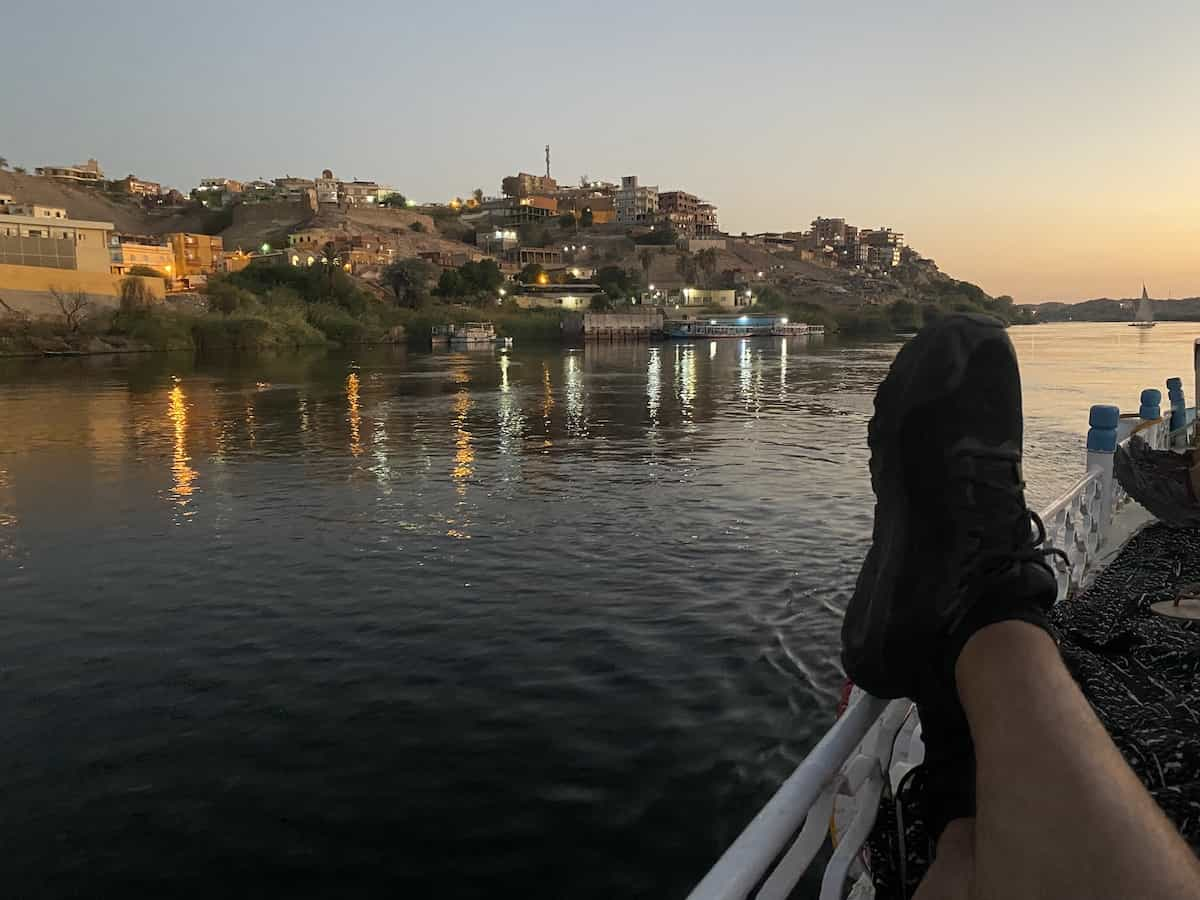
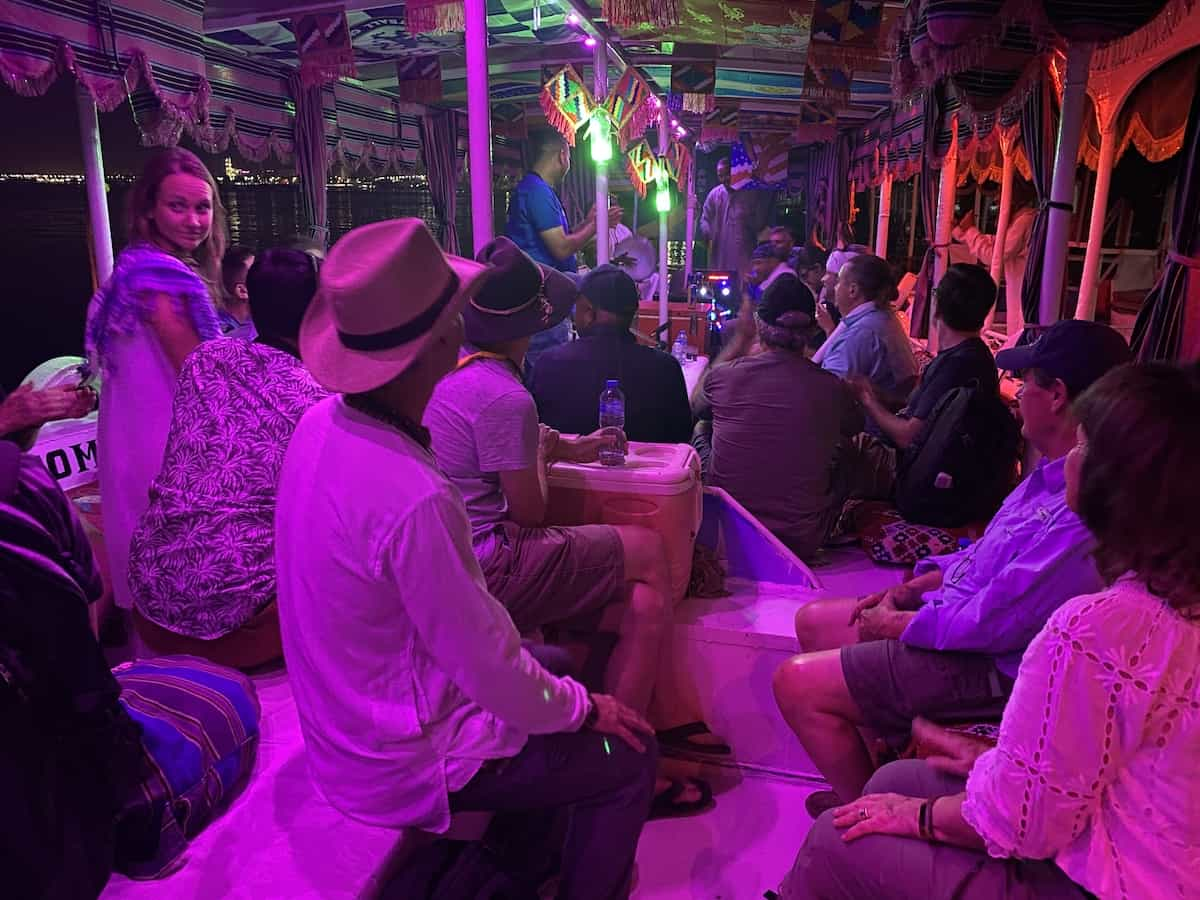
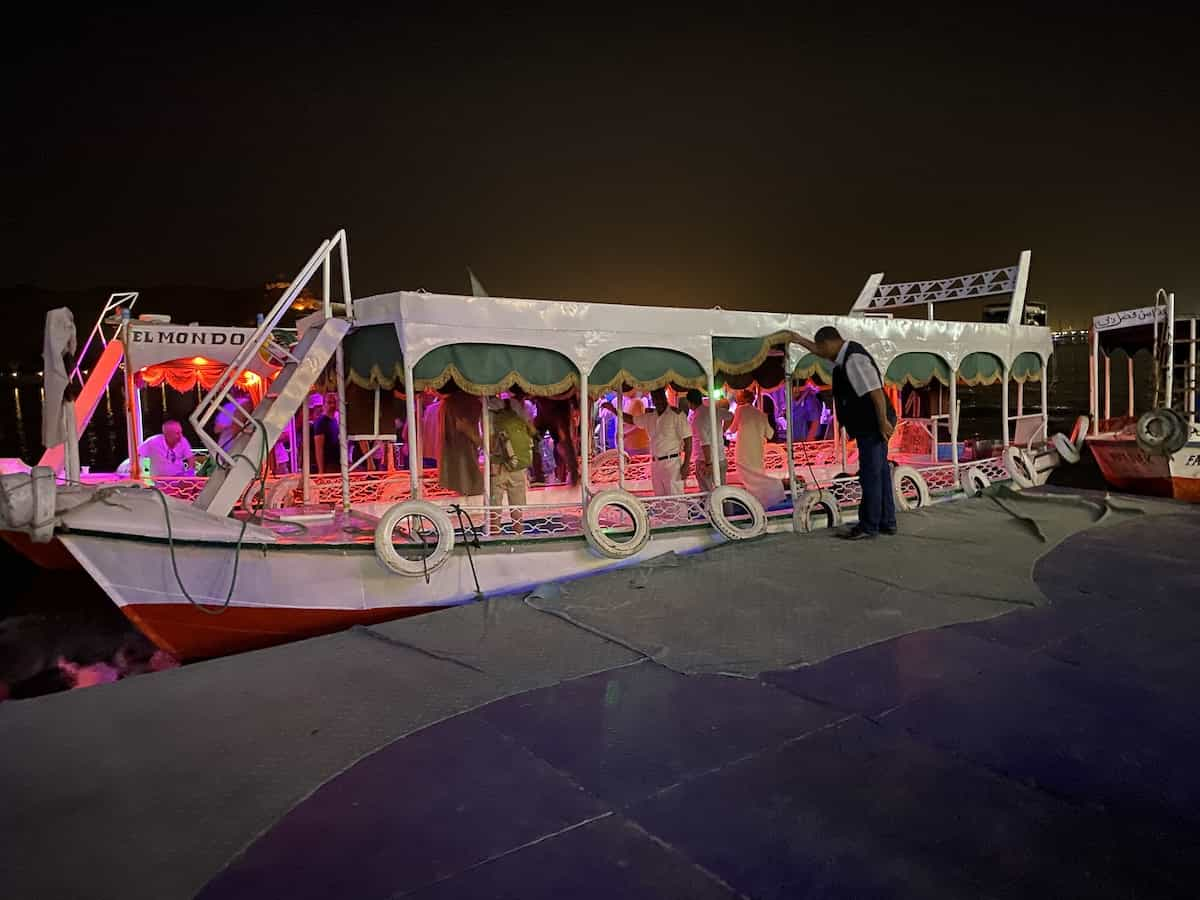
After exploring the ruins on Elephantine Island, the trip back to Aswan is a short ride across the Nile. Small motorboats shuttle visitors between the island and the riverfront docks in just a few minutes.
The return trip offers a wide view of the river and the city rising along the eastern bank. Traditional feluccas move slowly across the water while larger cruise ships line the docks near the center of town.
As the sun drops lower over the Nile, the ride back becomes one of the more relaxing moments of the visit. From the boat you can look back toward Elephantine Island and see how the ruins blend into the landscape of rocks, sand, and scattered stone walls.
The McDonald’s Detour
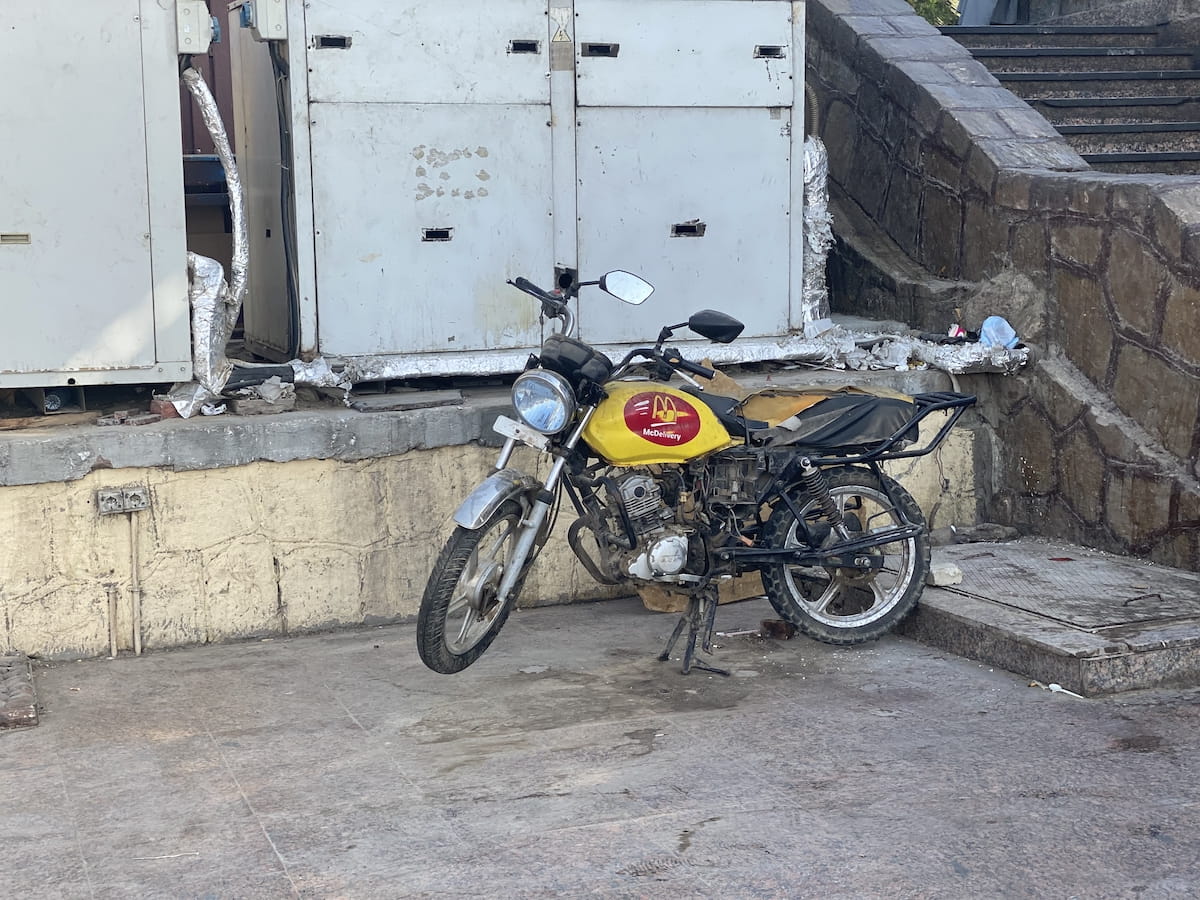
There was lunch served on the cruise ship prior to leaving, but after 4 days of the same food on the Nile Cruise ship, albeit delicious, I needed a change. I saw a McDonalds at the dock so I ditched the ship lunch and got some good ole American fast food. Sure hit the spot.
TIP: While your Nile cruise ship is docked in Aswan, you’re free to leave the boat. There are restaurants, small shops, and convenience stores within walking distance where you can grab snacks, drinks, or a quick meal.lso shop for snacks and drinks.



Is Elephantine Island Worth Visiting?
Elephantine Island turned out to be one of the more relaxed and interesting stops around Aswan. Instead of one massive monument, the island offers a mix of temple ruins, ancient stone walls, and scattered remains from thousands of years of settlement along the Nile. Walking through the site feels less like visiting a single attraction and more like wandering through layers of Egyptian history.
There are a few unusual sights that make the visit memorable. Massive granite blocks, curious stone structures sometimes jokingly called “phone booths,” and partially reconstructed walls show how archaeologists are still piecing the site together. Between the temple remains, the open archaeological areas, and views across the Nile toward Aswan, the island feels both historic and peaceful.
See Elephantine Island Explored in Video
Elephantine Island, and in particular the granite “phone booth” is covered in more detail in this Ben van Kerkwyk’s YouTube video on the Smoking Gun Evidence for Ancient Machining.
If you are curious about the Elephantine Island boomerangs, and the Australia connection, check out the Gosford Glyph at the Temple of Horus
We visited another Nile River island that had a temple, called Philae Island
Would you rather go to Elephantine Island, or McDonalds? Let us know in the comment section below.
Part of the Ben UnchartedX Egypt Tour