
How To Get Free Custom Domain Email With Gmail
Looking to get free email for your own domain name?
You finally found a domain name that wasn’t already taken. Next you want an email address to match. Something [email protected] looks more professional than a generic gmail.com address, but do you really have to pay for google workspace? No.
For freelancers, families, small businesses, or just regular folk, you can send and receive custom domain email for free while keeping your existing Gmail inbox. Google has been making it harder and harder over the years, and they recently raised the bar further. Starting January 2027 the “Send as” is going away, but fear not, we’ll show you how to work around that.
What is a Custom Domain Email?
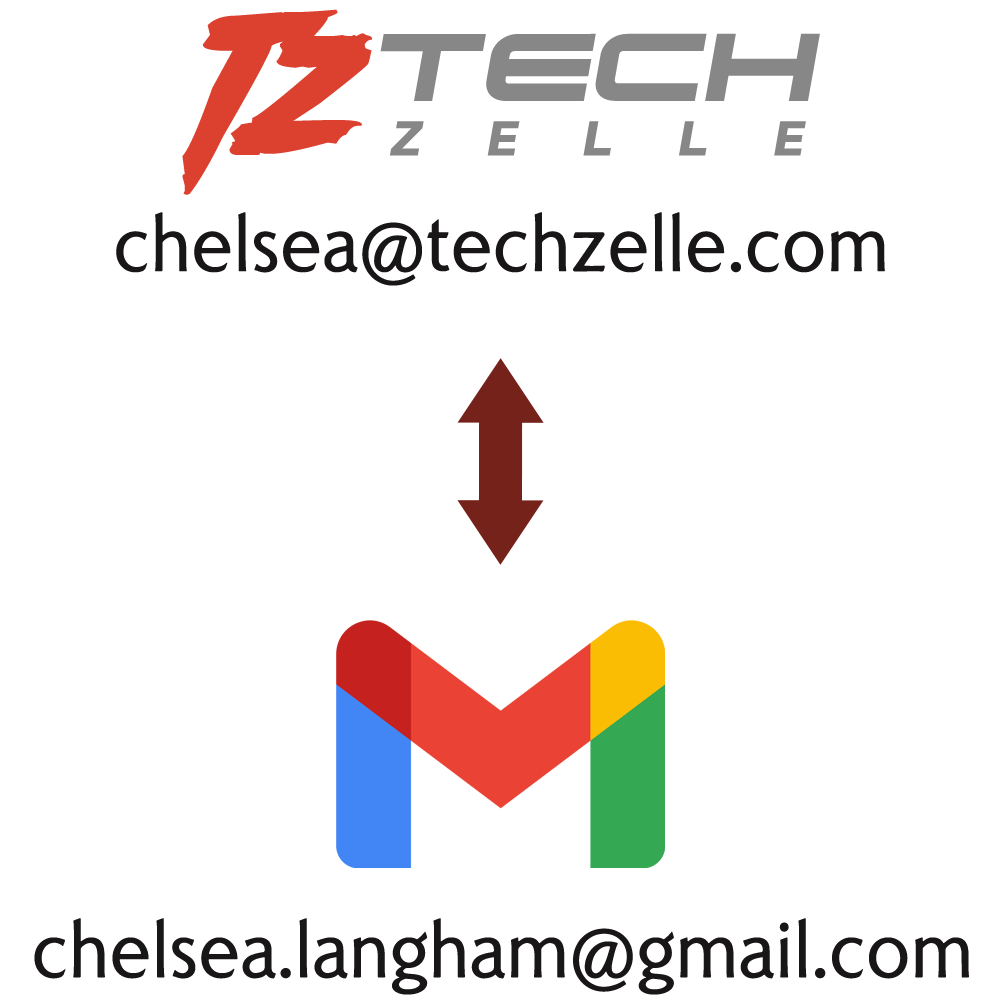
A custom domain email address uses a domain you own, like [email protected], instead of a generic free email provider’s domain, like [email protected].
It gives your business a more professional appearance and keeps your company name in every email you send. You don’t need a website to use one, and once you own the domain, you can set up email using the free services covered in this guide.
Where to Host Custom Domain Email?
Before we get into the gmail account solution, let’s review the most common options for domain email:
- Free at your webhosting provider.
Some webhosting providers include free email service. Avoid this option as bundling email makes it more difficult to switch webhosts in the future. Always keep email separate from webhosting. - Paid provider, Google Workspace, Microsoft 365.
These handle sending and receiving, with support for webmail and email apps. You’re paying for convenience and business features, such as managing employee accounts. Even a one-person business may find that worthwhile. The problem is that it is yet another never-ending subscription to pay. - Free Zoho email service.
Zoho offers a free email option. That issue there, is that you need to use their app / interface. Anything more sophisticated pushes you into the paid options. - Personal gmail account.
Gmail is the king for personal email. Most people have it, or should (yes you, yahoo, aol, hotmail users, lol).
Using your personal gmail is a free and convenient way to manage your custom domain email. The new catch is that you’ll have to use Apple Mail or Thunderbird for sending domain email. That said, this same setup also works with other free email services like yahoo or outlook,.
Setting Up Custom Domain Gmail
Here is an overview of what are doing:
- Incoming mail is sent to your custom domain email address.
- An email forwarding service (Cloudflare or ImprovMX) forwards that email to your gmail inbox.
- Use Apple Mail or Thunderbird to read your Gmail inbox and send or reply from your custom domain email address through SMTP2GO
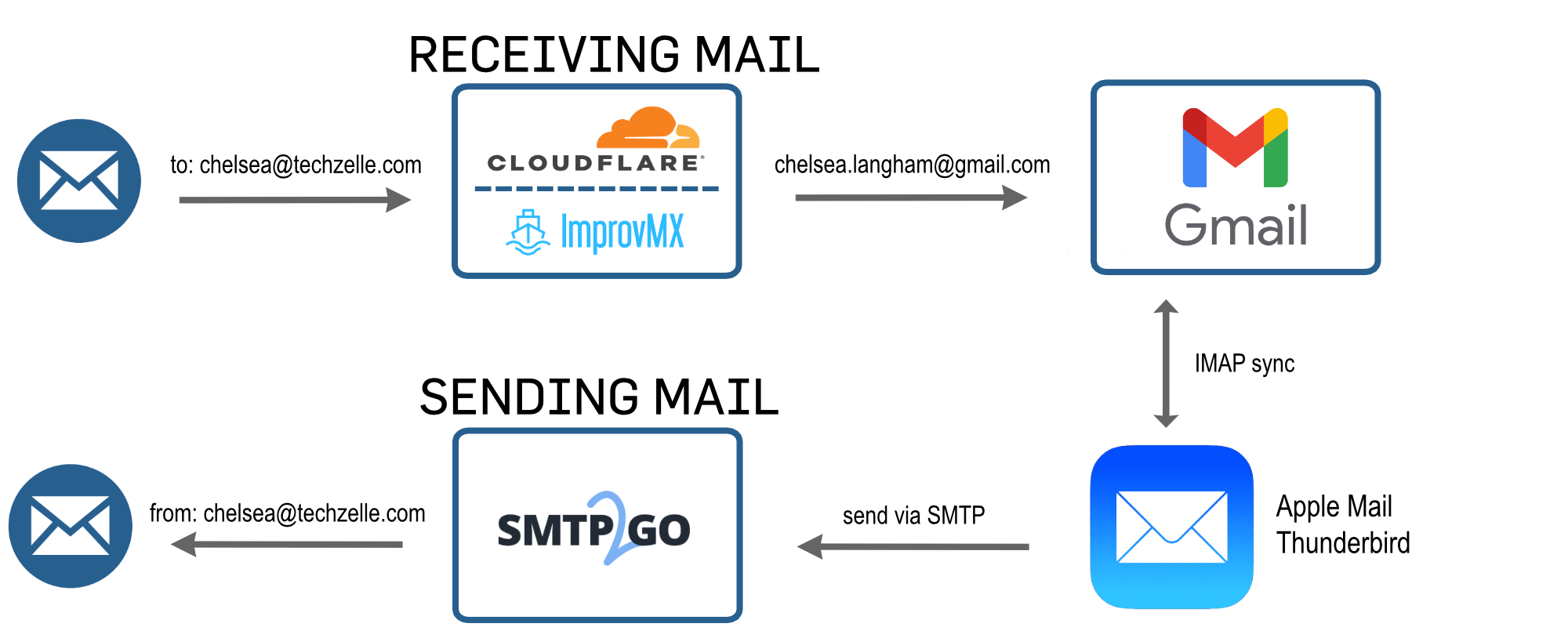
There are two parts for managing your custom domain email with a free gmail account.
- The first, and easier step, is to autoforward emails sent to your custom domain to your free gmail account.
- The second step is to configure Apple Mail or Thunderbird to send through SMTP2GO, using your custom domain email address as the “From” address.
Receiving Custom Domain Email In Your Gmail Account
Once you set up your custom domain, like: yourcompany.com, you’ll want to forward that domain email to your personal gmail account. That way, you can at least receive mail at your new domain, like [email protected]
Forward Custom Domain Email to Gmail using Cloudflare
Cloudflare provides global network cloud services. I recommend using their free Content Delivery Network (CDN) service and Domain Name Service (DNS) for your WordPress web site. I also use their domain name registration services, but you don’t that to use the email routing service.
TIP: Cloudflare’s domain name registration service is the cheapest around. Consider transferring your domain there before your next renewal, especially if you have been using Godaddy domain registration – which cost more and subjects you to many upsell offers.
The minimum service you need from Cloudflare is the DNS service.
If you don’t have a cloudflare account, register for the FREE option at https://cloudflare.com
Then follow instructions to move your website DNS from your web hosting company to Cloudflare.
Step 1: Setup Email Routing
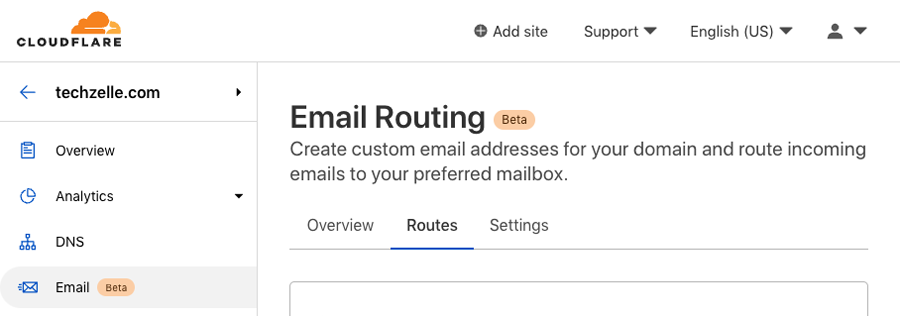
Once you have set up your free Cloudflare DNS, you are ready to move on to the email routing / autoforwarding. Click “Email” in the navigation panel.
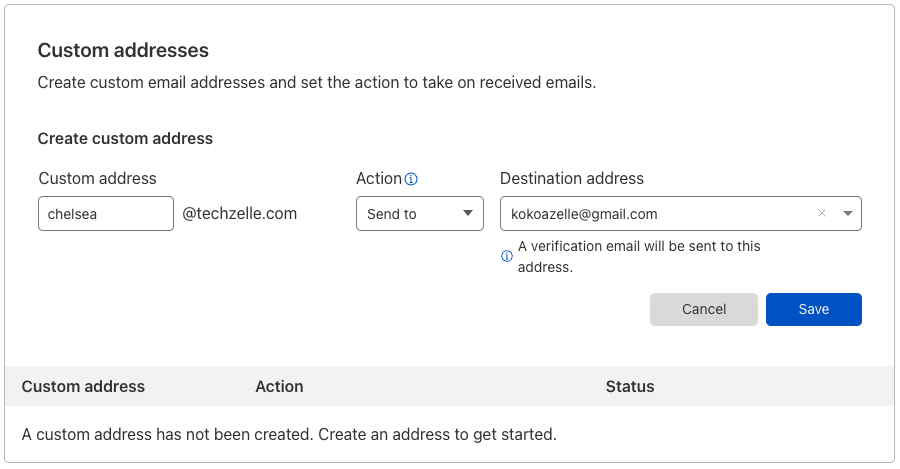
Step 2: Configure the Custom Addresses Section
- Enter the custom address you want to use at your domain.
This will be your main email address at your domain.
This could be something like [email protected], for example: chelseatechzelle.comTIP: Do not use common generic names, like: admin, staff, info, sales, help, support
These common names receive a lot of spam that you don’t need to deal with. If you want to use generic names, change it up to make it unique, like: tzadmin, tzstaff, … - Enter the gmail email address where you want to receive your custom domain emails.
That would be your personal gmail account, for example: kokoazellegmail.com
You’ll need to do their verification process to prove that you own that gmail address.
Step 3: Configure the Catch-All Address Section
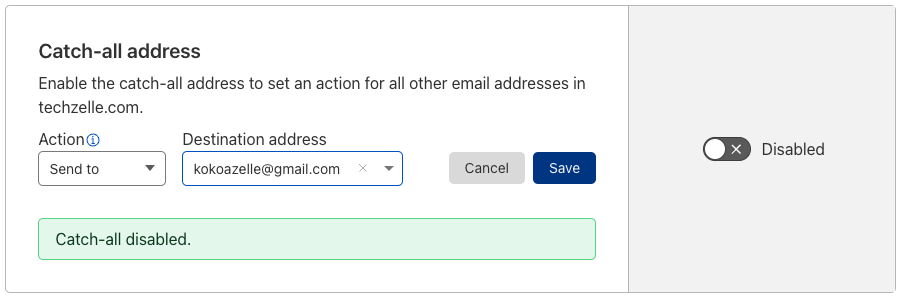
This setting controls what should be done with all unspecified email addresses at your domain. You can either drop those emails or send them over to you. I have set it up both ways for different situations.
For a personal domain, or a one-person company where it’s pretty much just going to be you forever getting emails there, then I like to send catch-all emails. This way you can use different branded emails for different purposes.
TIP: When dealing with different companies, I like to give out unique email addresses to each one for tracking and managing spam. I’ll use [email protected] for netflix, [email protected] for amazon, etc. If I ever start getting spam on one of those emails, I know where the leak is. If netflix@ is compromised then I’ll change it to netflix2@ and drop all future emails to netflix@.
For a company domain, I drop the catch-all emails. Only official company email addresses are forwarded, which cuts all the random spam.
TIP: You can still use the unique email address per company technique with the plus sign (+) feature of gmail. For netflix, it would be [email protected], amazon = [email protected], and so forth. All these emails still to to the same gmail account [email protected].
Step 4: Configure the Email DNS Records Section
Finally, configure your custom domain name email DNS records to point to Cloudflare’s email servers. They will take care of the forwarding and dropping emails at your custom domain.
Cloudflare checks your current email DNS records and provides instructions on how to update them as necessary. There is an option to “Add Records Automatically”.
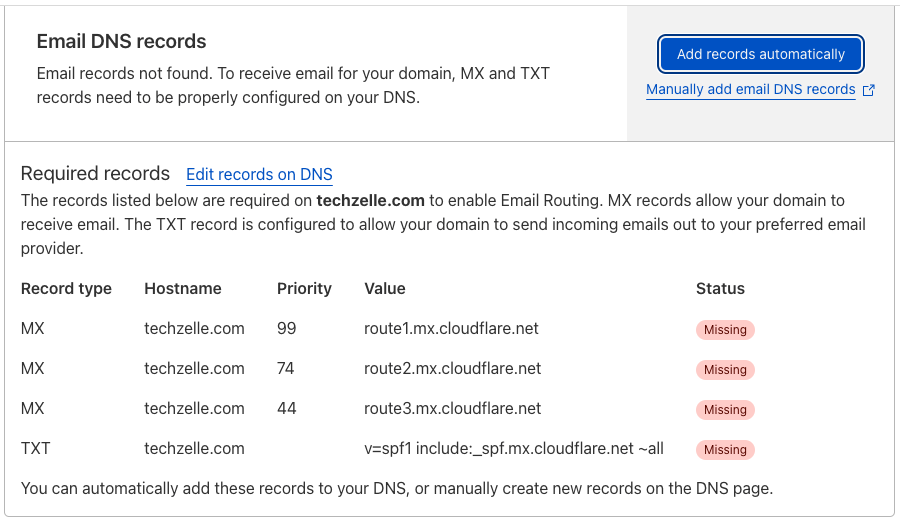
Add the following SPF TXT record at your domain’s root (@), or confirm that Cloudflare added it automatically:
v=spf1 include:_spf.mx.cloudflare.net ~all
Redirect Custom Domain Email to Gmail using ImprovMX
For those of you who do not use Cloudflare for DNS, and do not want to switch, you can keep your existing DNS provider and have ImprovMX handle your domain email forwarding.
As with the Cloudflare setup, you go through the same steps.
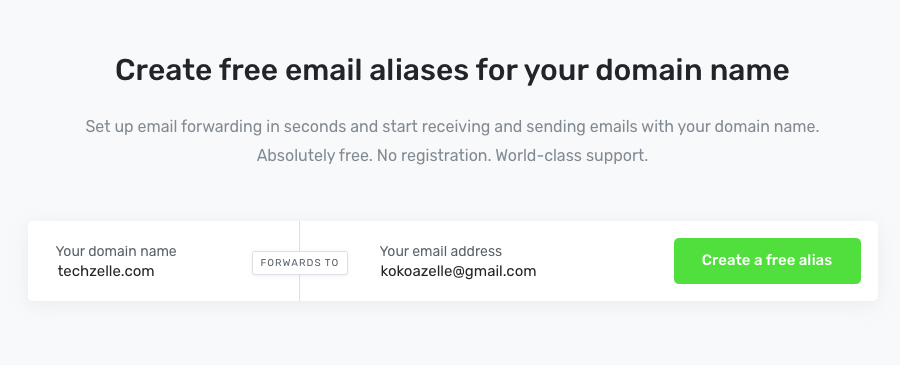
Step 1: Create An ImprovMX Account
Go to: https://improvmx.com
This is as simple as typing in your custom domain name and your personal gmail email address.
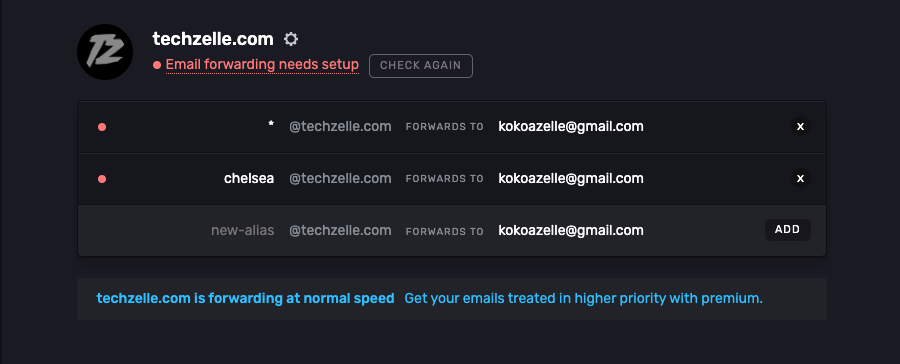
Step 2: Configure the Custom Addresses Section
Type in your custom email address, then click the ADD button.
The Catch-All Email Address is already automatically added. You can delete it if you want to drop them.
Step 3: Configure the Email DNS Records Section
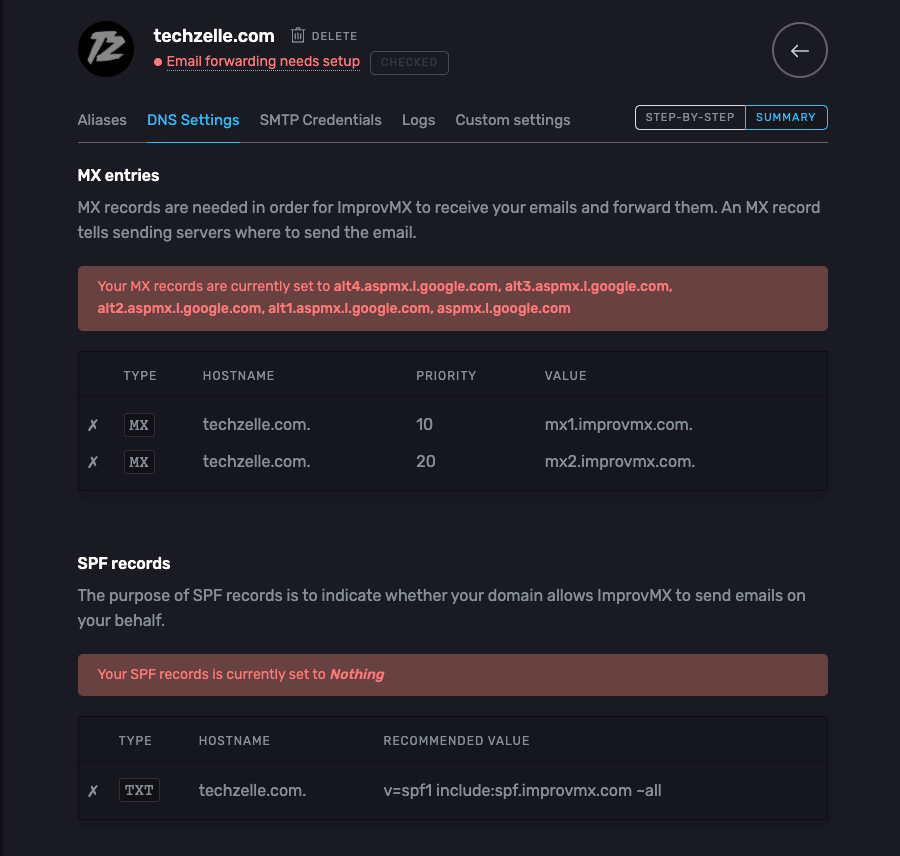
Just as with the Cloudflare example, update the DNS entries to match the ImprovMX specifications.
Note: If you already have an SPF record, merge include:spf.improvmx.com into it rather than creating a second SPF record.
v=spf1 include:spf.improvmx.com ~all
Sending Email From Your Custom Domain Address
Now that your domain email is arriving in Gmail, let’s set up sending. You’ll use SMTP2GO’s free outgoing mail service, then connect it to Apple Mail or Thunderbird alongside your Gmail inbox.
Step 1: Create a Free SMTP2GO Account
Go to SMTP2GO and sign up for the free plan. It allows up to 1,000 emails per month, with a daily limit of 200.
Step 2: Verify Your Domain
In the SMTP2GO dashboard, go to Sending → Verified Senders → Sender domains and add your domain.
Copy the CNAME records provided by SMTP2GO into your domain’s DNS settings. These configure authentication for outgoing mail, including SPF and DKIM. You don’t need to change the SPF TXT record you added for forwarding.
If you use Cloudflare DNS, set these CNAME records to DNS only, with the proxy turned off.
Return to SMTP2GO and confirm that your domain is verified.
Step 3: Create Your SMTP Login
In SMTP2GO, go to Sending → SMTP Users → Add SMTP user.
Create a username and password for your email app. Save these credentials; they are separate from your Gmail password and SMTP2GO dashboard login.
Step 4: Connect Gmail to Your Email App
If you haven’t already done this…
Open Apple Mail or Thunderbird and add your existing Gmail account. Choose Google as the account provider, then sign in through Google’s login window.
This connects your Gmail inbox for reading and syncing messages.
Step 5: Configure Outgoing Mail
| Setting | Value |
|---|---|
| SMTP server | mail.smtp2go.com |
| Port | 587 |
| Encryption | STARTTLS / TLS |
| Authentication | Password |
| Username | Your SMTP2GO SMTP username |
| Password | Your SMTP2GO SMTP password |
Use the credentials created in Step 3, not your Gmail login.
Step 6: Add Your Custom Domain Address
Add your custom domain email address as a sending identity in your email app, then assign SMTP2GO as its outgoing server.
In Thunderbird, open Account Settings, select your Gmail account, then choose Manage Identities → Add. Enter your name and custom domain address, and select the SMTP2GO outgoing server.
In Apple Mail on Mac, go to Mail → Settings → Accounts → Account Information. Open the Email Address menu and choose Edit Email Addresses to add your domain address, where this option is available. Configure SMTP2GO under Server Settings → Outgoing Mail Account → Edit SMTP Server List.
Apple Mail’s outgoing server selection is associated with the account. If you also send from your regular Gmail address, check that each message uses the appropriate outgoing server.
Step 7: Choose Your Default Sender
If most of your messages should come from your domain address, make it the default sender.
On Apple Mail for Mac, go to Mail → Settings → Composing → Send new messages from and select your domain address.
You can also select an address from the From menu when composing or replying. Check this field when replying to forwarded messages.
Step 8: Test Sending and Receiving
From a separate email account:
- Send a message to your custom domain address.
- Confirm it arrives in Gmail and appears in your email app.
- Reply using your custom domain address.
- Check that the reply arrives with the correct From address.
- Check the received message’s authentication details for SPF, DKIM and DMARC results.
Your incoming messages now go through the forwarding service to Gmail, while outgoing domain messages go through SMTP2GO.
Using Free Gmail For Domain Email Summary
You now have Gmail storing your incoming domain email, with Apple Mail or Thunderbird handling reading and replies, and SMTP2GO sending messages from your domain address.
Send a few test messages to and from a separate email account to confirm everything works. Check that replies show your custom domain address in the From field.
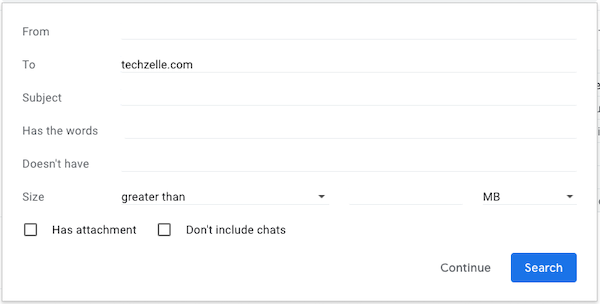
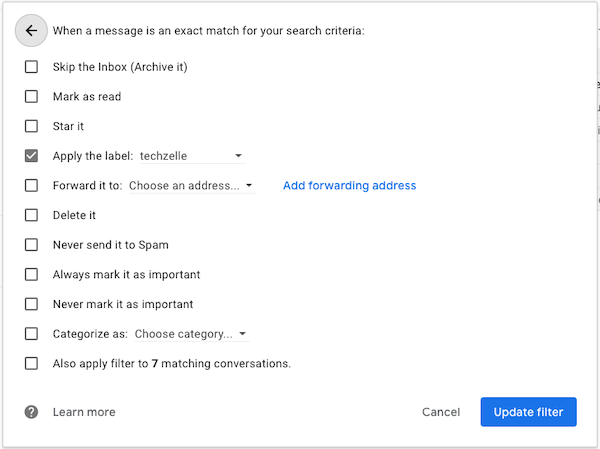
To organize incoming domain email in Gmail, go to Settings → See all settings → Filters and Blocked Addresses → Create a new filter. Enter your custom domain email address in the To field, click Create filter, then choose Apply the label and create a label such as “Work.”
If you have a Divi website, consider adding a free digital business card to your site.
How are you handling your domain email? Are you using paid or free services? Let us know in the Comment section below.