
SAQQARA · EGYPT
The Serapeum of Saqqara.
A graveyard of giant granite boxes.
Underground tunnels lined with 24 enormous stone sarcophagi, officially for the sacred Apis bulls. Rough outsides, strangely smooth insides, and one I fell into.
UNCHARTEDX EGYPT TOUR · SAQQARA
OCTOBER 27, 2021 · ABOUT AN HOUR UNDERGROUND
THE SHORT VERSION
What is the Serapeum of Saqqara?
The Serapeum is a network of tunnels cut into the bedrock at Saqqara, south of Cairo. Along the main gallery are side alcoves, and in them sit 24 giant stone boxes, most of them granite, each with a massive lid. The official story is that they’re sarcophagi for the Apis bulls, sacred animals of the god Ptah.
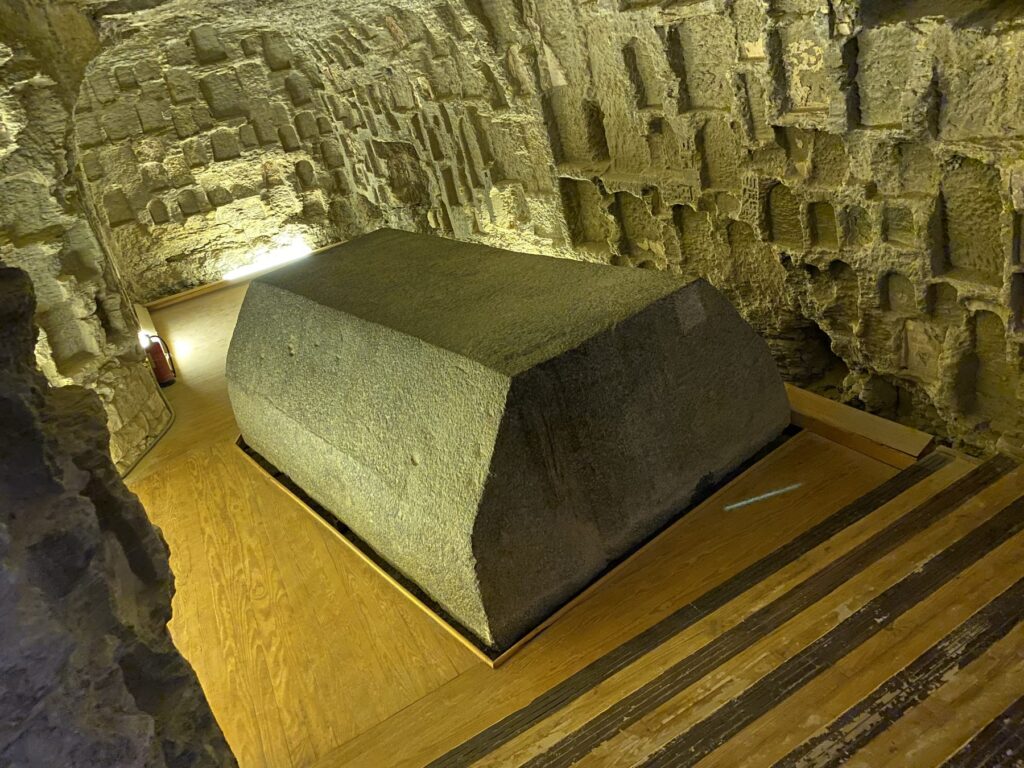
Walking through, it looked like a cemetery. A box in every alcove, and each one different from the next, like tombstones in a graveyard.
What were the Serapeum boxes for?
Egyptologists say Apis bull burials. The catch is that the boxes were found empty or robbed, and the earliest Apis burials nearby used wooden coffins. The boxes are also so well made inside, and so huge, that a lot of people, me included, wonder whether they were made for something else, or earlier than the inscriptions on them suggest.
Serapeum quick facts
LOCATION
Saqqara necropolis, about 30 km south of Cairo
WHAT’S INSIDE
24 stone sarcophagi in alcoves off a main gallery over 200 m long
STONE
Mostly granite, plus basalt or diorite, and a few in other stone
WEIGHT
About 40 tonnes per box, plus a lid of about 25 tonnes
OFFICIAL DATE
Started around 612 BC under Psamtik I, used into Ptolemaic times
REDISCOVERED
By Auguste Mariette, who entered the tunnels in 1851
INSCRIBED BOXES
Four, three naming kings: Amasis, Cambyses and Khabash
Weights and dates from published excavation records. Everything else is what I saw on October 27, 2021.
Going down
Like walking
through a cemetery.
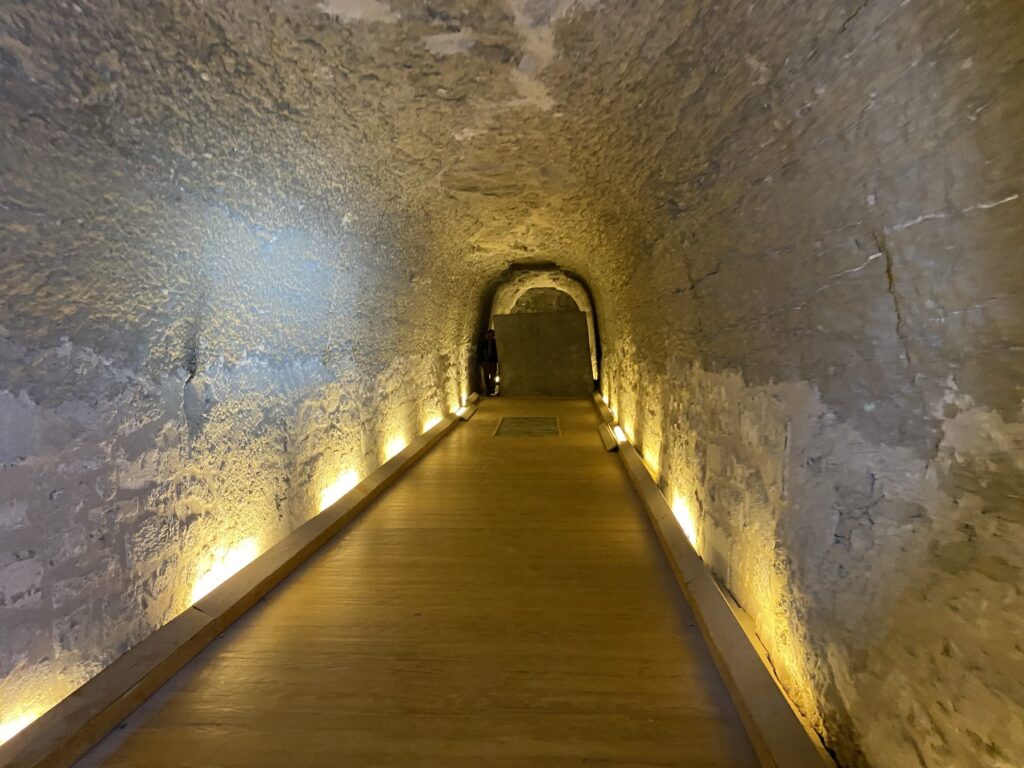
A sunken ramp takes you down to the entrance, and then it’s long, lit tunnels with a giant box parked in nearly every side alcove.




THE STRANGE ONES
THREE THAT STOOD OUT
How did they
move these?
The question I kept asking the whole time.
BY THE ENTRANCE
A lid on its own.
Near the bottom of the entrance ramp there’s a lid sitting by itself. It’s huge. How do you even move something like that, let alone in a tunnel?
IN THE HALLWAY
Why leave it there?
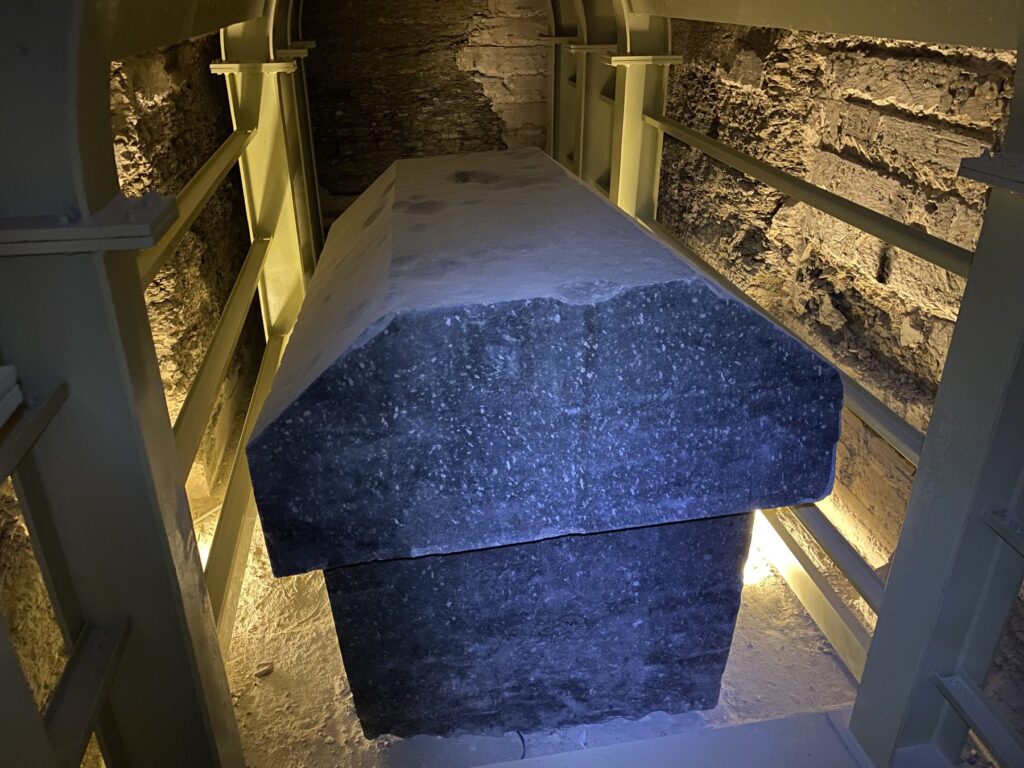
Then there’s a box sitting in the middle of a hallway, not in an alcove. It makes you wonder how they moved these things at all. And why leave it there, of all places? What happened?
ONE BOX NEVER MADE IT TO AN ALCOVE.
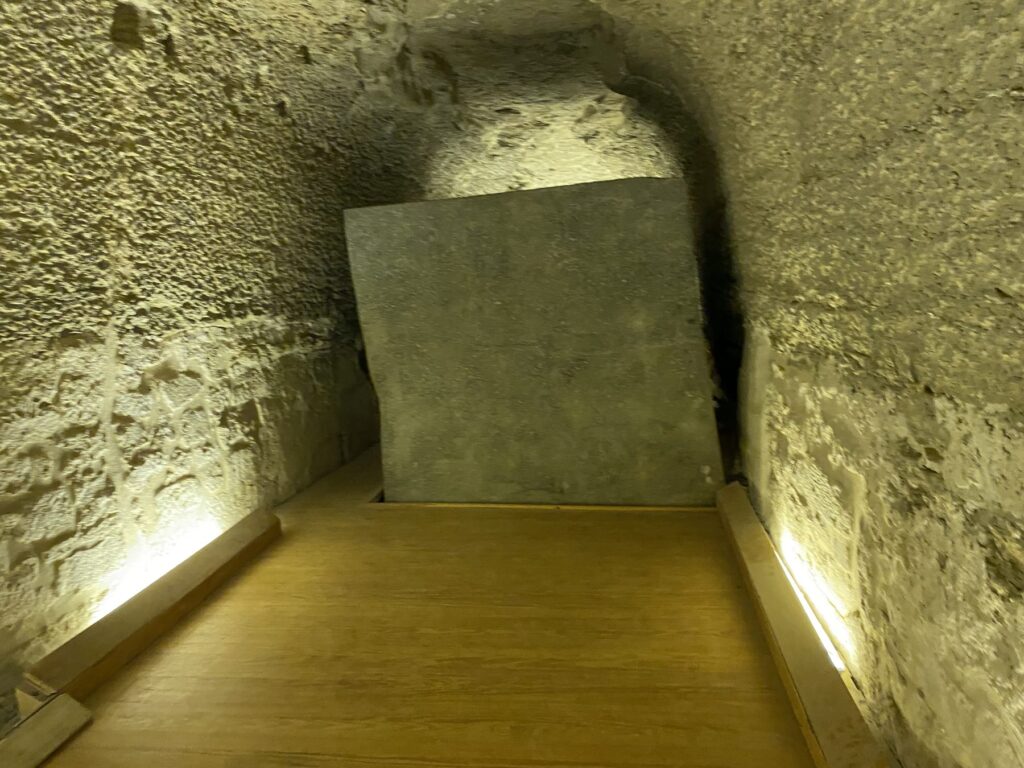

BLOWN OPEN
Opened with dynamite.
One box has a hole blasted through its side. The story goes that it was opened with explosives during the early exploration of the site, and was found empty.

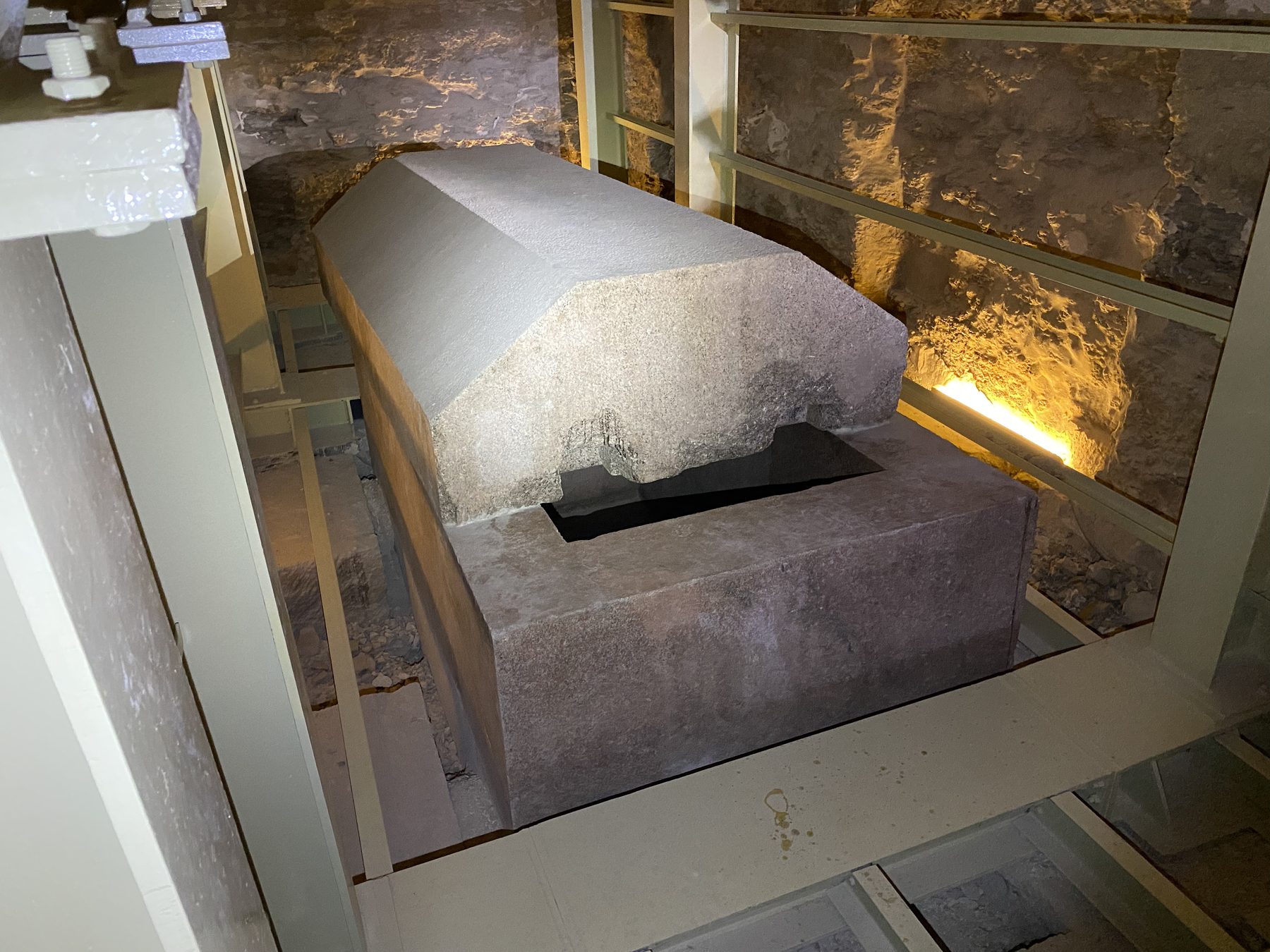
UP CLOSE
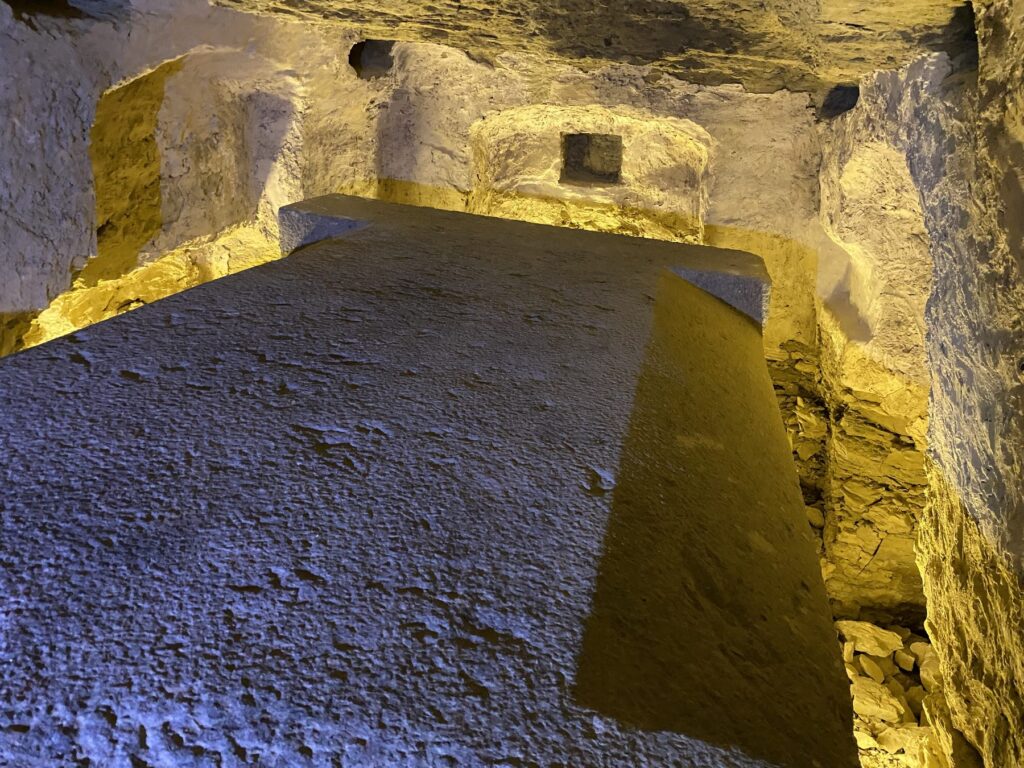
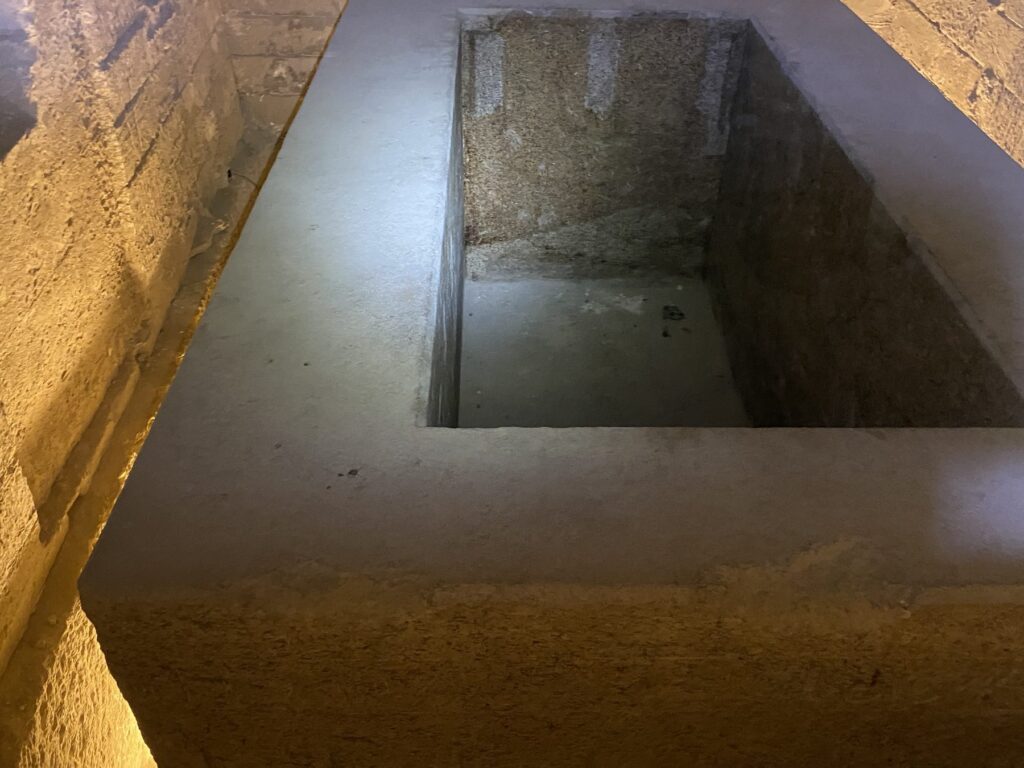
Rough outside, smooth inside.
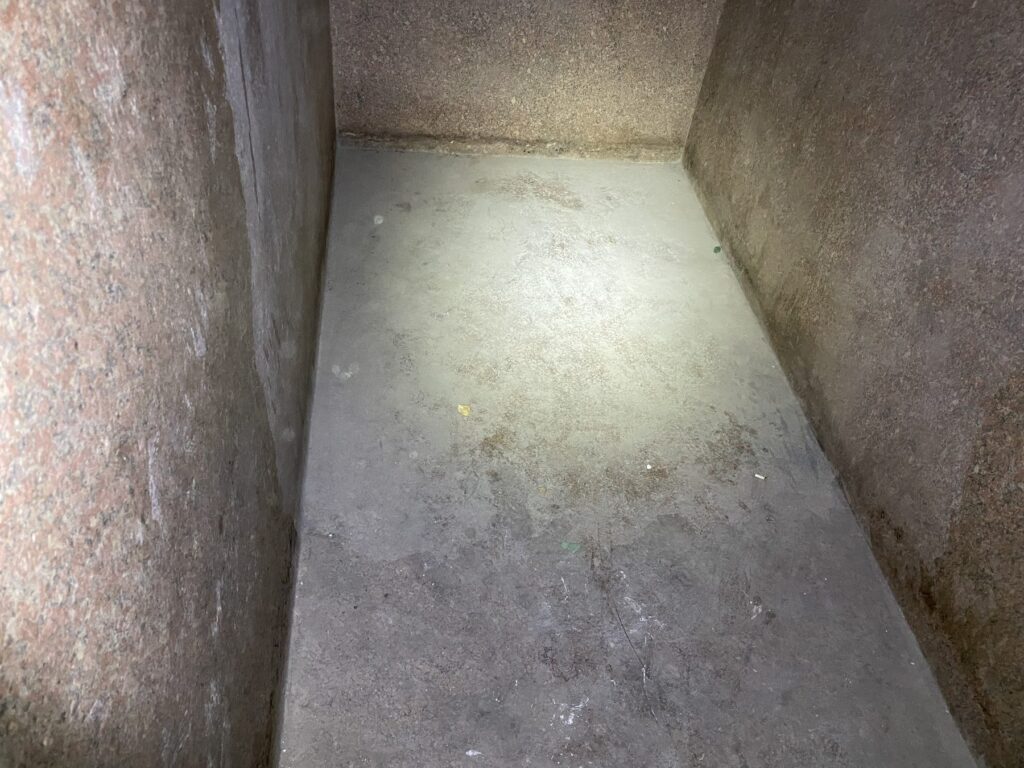
The outsides aren’t flat or uniform, but the surface is smooth, so it doesn’t look chipped or damaged. The insides are much smoother, with crisp corners.
THE STONEWORK
Inside the granite sarcophagi.
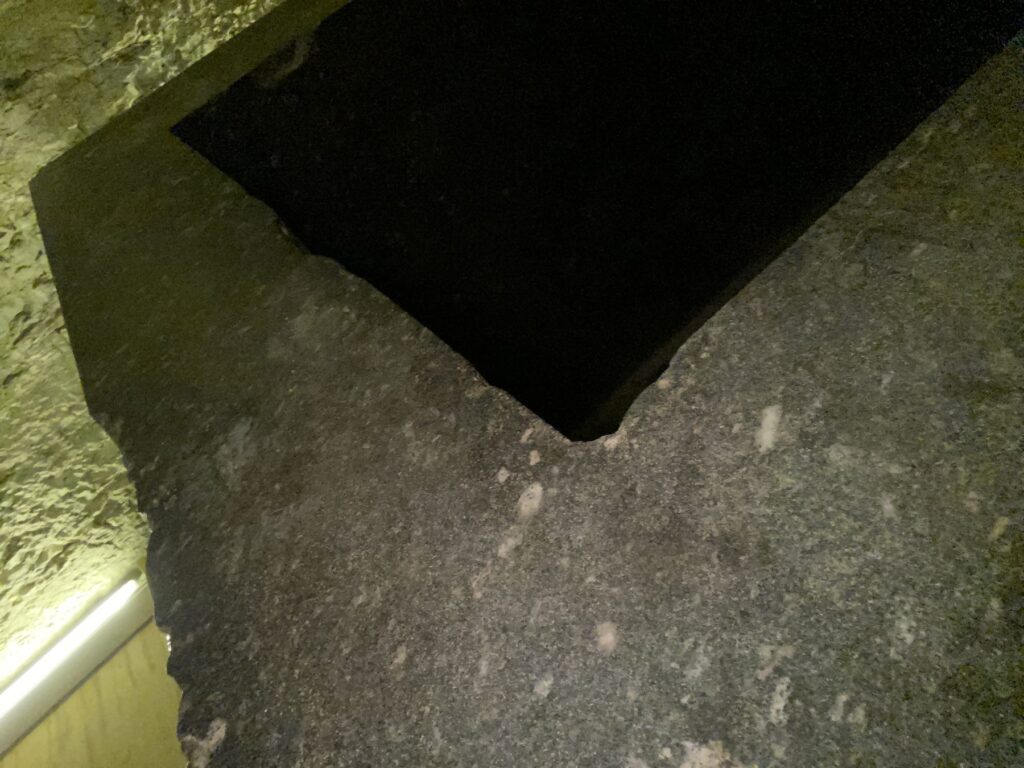
The outside of each box is uneven. Not flat, but smooth to the touch, the way worked stone is, not broken stone. Some lids show shallow scoop marks across the top, and some have notches chipped at the corners.
Then you look inside and it’s a different story. The interior walls are much smoother and flatter, and the inside corners are sharp. That’s the part that gets people talking, because this is granite, one of the hardest stones the Egyptians worked.
If you like scoop marks, compare them to the ones on the Unfinished Obelisk at Aswan.
OUTSIDE: UNEVEN BUT SMOOTH. INSIDE: FLAT, WITH SHARP CORNERS.


THE BIG QUESTION
Who made
the Serapeum boxes?
The official dating, why people doubt it, and what I noticed.
The official story
Apis bulls were buried at Saqqara for centuries. Under Ramesses II, his son Khaemwaset dug an earlier set of tunnels, now called the Lesser Vaults. The big gallery with the granite boxes, the Greater Vaults, was started around 612 BC under Psamtik I and kept in use into Greek times. Of the 24 boxes, four are inscribed, and three name kings: Amasis, Cambyses and Khabash.
Why people doubt it
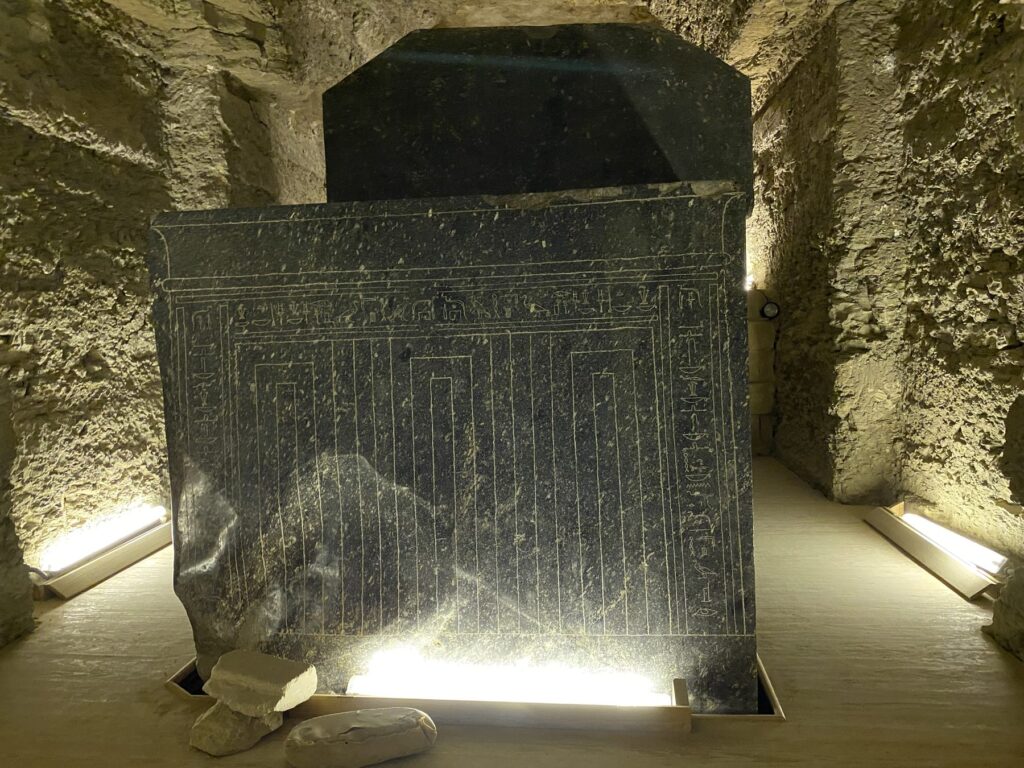
The inscriptions are scratched on roughly, and they don’t match the quality of the boxes they’re on. The three kings named reigned more than 200 years apart. Some people think the boxes are older and the names were added later. Others ask why anyone would make boxes this precise for a bull.
What I noticed
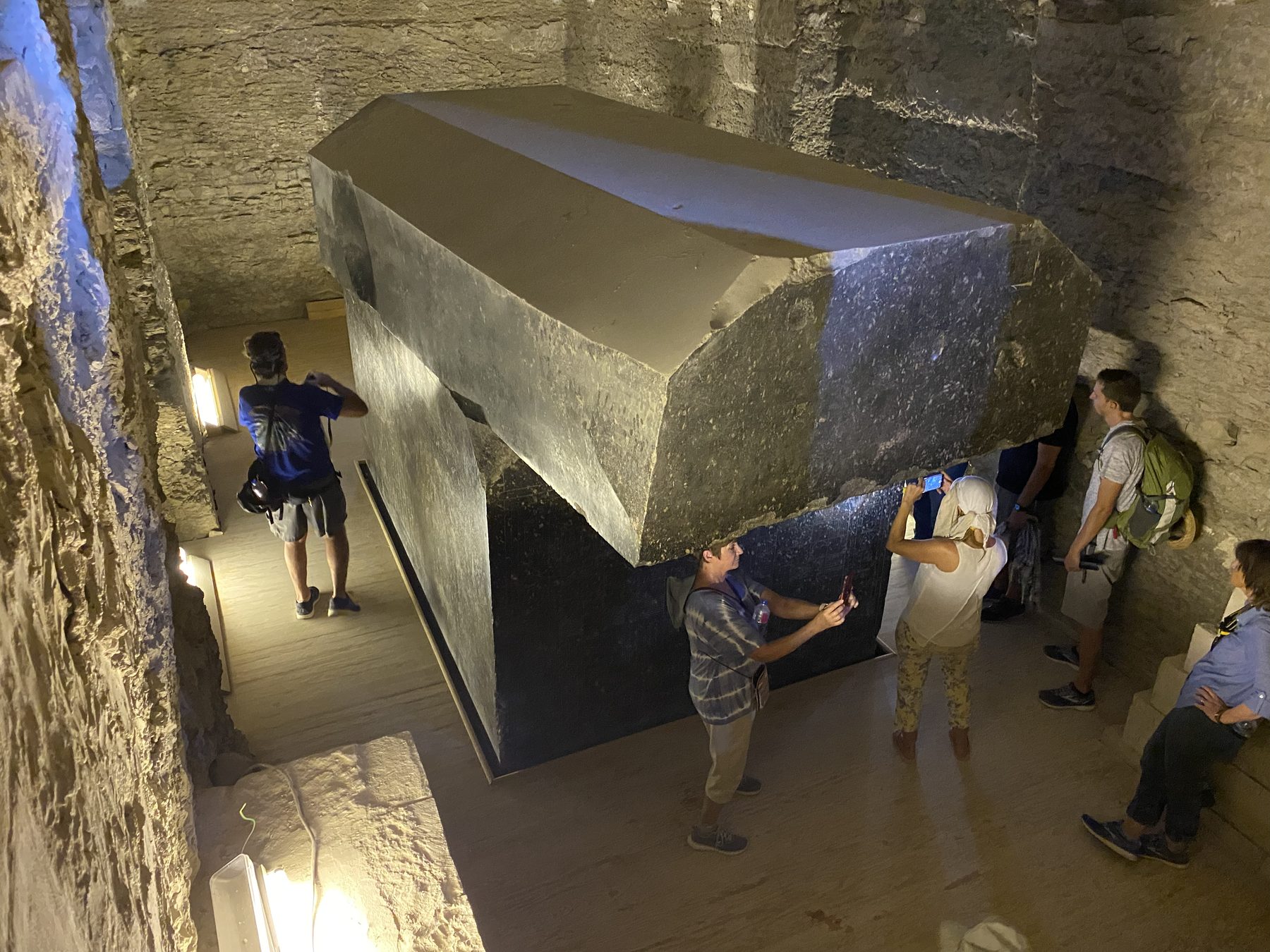
The free box at the end is the most impressive in size and has the scratchings all over it. Standing there, the rough writing and the smooth, massive box really don’t look like the same work. Should we be using those inscriptions to date the boxes?


24
stone boxes in the Greater Vaults
~40 t
weight of one box
~25 t
weight of one lid
200 m+
length of the main gallery
VISITING
Tips for visiting the Serapeum.
At the end of the main tunnel there are two boxes with stairs down to them. The one on the right is the official one. It’s free, you can walk down, go all the way around it and get close. It’s the most impressive box in size, and it has the scratched hieroglyphs.
The one on the left is roped off, with a guard. Give him a tip and he’ll let you go down to look at that box. In retrospect I should have paid. After spending thousands to get there, what are you going to do, not pay a few bucks?
The rest of the boxes along the tunnel have a low rope that suggests you stay out. When I was there, you could still get to plenty of them and touch them on your own, if you dared. We spent about an hour down there.
TIP: GO STRAIGHT TO THE END FIRST. YOU’LL HAVE THE FREE BOX ALMOST TO YOURSELF WHILE EVERYONE ELSE IS AT THE FIRST ALCOVES.


THE CURSE OF THE SERAPEUM
How I fell into a box.
While the guards were busy collecting tips, I went over a short rope to get a photo of myself inside one of the boxes. I kind of slipped getting in. The box looks three feet deep from the outside, but it’s actually five.
I twisted my shoulder as I fell in. I had to stand on my toes and pull myself out with an injured arm. But I did get the photo. I suppose that’s why they have it roped off.
I had much more success getting into another box, through a broken opening. It’s rather spacious. This could be the Egyptian version of the Japanese capsule hotel.
UPDATE: MY SHOULDER STAYED STIFF FOR ABOUT A YEAR. WHAT FINALLY FIXED IT WAS RED LIGHT THERAPY.
I tried PlatinumLED after doing a lot of research. Plenty of panels out there are underpowered, and the big-name brand, Joovv, is overpriced. This one fixed my shoulder 100%. Not sponsored, no affiliate link, it just worked.


NEXT DOOR
The Tomb of Ty
at Saqqara.
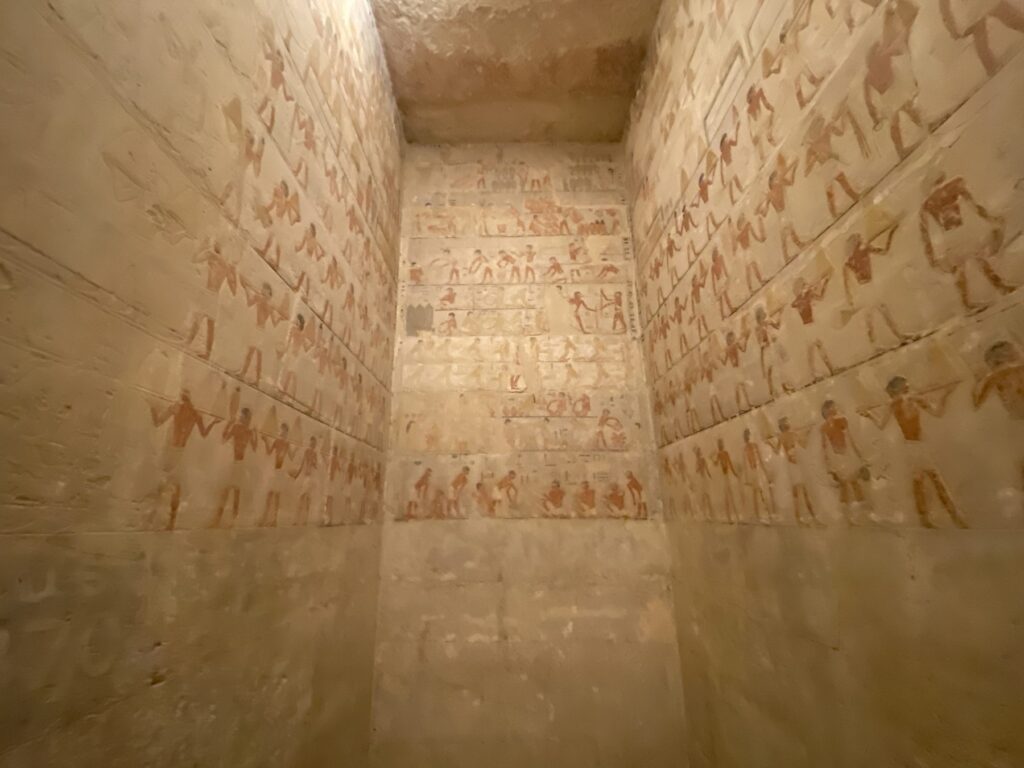
A small add-on right next to the Serapeum, worth 10 to 15 minutes. Ty (also spelled Ti) was a 5th Dynasty court official, around 2400 BC, and his tomb walls are covered in carved scenes of everyday life: farming, fishing, cattle, boat building.




Watch
What got me
curious.
This UnchartedX series is what first got me curious about the Serapeum and made it a highlight of the trip. This is part one of five, covering the tunnels, the different box types and the precision of the interiors.
Frequently asked QUESTIONS
Serapeum FAQ.
What is the Serapeum of Saqqara?
An underground tunnel complex at Saqqara, south of Cairo, lined with 24 giant stone sarcophagi in side alcoves. Officially it was the burial place of the sacred Apis bulls.
How heavy are the Serapeum boxes?
Published estimates put a box at about 40 tonnes, with a lid of about 25 tonnes. One well-measured box comes to about 62 tonnes total.
Were Apis bulls found in the Serapeum boxes?
The granite boxes were found empty or robbed. Bull remains were found in earlier Apis burials at the site, in wooden coffins, but not in the big granite boxes themselves.
How old is the Serapeum?
The gallery with the granite boxes was started around 612 BC under Psamtik I and used into Ptolemaic times. An older set of tunnels dates to Ramesses II’s reign. Some people believe the boxes themselves are older than their inscriptions.
How were the boxes moved into the tunnels?
The standard explanation is that each alcove was filled with sand, the box was set on top, and the sand was removed bit by bit until the box settled into place. How they got 60-tonne stones down the tunnels in the first place is still debated.
Can you go inside the Serapeum?
Yes, the main tunnels are open to visitors. One box at the end has stairs so you can walk all the way around it. Most other boxes are roped off.
How long do you need at the Serapeum?
We spent about an hour underground. Add 10 to 15 minutes for the Tomb of Ty next door.
Can you touch the Serapeum boxes?
At the official box at the end, yes. Most others are behind low ropes. Please don’t climb in. I did, and I hurt my shoulder.