
Strangely Precise Granite Boxes Inside The Serapeum At Saqqara
Oct 27 • Saqqara, Egypt
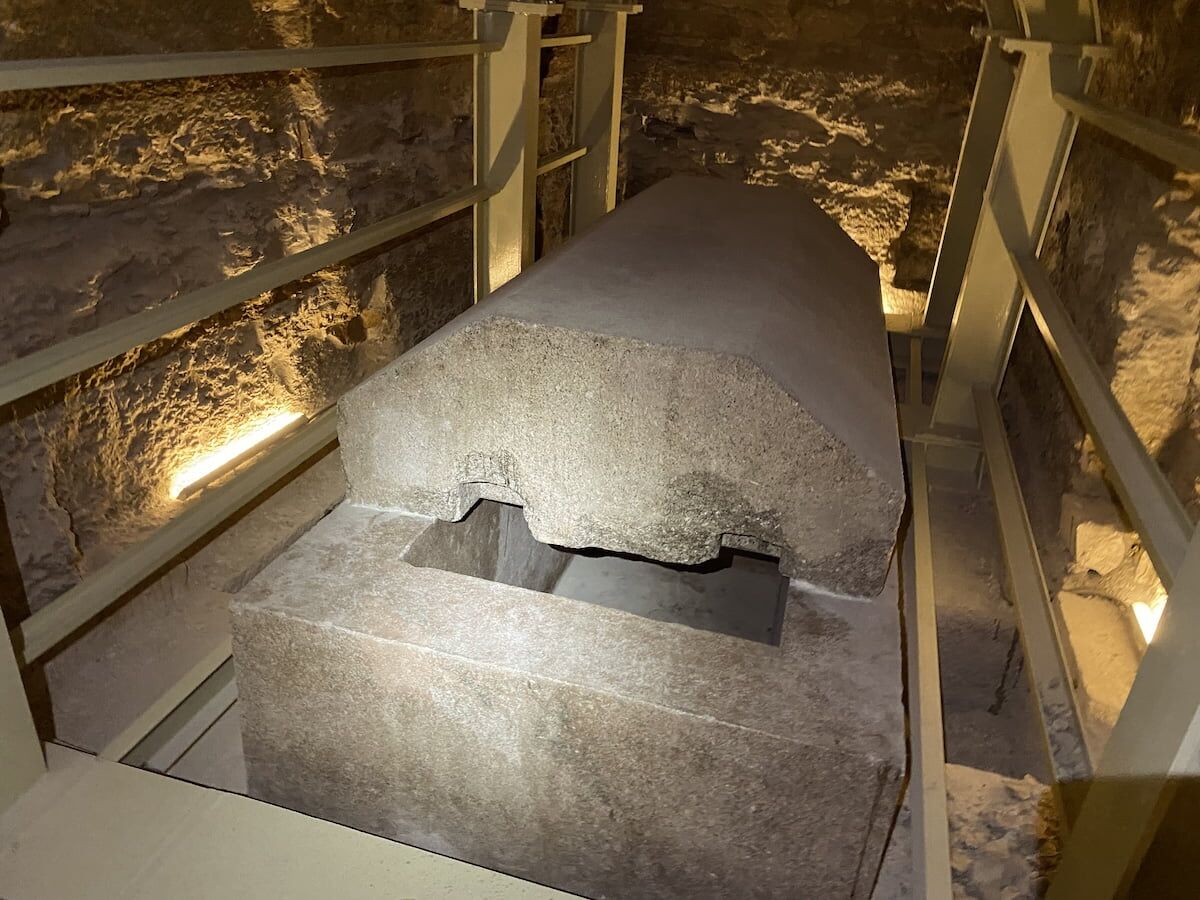
The Serapeum at Saqqara is an underground tunnel complex filled with enormous granite boxes. Each one weighs 70 to 100 tons and sit inside carved alcoves along the corridor. When you look inside the boxes, the surfaces appear strangely precise.
Some say these were burial containers for the sacred Apis bulls. But no bulls were ever found in the granite boxes themselves, and earlier Apis burials nearby used simple wooden coffins. What exactly were these massive granite boxes made for?
Serapeum Quick Facts
- Location: Saqqara necropolis, south of Cairo, Egypt
- Structure: Underground tunnel complex with granite stone boxes
- Stone Type: Mostly granite, one diorite, one limestone
- Box Weight: Roughly 70–100 tons each including lids
- Number of Boxes: 24. There are 23 in alcoves and 1 in the main corridor
- Purpose (allegedly): Sarcophagi for sacred Apis bulls
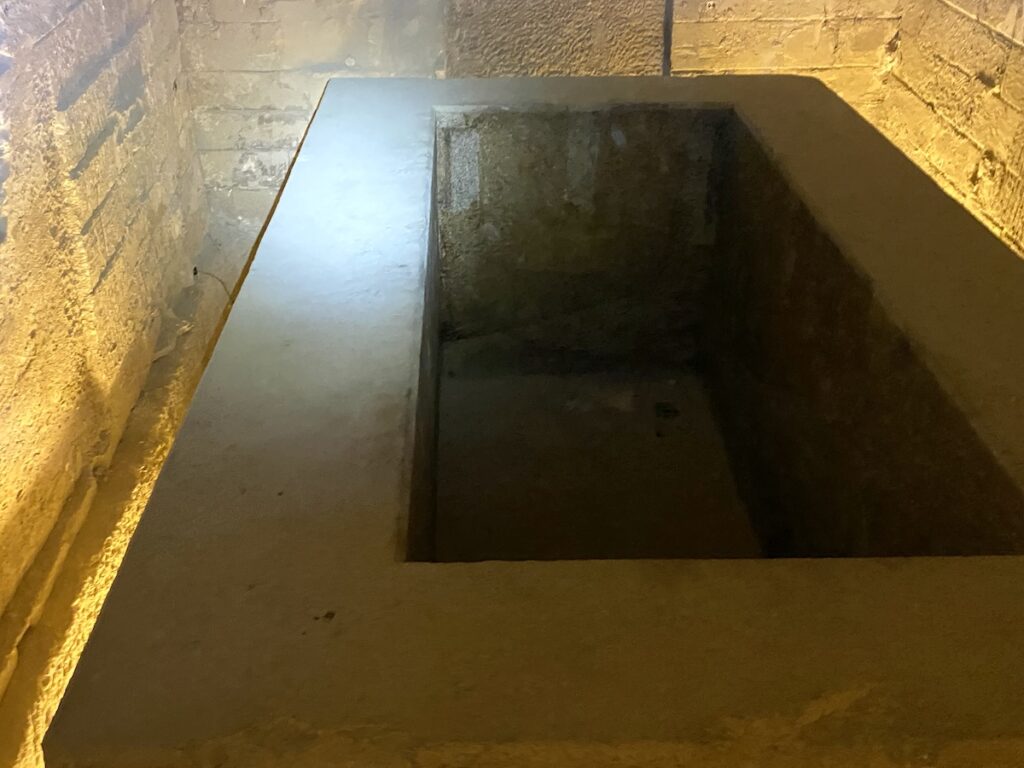
- Interior Features: Extremely flat walls and sharp 90 degree corners
- Tunnel Layout: Long corridor with side alcoves containing the boxes
- Discovery: Rediscovered by Auguste Mariette in 1851
What Are The Serapeum Boxes
Deep underground at Saqqara in Egypt is a tunnel complex known as the Serapeum. Along the walls of these corridors sit a series of enormous stone boxes placed inside carved alcoves cut directly into the limestone bedrock.
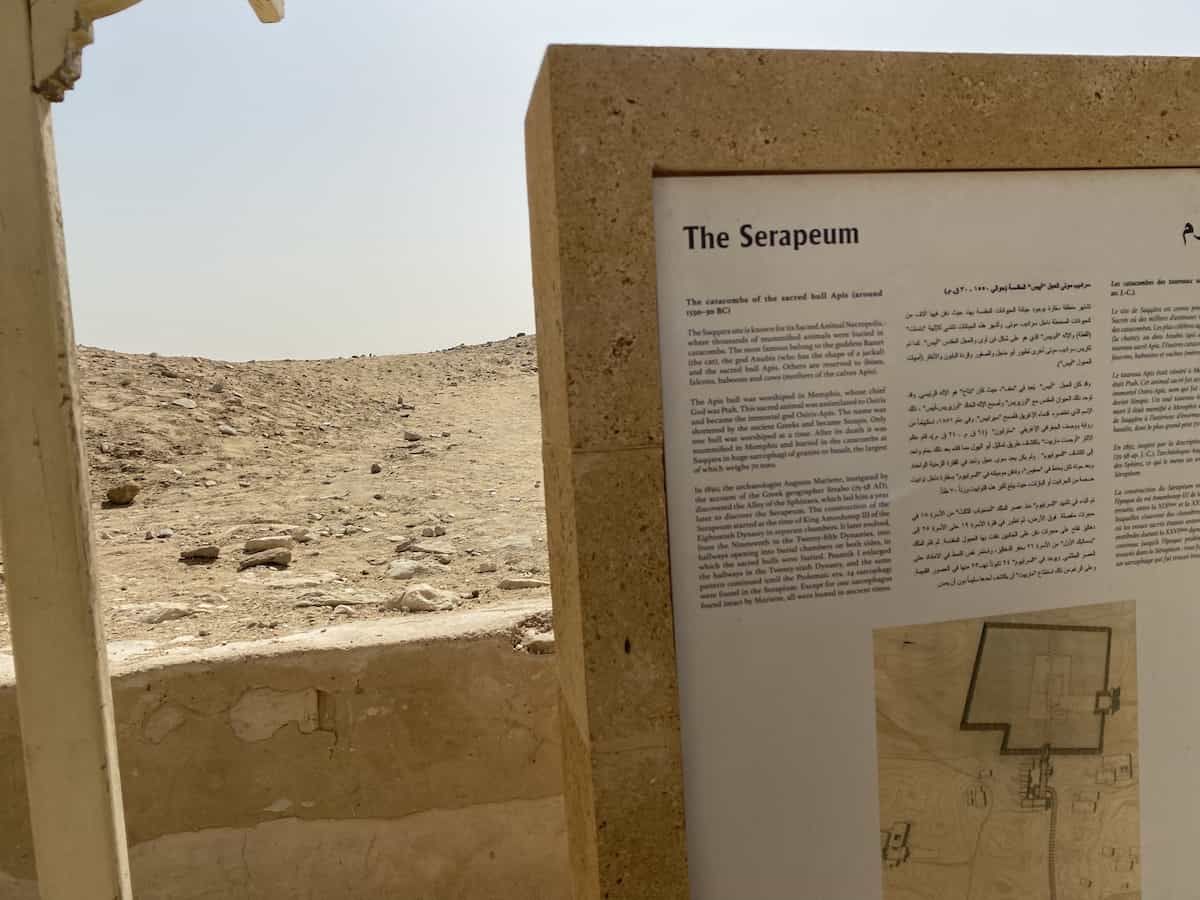
Most of the boxes are made from granite and weigh roughly 70 to 100 tons including the lids. The standard explanation is that they were used as sarcophagi for the sacred Apis bulls, animals that were worshipped in ancient Egypt and associated with the god Ptah. Over time the underground complex was expanded as additional bulls were buried at the site.
What Makes The Serapeum So Unusual
What draws attention at the Serapeum is not just the size of the boxes but the way they are made. These are massive stone containers carved from single blocks of granite and hollowed out to create large interior chambers.
When you look inside the boxes, the surfaces appear unusually flat and square for something carved out of such hard stone. Combined with the tight underground tunnels where they are installed, it raises practical questions about the tools, planning, and effort required to shape stones this large and position them inside the chambers.
Approaching The Serapeum Entrance
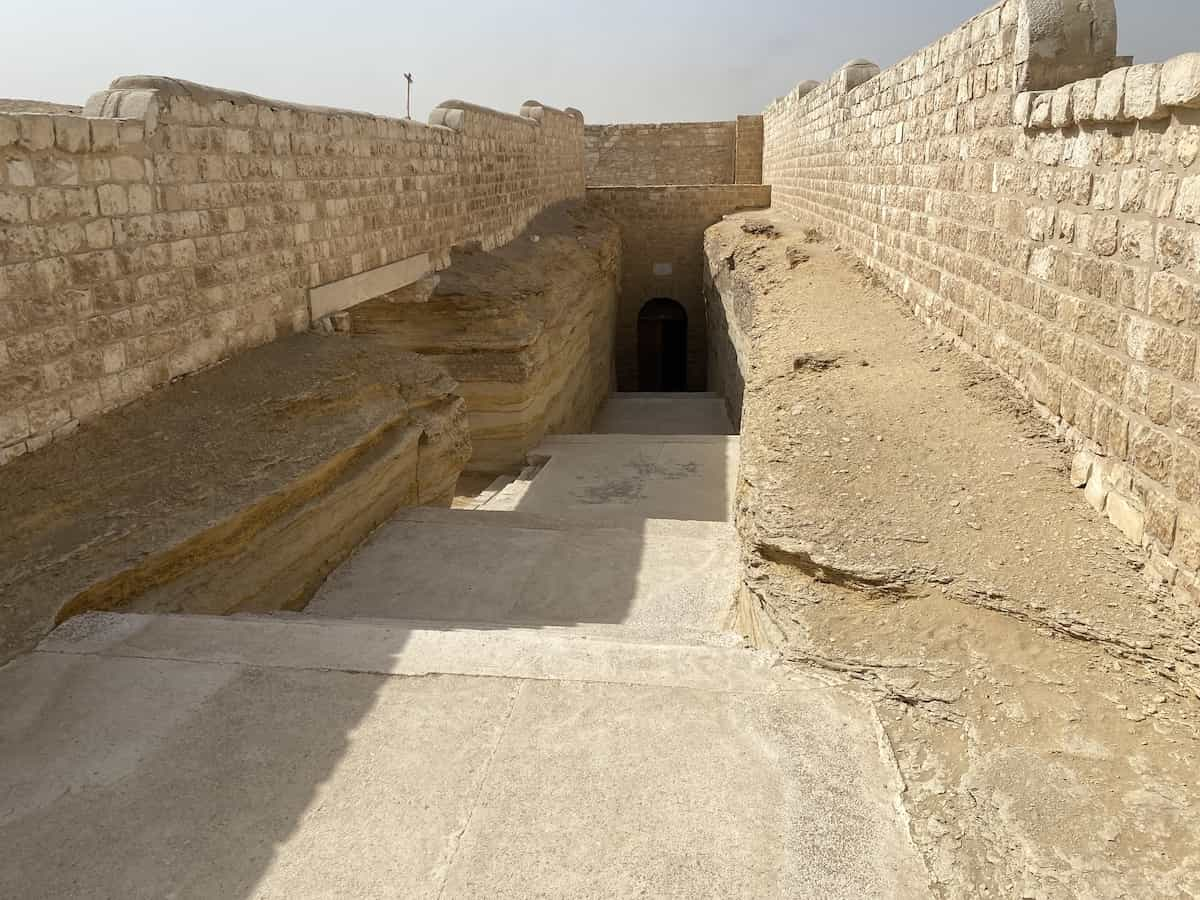
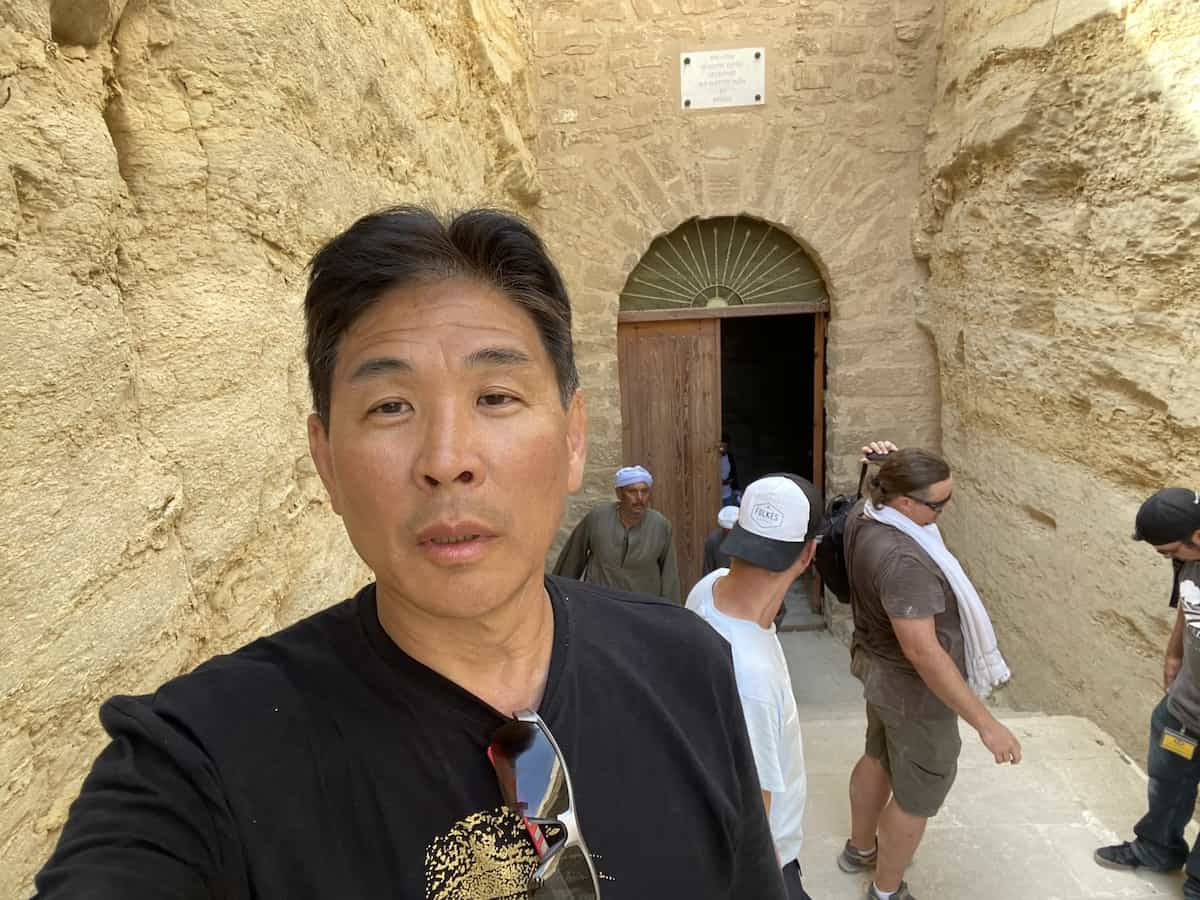
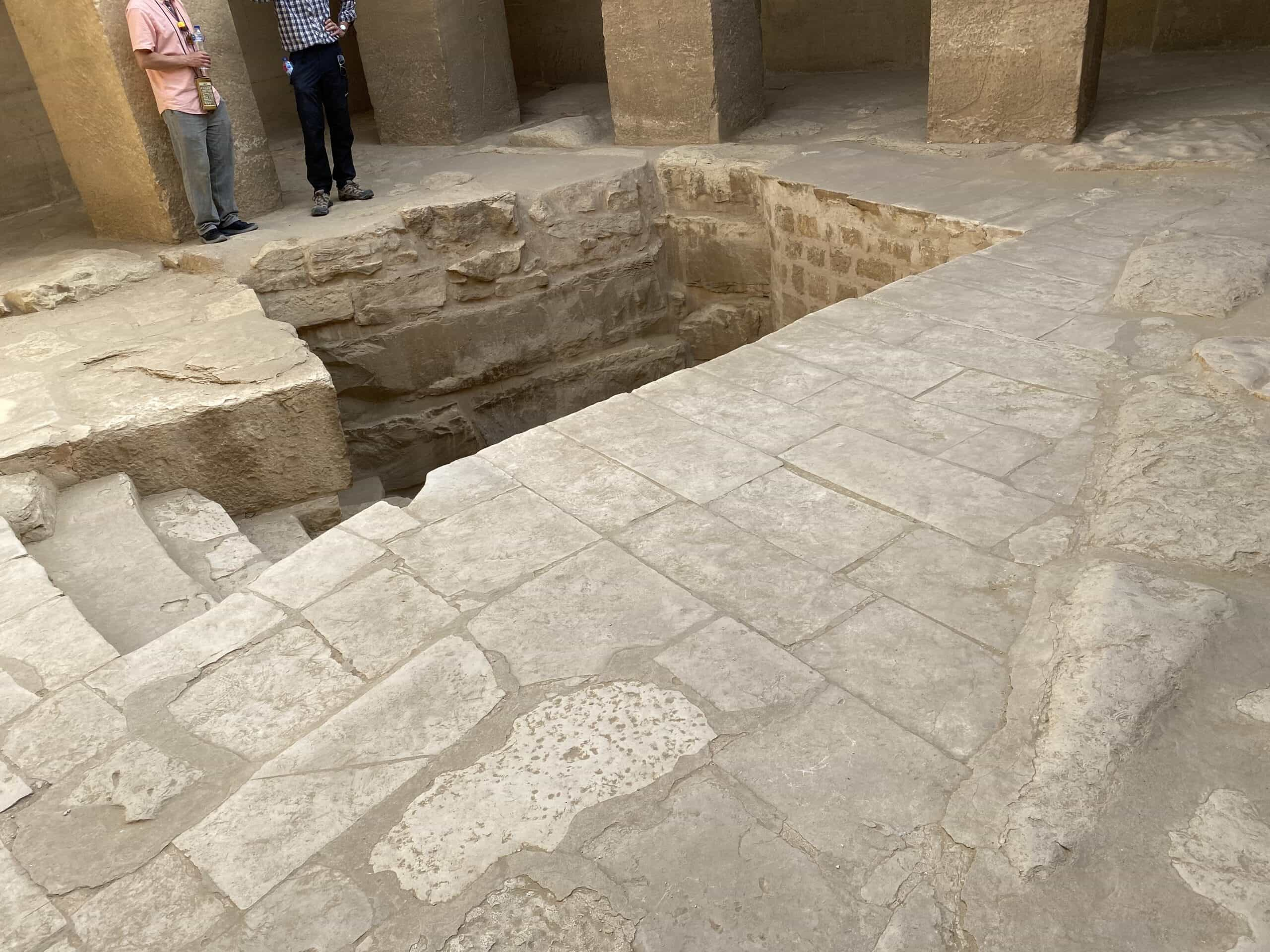
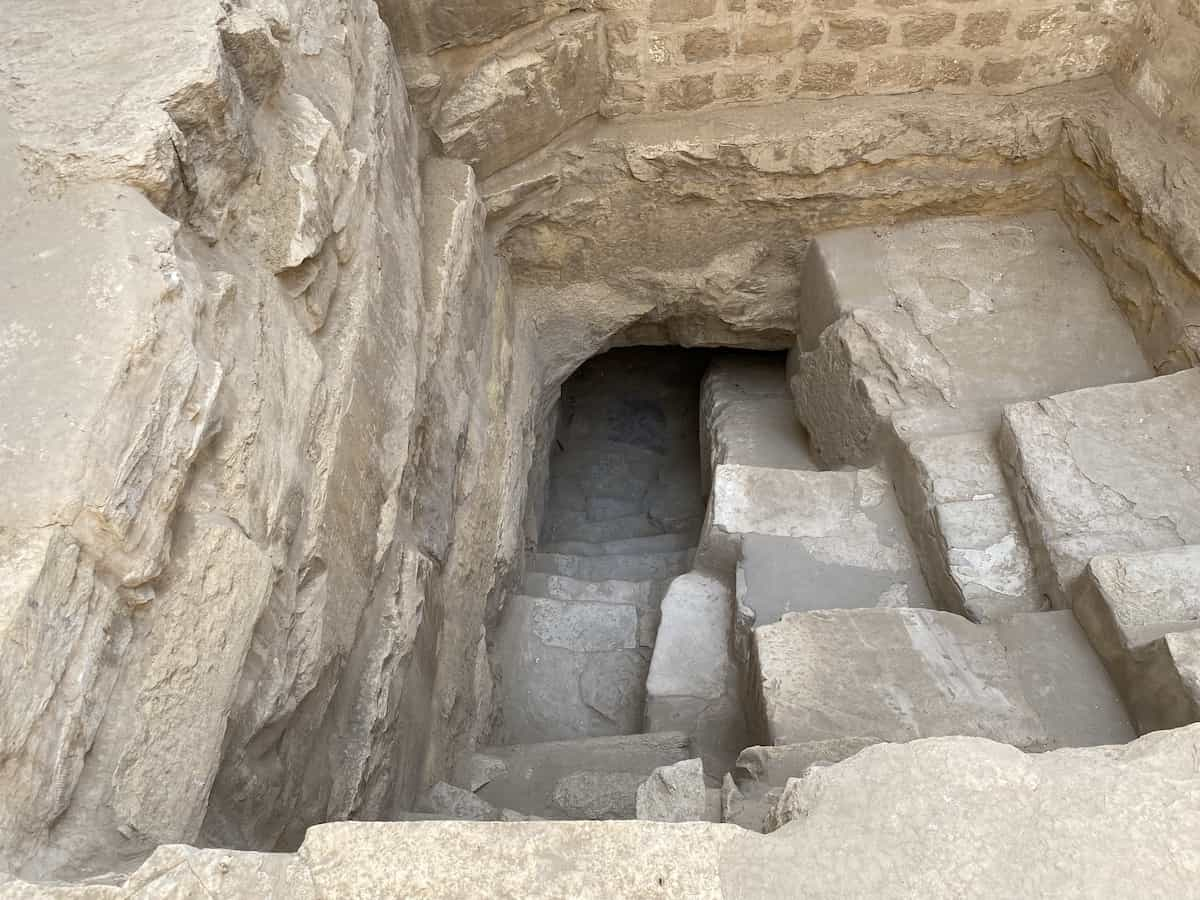
The Serapeum at Saqqara is reached through a simple entrance cut into the desert plateau. From the surface, a stairway leads down into the underground tunnels where the massive granite boxes are located. From here the passage continues into the long corridor system carved beneath the Saqqara necropolis.
Who Built The Serapeum at Saqqara
Egyptologists generally link the Serapeum tunnels to the New Kingdom, particularly the reign of Pharaoh Ramesses II in the 13th century BC. During this period the site was used as a burial place for the sacred Apis bulls, animals believed to be living manifestations of the god Ptah.
Over time the underground complex was expanded as more bulls were buried there. Additional chambers were cut into the limestone and new stone boxes were installed. Inscriptions found on some of the boxes are used to connect parts of the site to specific periods of Egyptian history.
How Were The Granite Boxes Made
Most of the Serapeum boxes were carved from granite, one of the hardest stones used in ancient Egypt. Each box started as a large block that had to be shaped on the outside and then hollowed out to form the interior chamber.
Working granite is difficult even with modern tools, so producing boxes this size would have taken significant time and effort. The builders would have needed to shape the exterior, carve out the interior cavity, and fit a massive lid on top, all while keeping the stone from cracking during the process.
A Closer Look at the Granite Boxes Inside The Serapeum
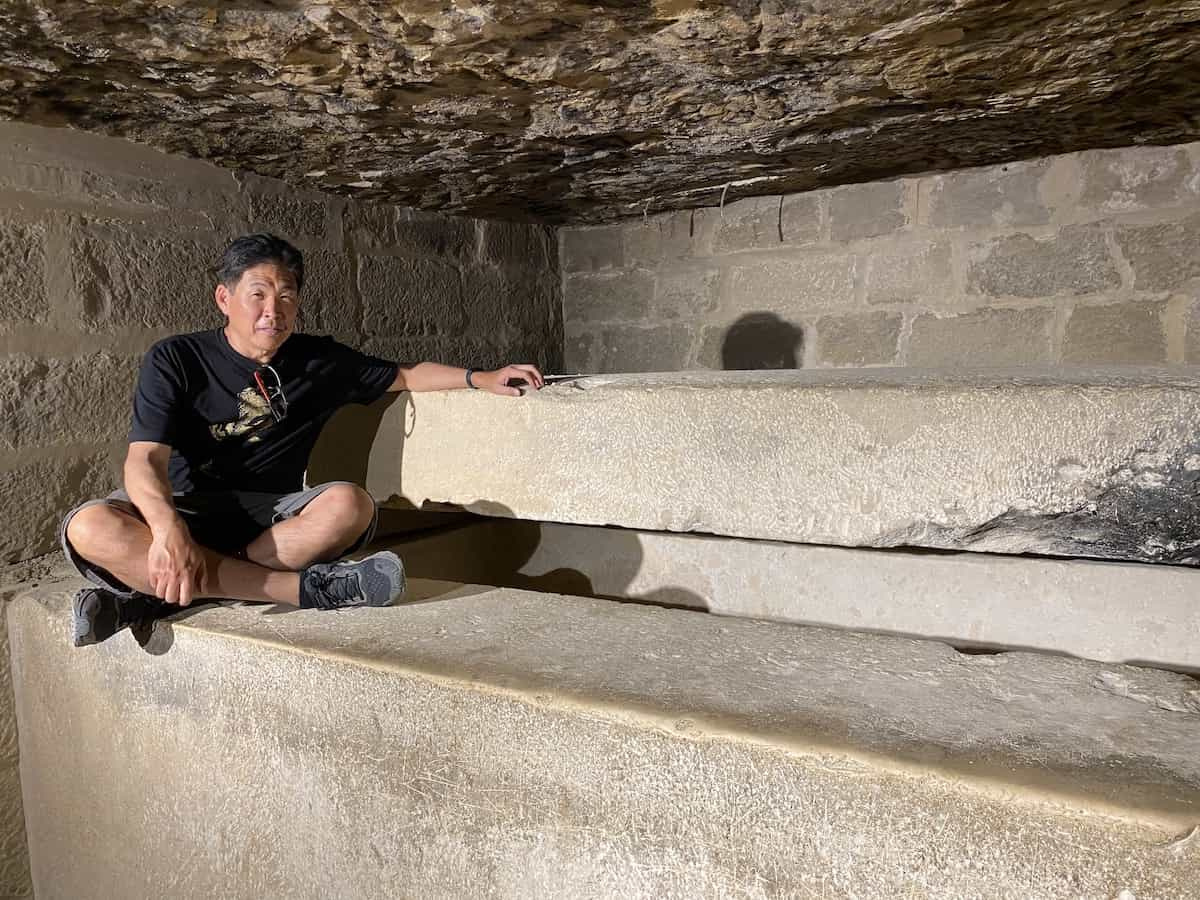
The main feature of the Serapeum tunnels is the series of enormous stone boxes placed inside alcoves along the corridor walls. Most are carved from granite and sealed with massive lids that together can weigh close to 100 tons. Walking through the tunnels and seeing these boxes up close gives a better sense of their scale and the challenge of carving and positioning stones this large inside a narrow underground passage. Let’s have a look:
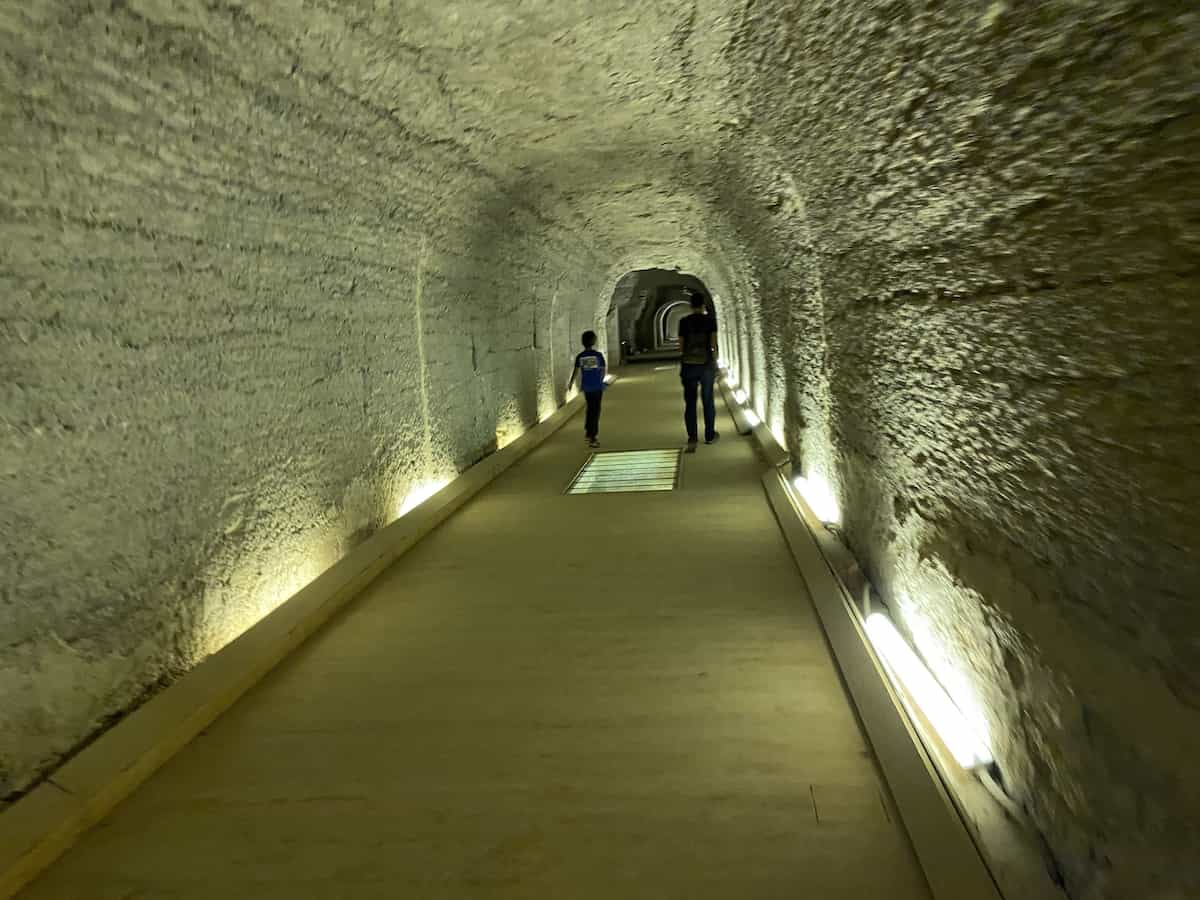
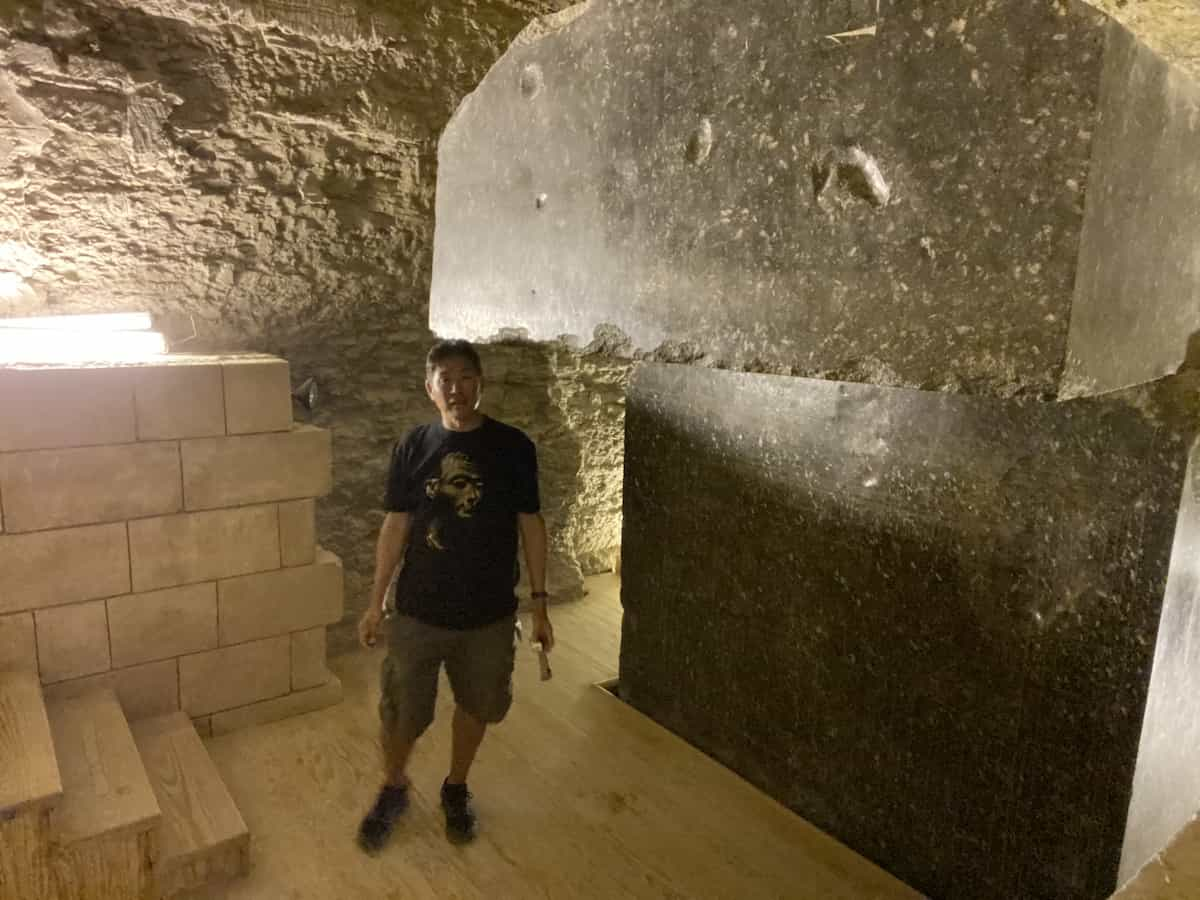

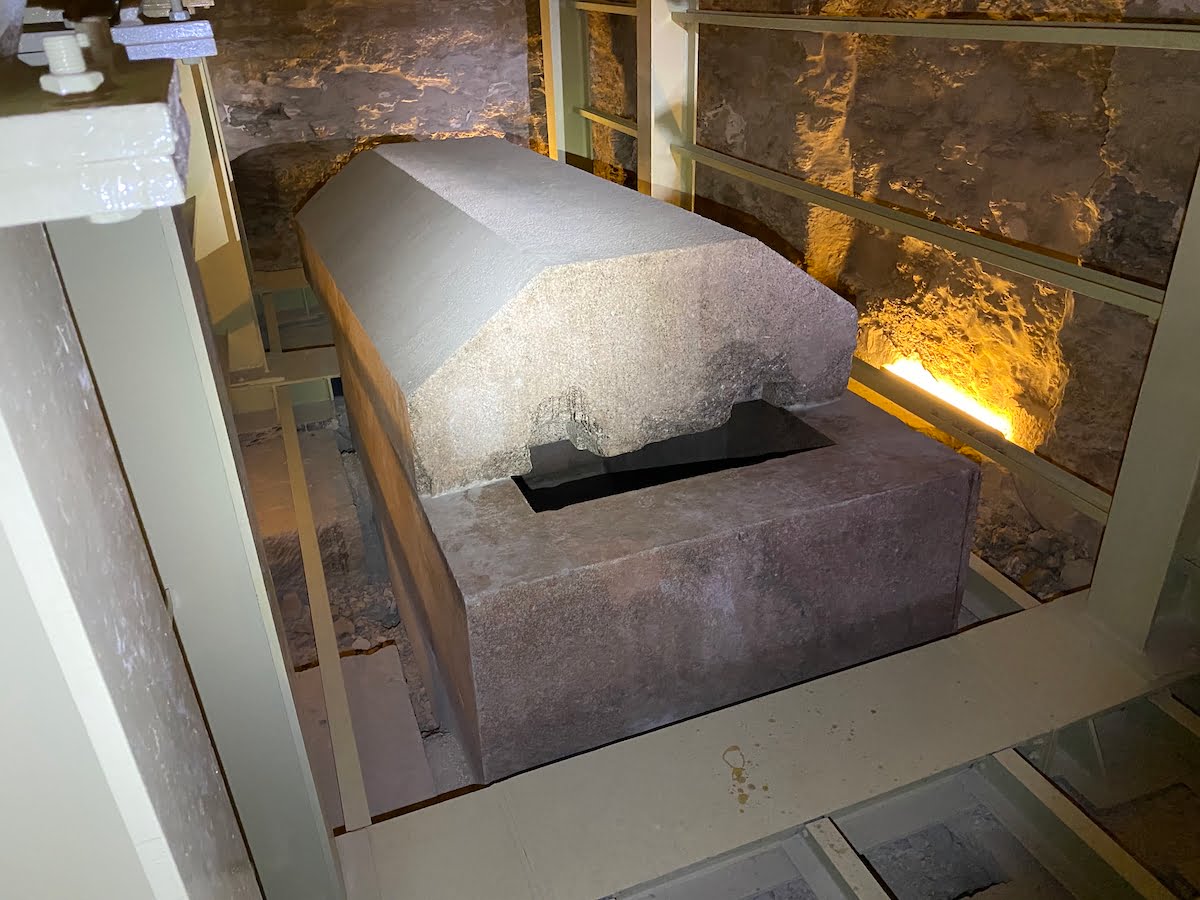

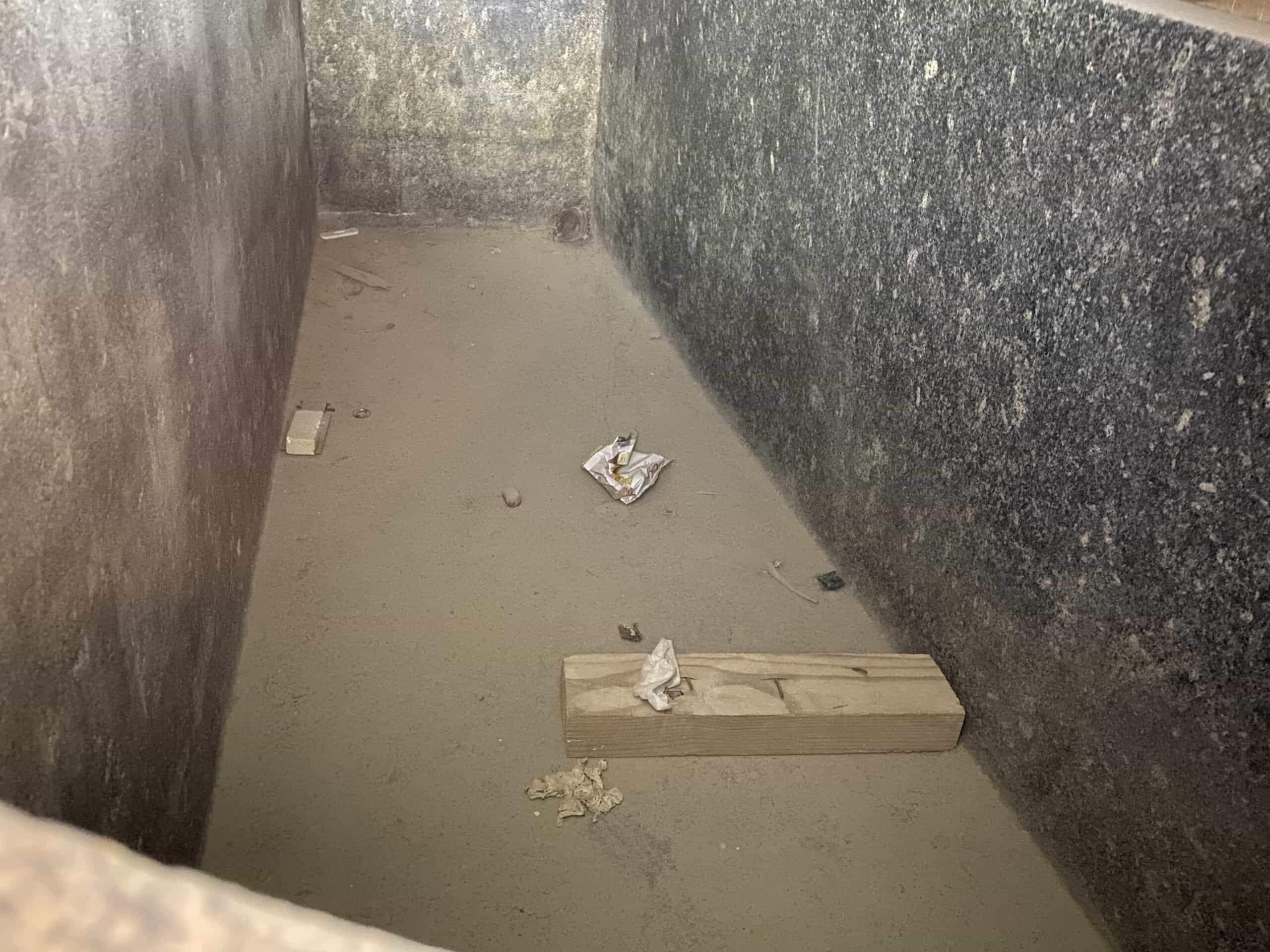
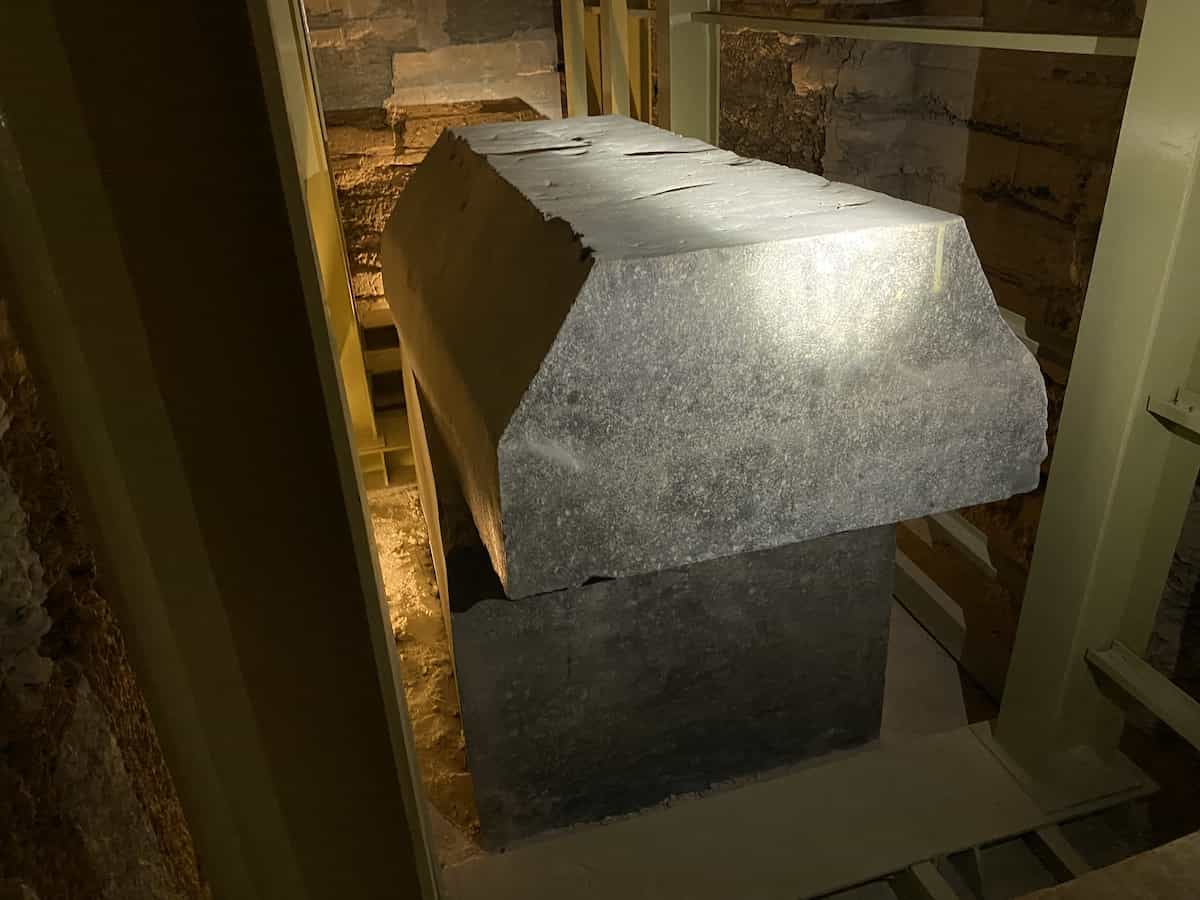
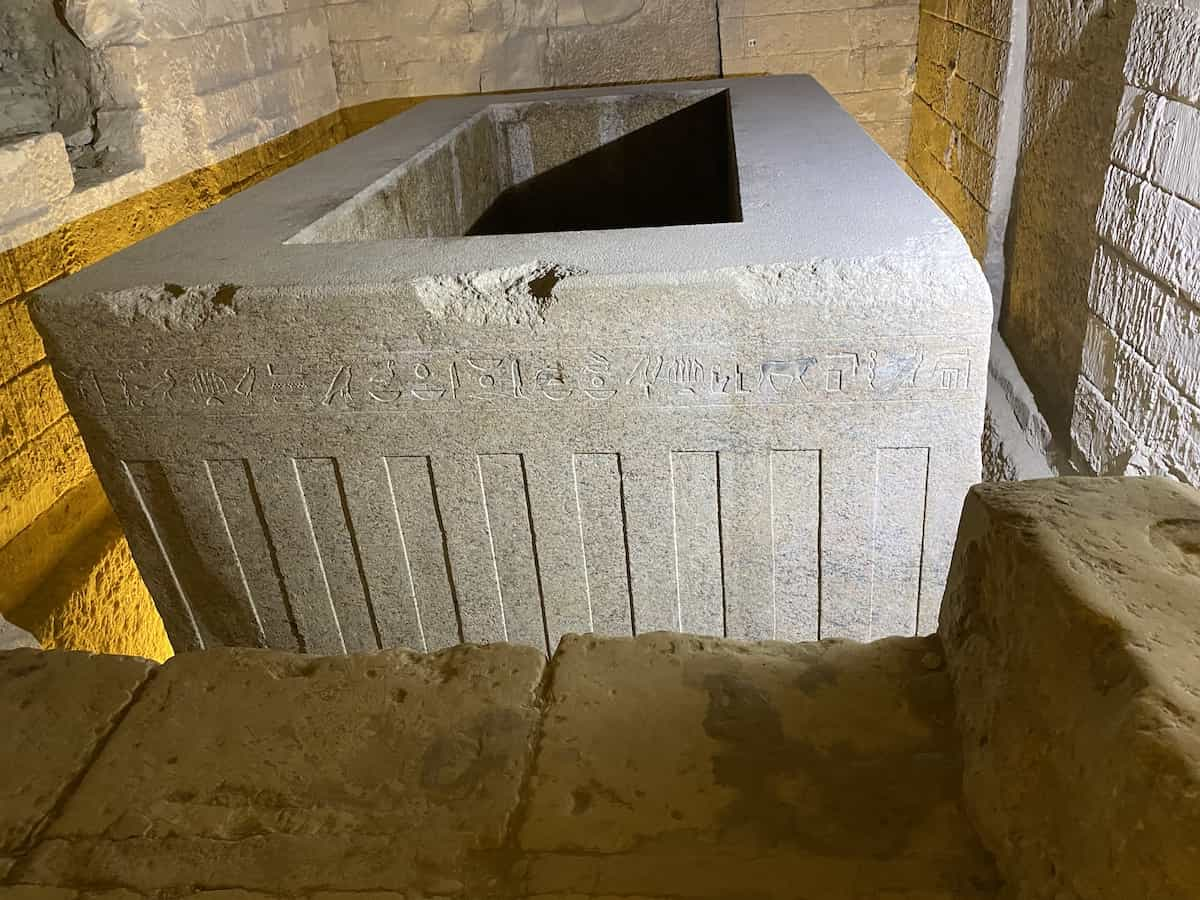
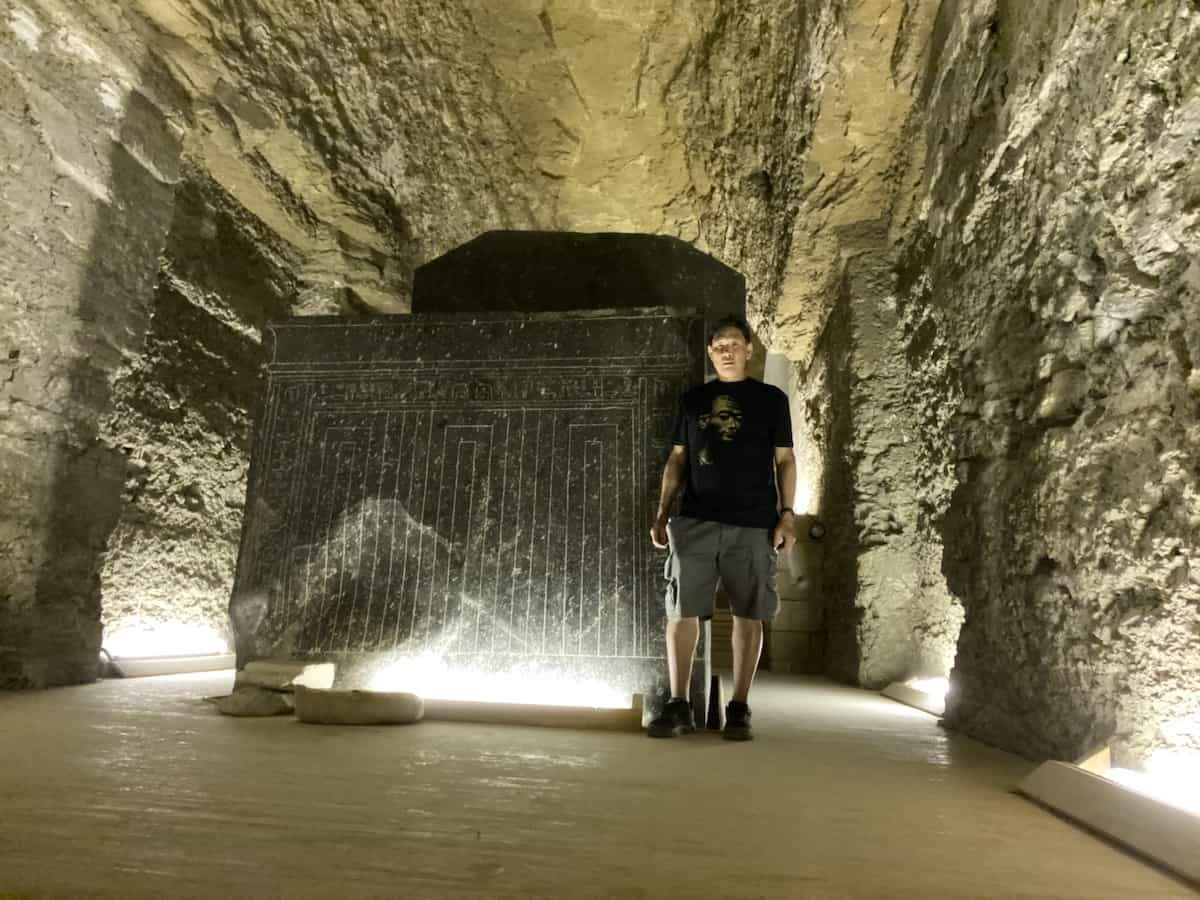
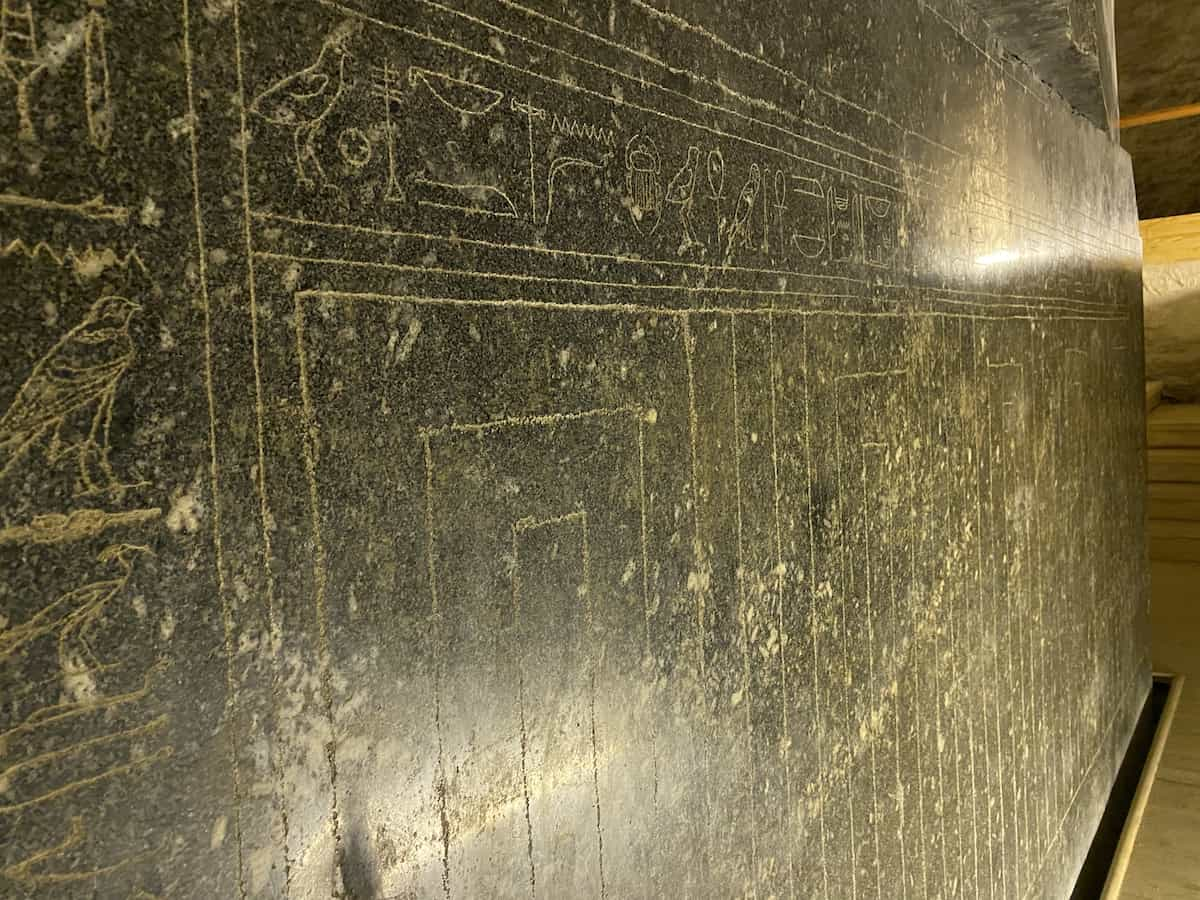
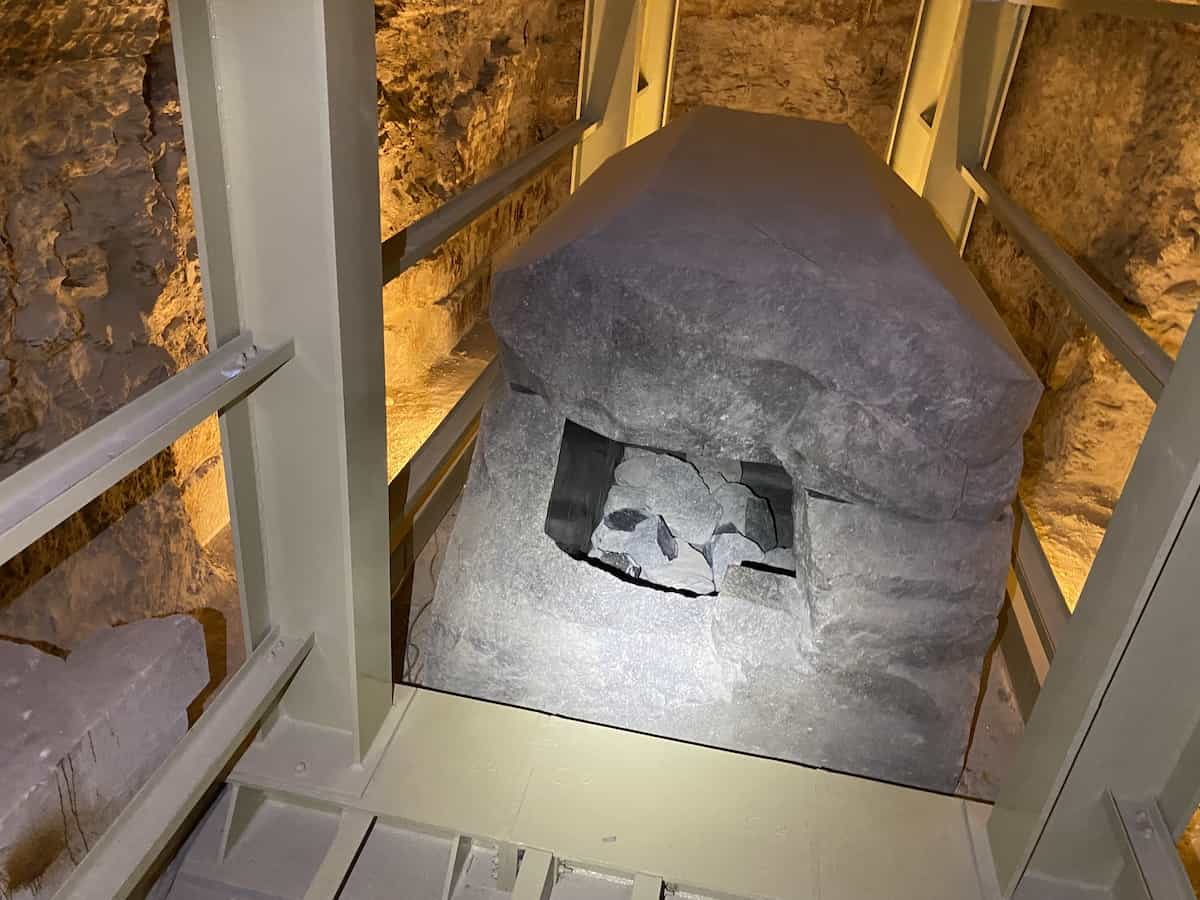
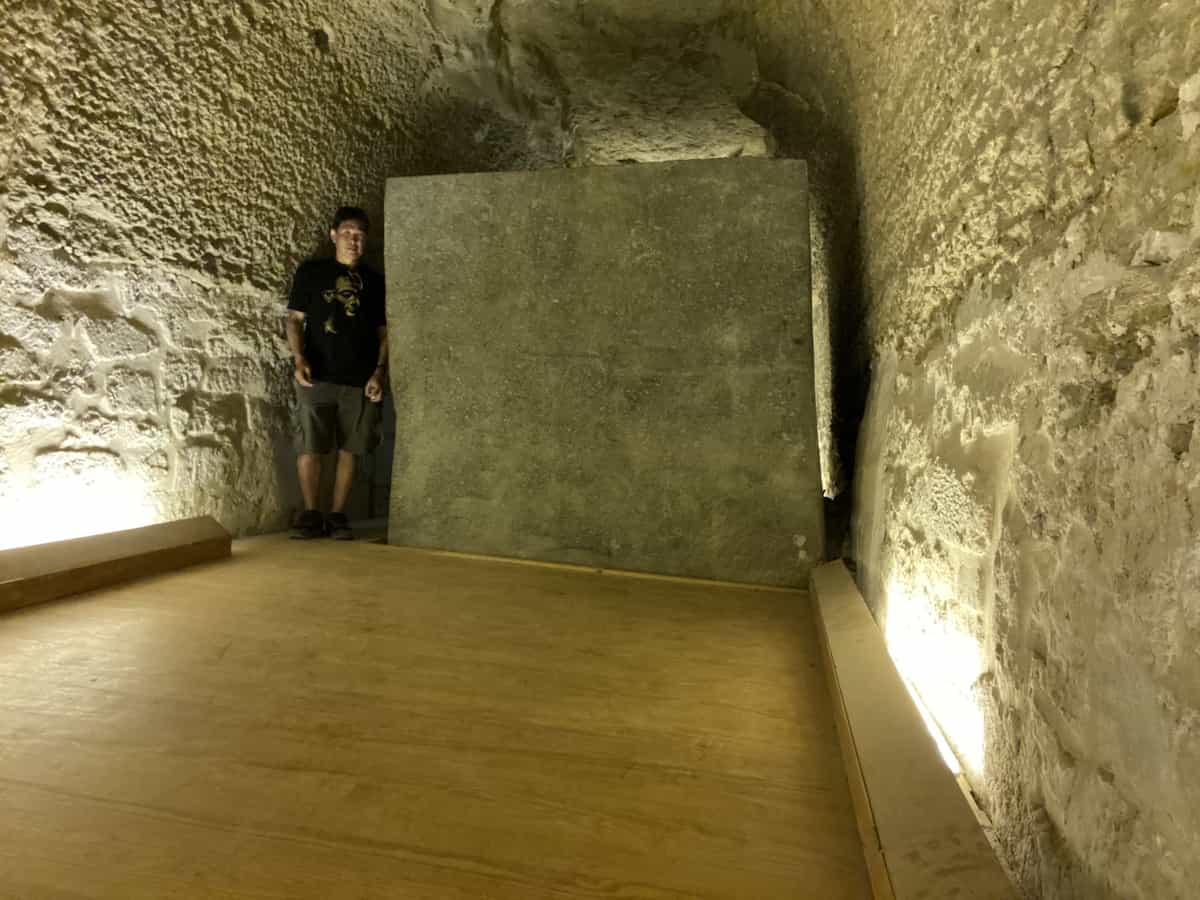

After walking through the Serapeum tunnels and seeing the granite boxes up close, the main takeaway is their scale. These boxes are enormous. Interestingly, the boxes are made from different stones including granite, diorite, and limestone, and they vary slightly in shape and size. It’s hard to imagine how workers were able to move stones this large through the narrow tunnels and position them inside the tight alcoves carved into the walls.
TIP: When you visit the Serapeum, go straight to the end of the tunnel to the alcove with steps to the box that is accessible for close inspection. You should have some time there by yourself while everyone else is busy looking at the earlier boxes which are all roped off to discourage touching.
How Were The Boxes Moved Underground
Moving the Serapeum boxes into the tunnels would have been a major engineering task. Many of the boxes weigh roughly 70 to 100 tons including the lids, yet they were placed inside narrow corridors cut deep into the limestone bedrock.
To reach the chambers, the stones would first have been transported across the Saqqara plateau and then lowered into the underground passages. Once inside the tunnels, workers still had to maneuver these enormous boxes down the corridor and position them precisely in the alcoves carved into the walls.
Some researchers suggest that ropes were redirected around fixed anchor points in the tunnel so workers could stand behind the box and pull it forward. The alcoves were temporarily filled with sand, the box placed on top, and the sand gradually removed until the box slowly settled into its final position.
How Old Are The Serapeum Boxes?
Most Egyptologists date the Serapeum to the New Kingdom, with major construction linked to the reign of Ramesses II in the 13th century BC. This dating is based mainly on inscriptions found on some of the boxes and within the tunnels that refer to burials of the sacred Apis bulls.
What visitors often notice, however, is the contrast between the boxes and the markings on them. The granite interiors appear very flat and precisely cut, while some of the inscriptions scratched onto the outside surfaces look comparatively rough. This has led some researchers to suggest the inscriptions may have been added later, raising the question of whether the boxes themselves could be older.

How I Was Struck Down by the Curse of the Serapeum
There’s a security guard in the Serapeum who usually hangs out near the end of the tunnel by the box that is officially open to visitors. In the alcove across from it is a roped-off staircase leading down to another box. If you tip, you’re invited down to take a closer look. The other alcoves have a simple low rope suggesting visitors should stay out.
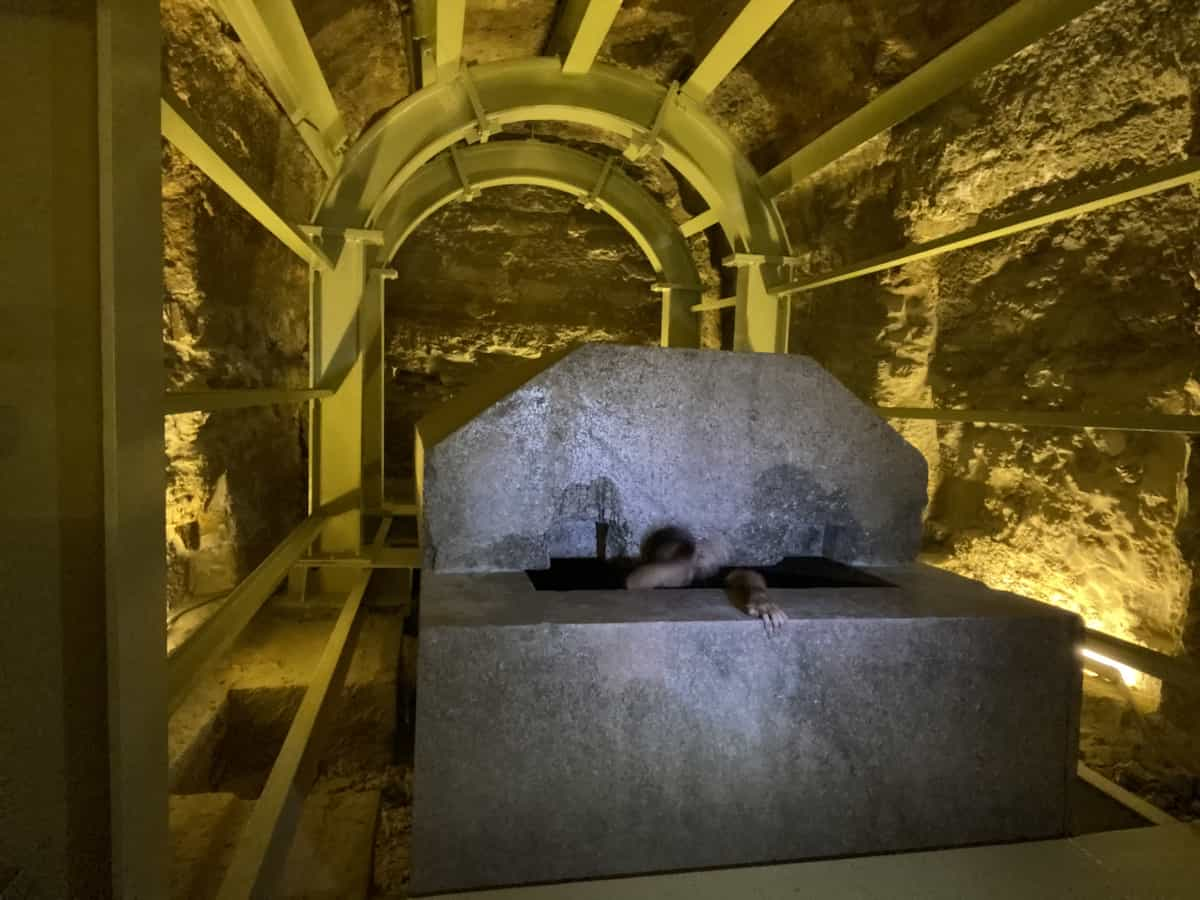
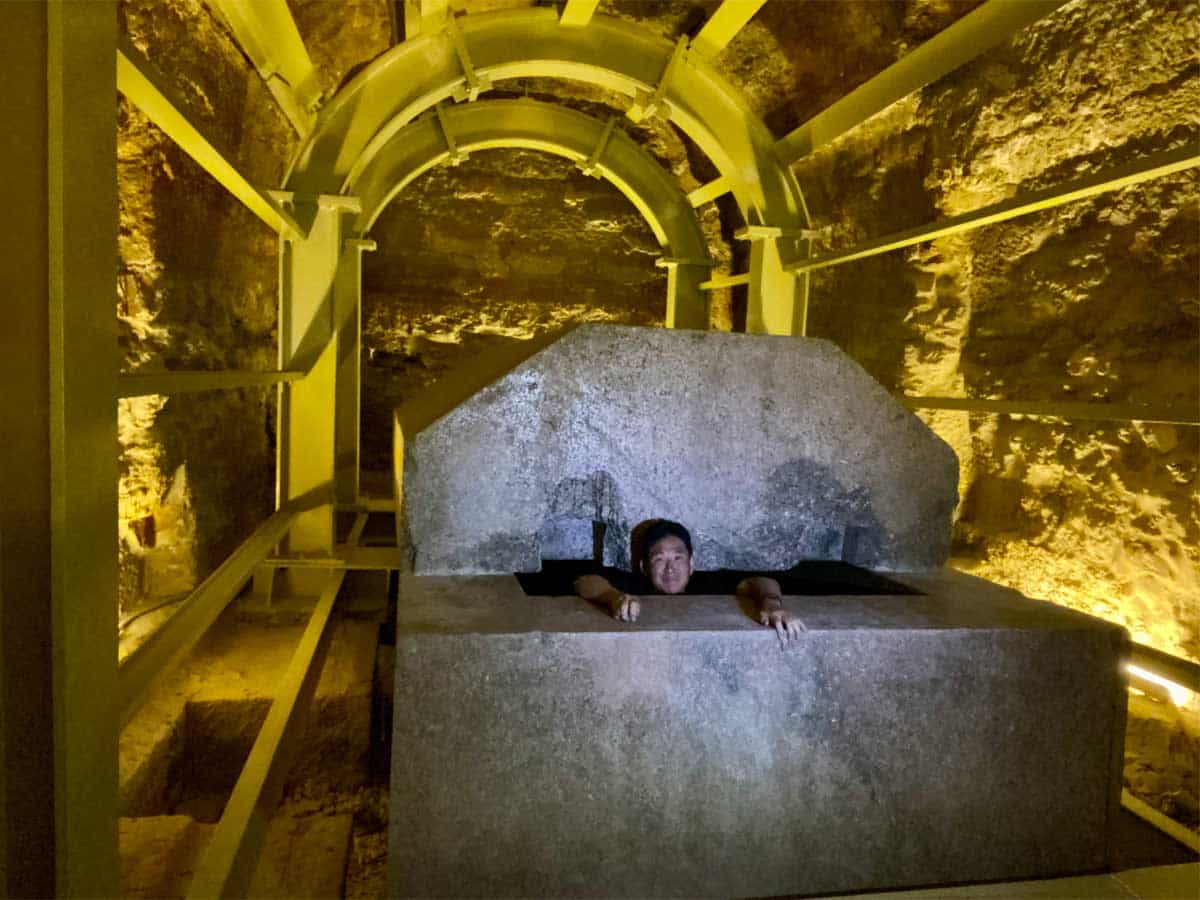
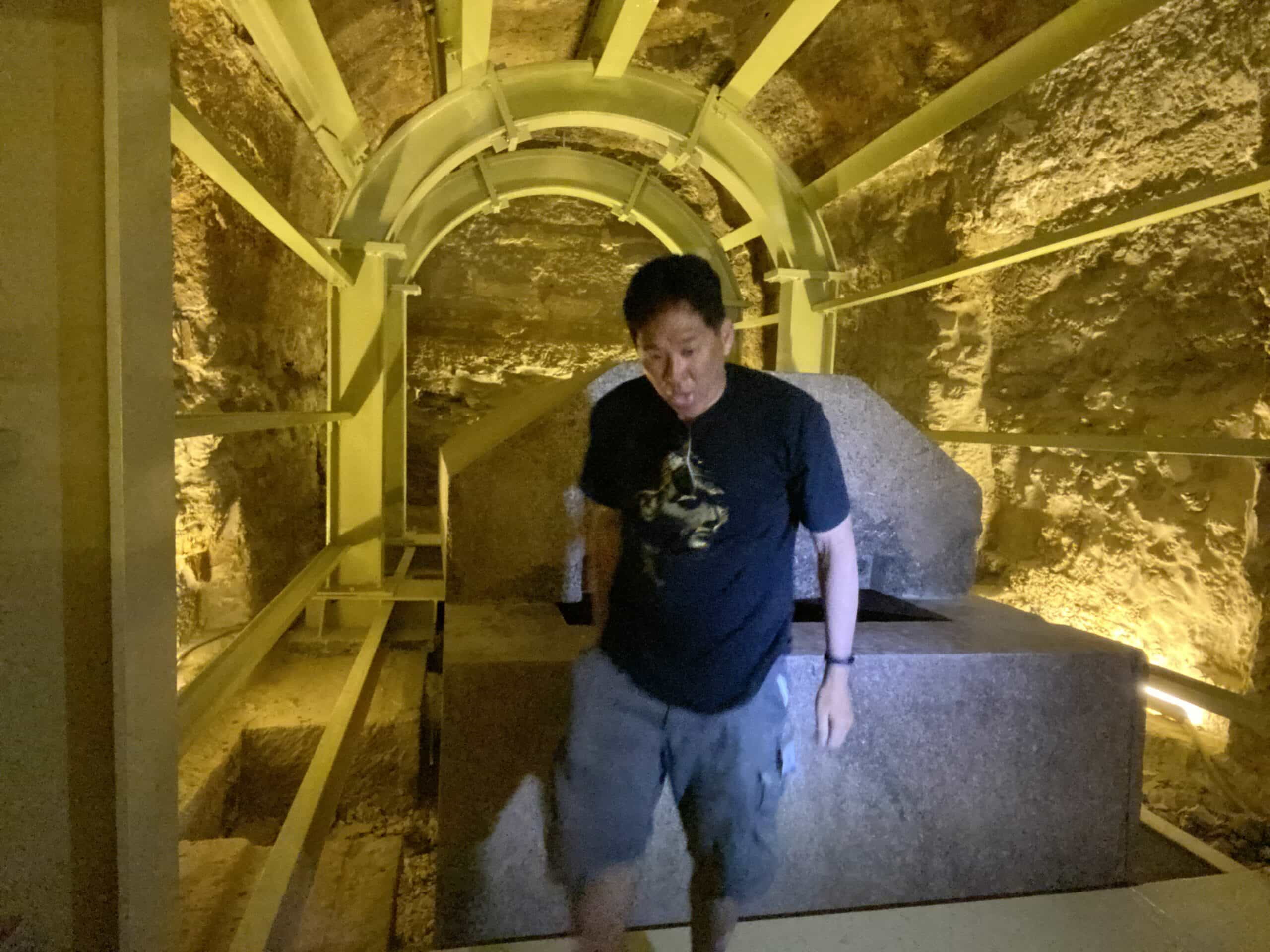
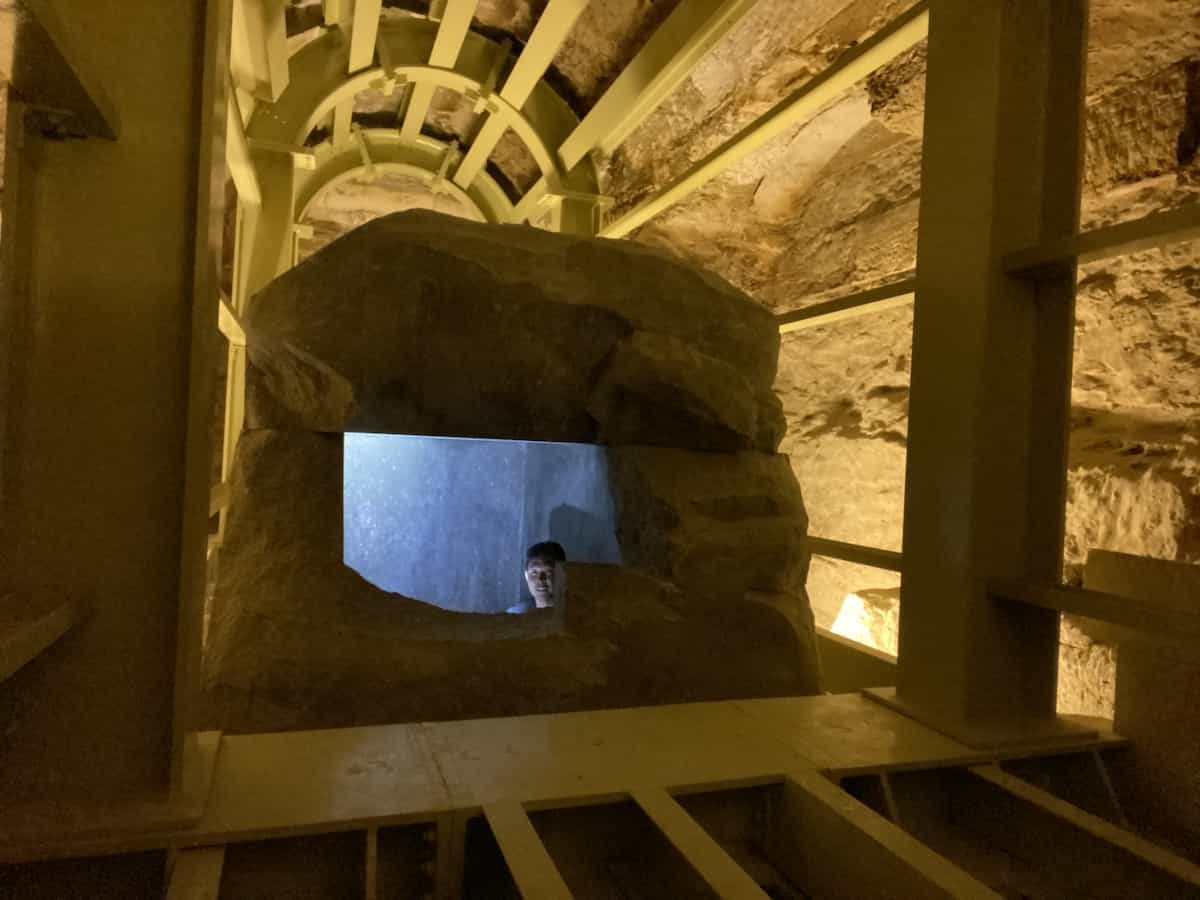
While the guards are busy collecting tips, it’s tempting to wander over and inspect some of the other boxes on your own. In the middle of trying to take a selfie inside one of them, disaster struck and I managed to fall in. After climbing out and regaining a little dignity, I tried again at a different box and finally got the shot.
UPDATE: My injured shoulder and limited range of motion was a nagging injury for a year before I tried PlatinumLED Red Light Therapy from which fixed it 100%.

Tomb of Ty at Saqqara
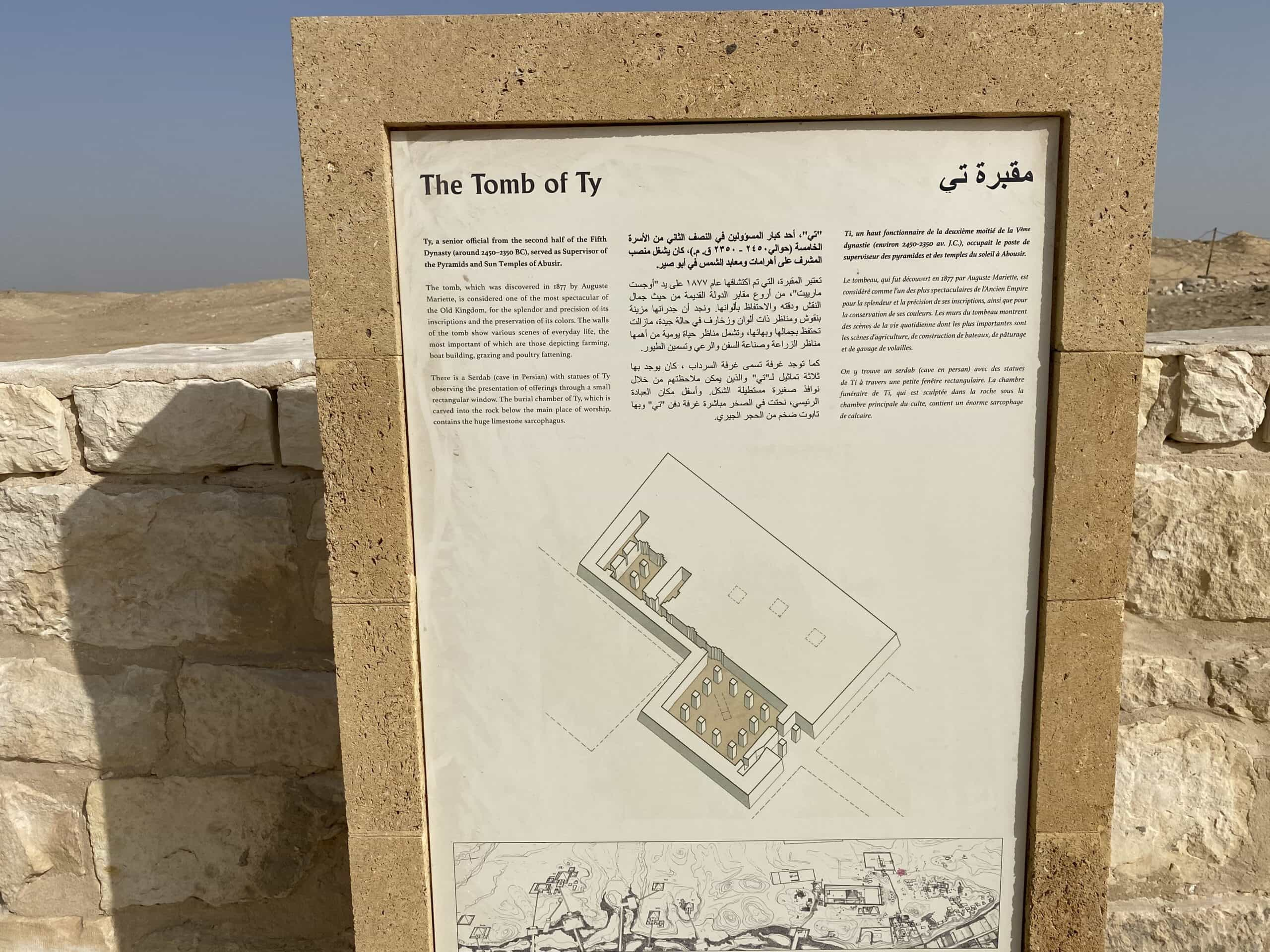
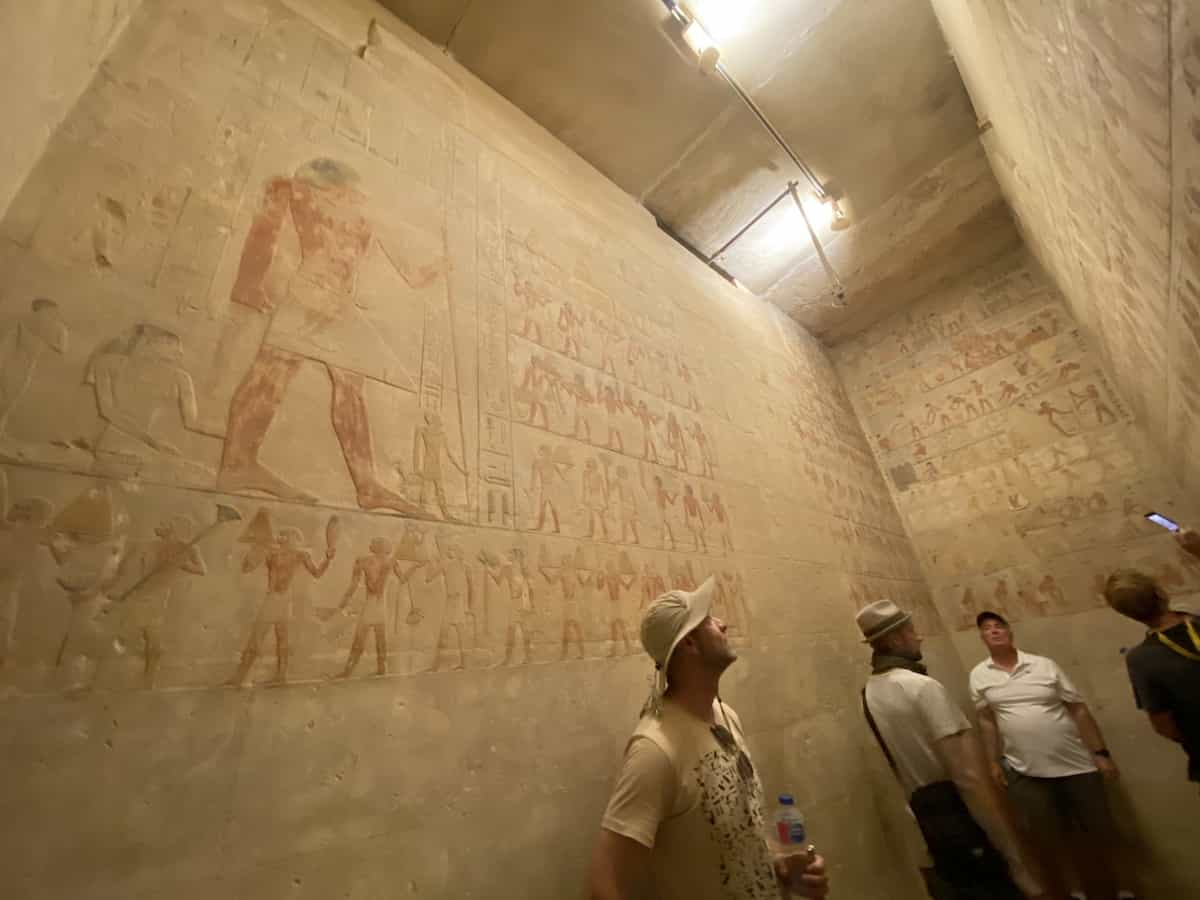
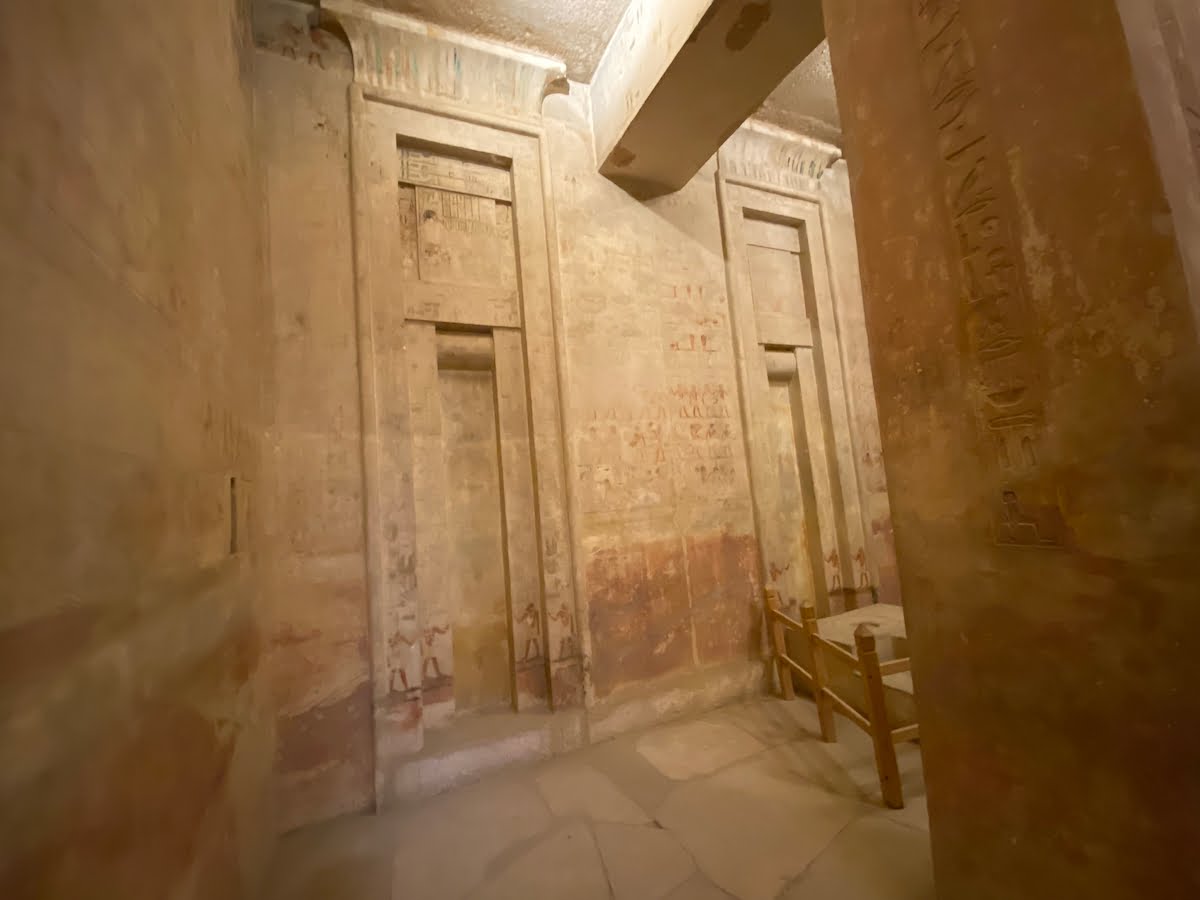
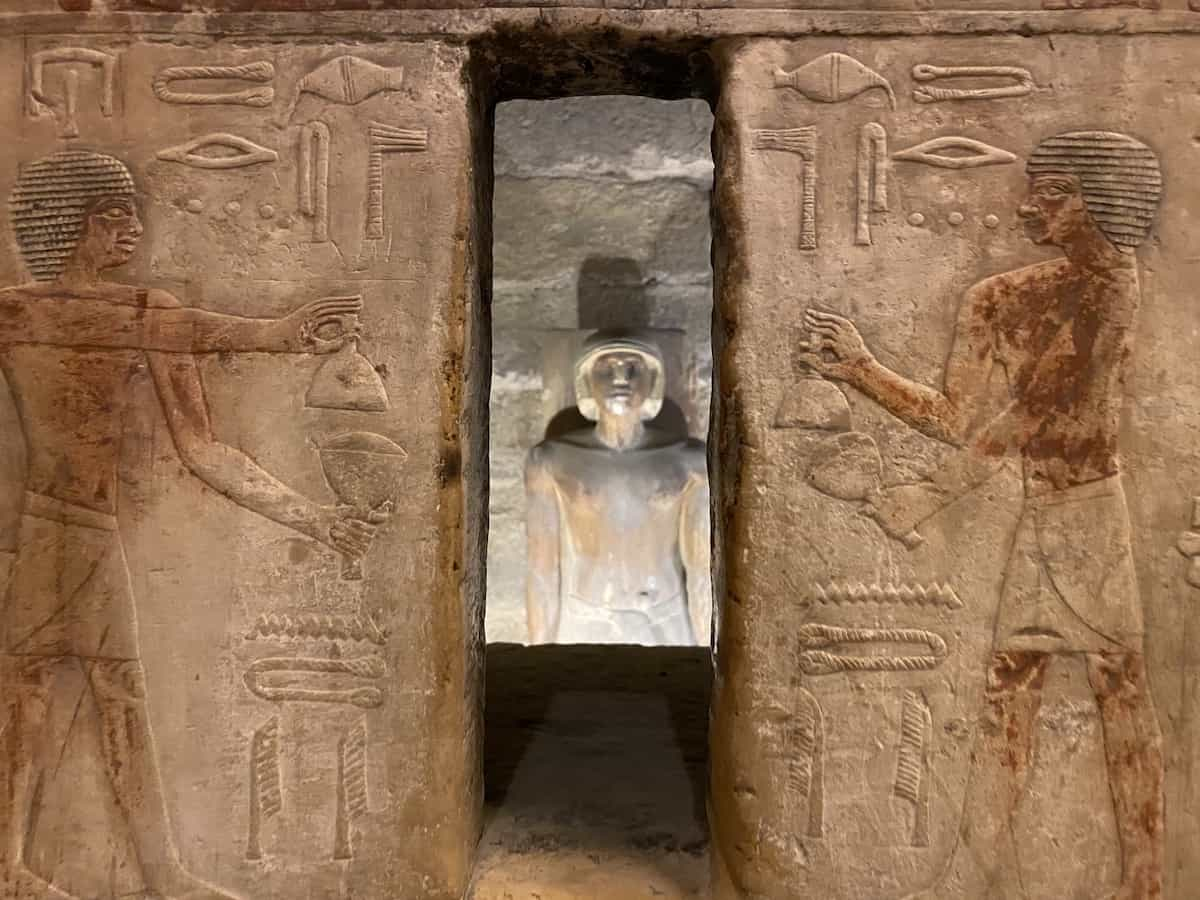
Located nearby the Serapeum, The Tomb of Ty at Saqqara dates back to the 5th dynasty. Ty was a court official who held such titles as “Overseer of the Building Sites” and “Priest of the Pyramids of Kng Neferirkare and Niuserre”. There are some details reliefs depicting fishing, farming, hunting, and crafts.
The walls show scenes of everyday life in ancient Egypt, including farming, fishing, cattle herding, and boat building. While the Serapeum is known for massive granite engineering underground, the Tomb of Ty provides a completely different perspective on Egyptian history through the daily activities of people living more than four thousand years ago.
What is Special About Saqqara?
The massive granite boxes of the Serapeum are one of the most unusual sights at Saqqara, but they are only part of what makes the site so fascinating. Just a short distance away are the Old Kingdom tombs, including the Tomb of Ty, where carved wall reliefs show scenes of everyday life more than four thousand years ago.
Above ground stands the Step Pyramid of Djoser, one of the oldest large stone monuments in the world. Beneath the pyramid, archaeologists discovered thousands of finely crafted stone jars and bowls, some estimated at around 40,000 pieces, carefully stored in underground galleries. These objects are associated with the earliest generations of dynastic Egypt.
If you thought the scoop marks on the Serapeum box lids were unusual, check out the Unfinished Obelisk scoop marks in the Aswan quarry.
Serapeum Granite Boxes Video Series
This UnchartedX video series is what first got me curious about the Serapeum and made it a highlight of the trip. This video is the first episode and introduces the tunnels, the massive granite boxes, and the questions surrounding their construction. It’s part one of a five-part series exploring the layout of the site, the different box types, and the precision of the interior stonework.
What do you think about these massive boxes in the Serapeum? Who built them? Let us know in the comments.
Part of the Ben UnchartedX Egypt Tour
How disrespectful of you. How would you like it if someone climbed all over your sacred sites? No wonder your people are voted as the worst tourist!
The Serapeum is actually one of the few places where visitors are encouraged to get close to the stonework. One of the boxes is officially open for inspection, and guards will let visitors touch or look into others in exchange for a small tip.
That said, there’s a reason the other boxes are roped off: they’re trying to prevent accidents.