
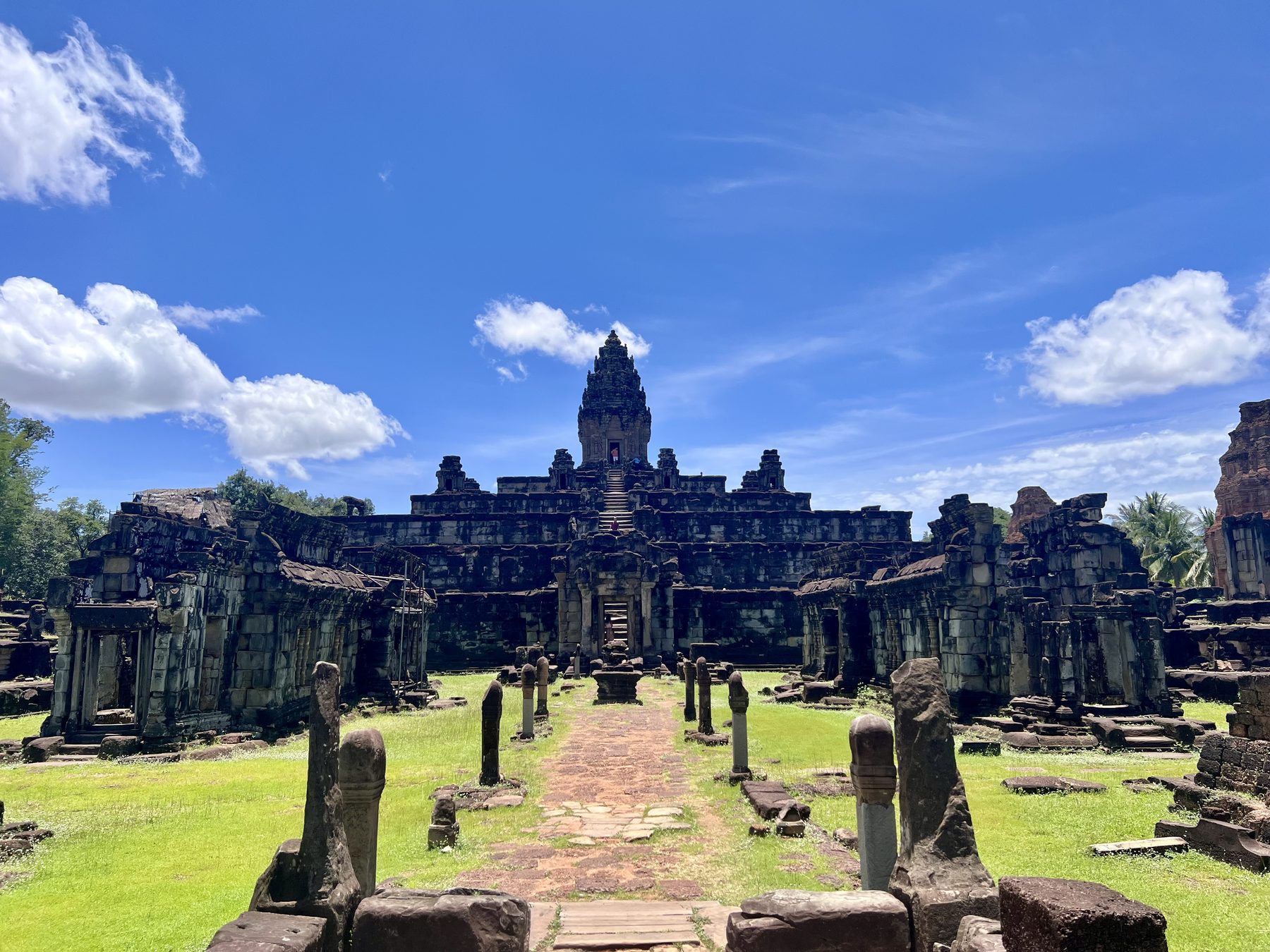
ANGKOR · ROLUOS GROUP, CAMBODIA
Bakong Temple.
Standing in the Zenith Sun.
Twice a year, the midday sun lines up with a small hole at the top of Bakong’s central tower and drops a beam of light straight down into the dark sanctuary. I showed up late the first time. Four months later I went back and stood right in it.
ZENITH SUN · BAKONG TEMPLE
VISITED APRIL + AUGUST 2025 · SIEM REAP
THE SHORT VERSION
What is the zenith sun at Bakong?
The zenith sun is the moment the sun is directly overhead. At Bakong’s latitude, about 13° north, that happens twice a year: around April 25 and August 17, just after 12 noon.
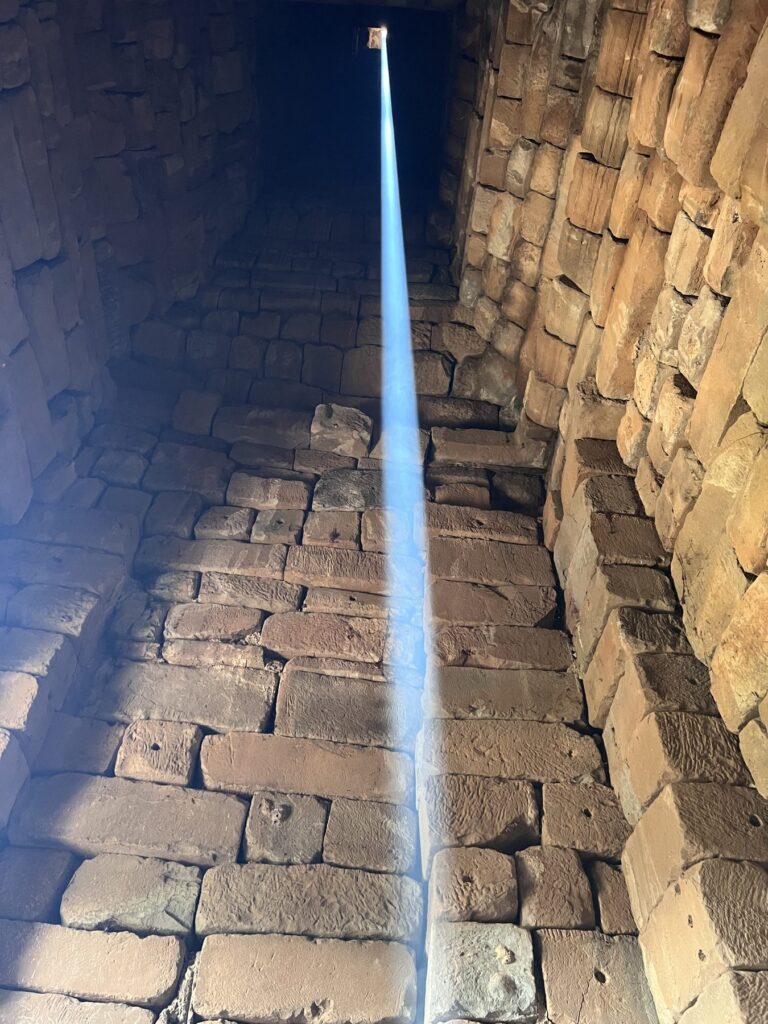
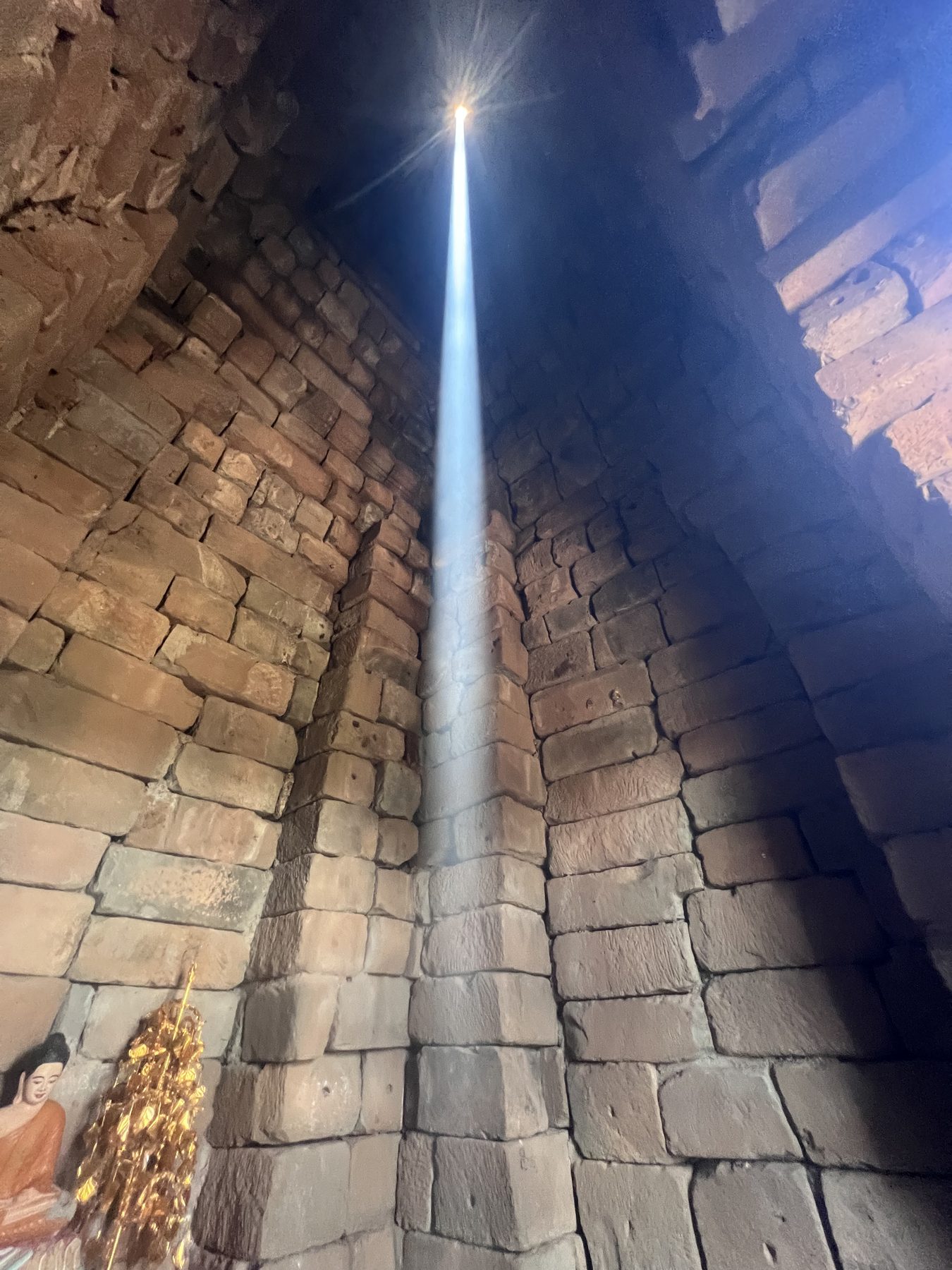
Bakong’s central tower has a small opening at the very top. When the sun is overhead, light drops through it into the dark chamber below. For a few minutes, you get a clean column of sunlight running from the roof to the floor. Not at an angle. Straight down.
Is it worth timing a visit for?
Yes, and the timing is the whole thing. Ten minutes late and the beam is already slanting across the wall. I know, because that’s what happened to me in April. In August I got there early, and standing under the beam with the sun on the top of my head made the second trip worth it.
Bakong is also the oldest of the big Khmer temple mountains, built in the late 9th century, so there’s plenty to see before and after the beam.
Bakong zenith sun details
WHERE
Bakong, in the Roluos Group, about 13 km east of Siem Reap
ZENITH DATES
Around April 25 and August 17 each year
BEAM TIME
About 12:02 PM in April, 12:08 PM in August
ARRIVE BY
11:30 AM, and head straight to the central tower
HOW LONG
5 to 10 minutes of beam, about a minute truly vertical
UPCOMING
Apr 26 2027 · Aug 17 2027 · Apr 25 2028 · Aug 17 2028 · Apr 25 2029 · Aug 17 2029
ENTRY
Included with the Angkor Pass
GUIDES
Kanha Phum, Bon Chem Cambodia Backroads
*Dates and times are calculated for Bakong’s location. The beam is still close to vertical a day or two either side.
Why is there a hole in the roof?
The real-life
Map Room.
Remember the Map Room scene in Raiders of the Lost Ark? The sun shines through a hole in a crystal and lands on the exact spot the builders intended. Bakong is the real version of that.
You watch the light inch toward vertical, and then for one moment the column stands straight. No angle. No error. Just the sun, doing what the stone told it to do more than 1,100 years ago.
TWO VISITS
APRIL + AUGUST 2025 / INDOCHINA TIME
I was late
the first time.
Times are straight off my phone. The difference between them is about ten minutes.
APRIL 25, 2025 / 12:11 PM
Nine minutes late.
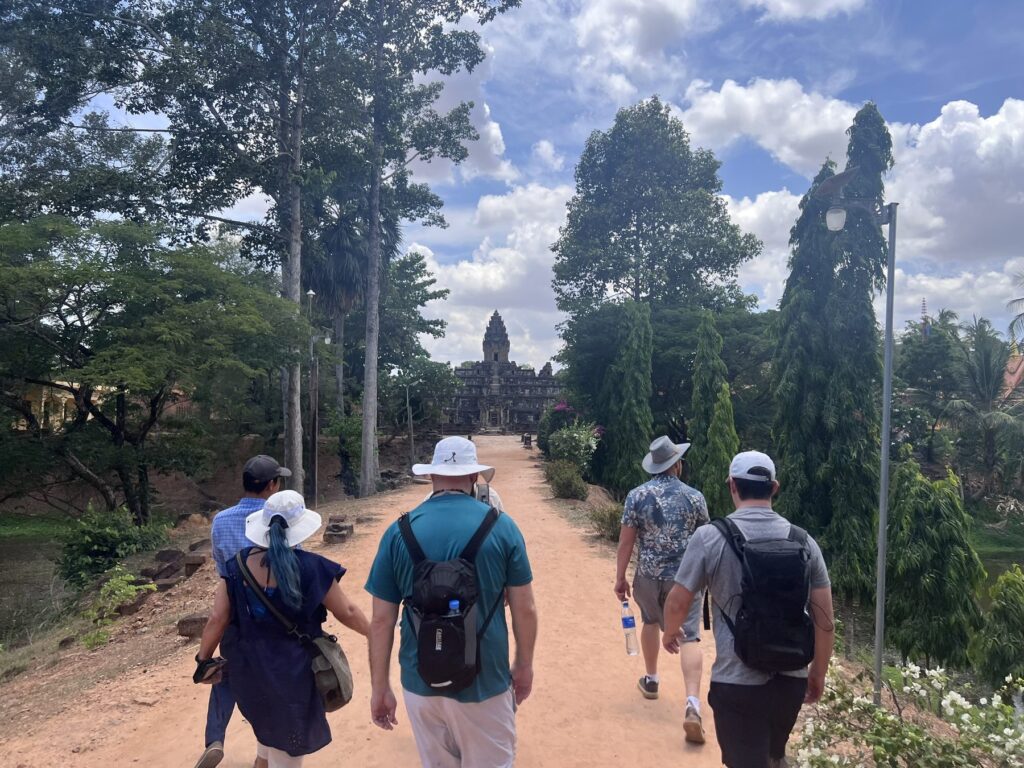
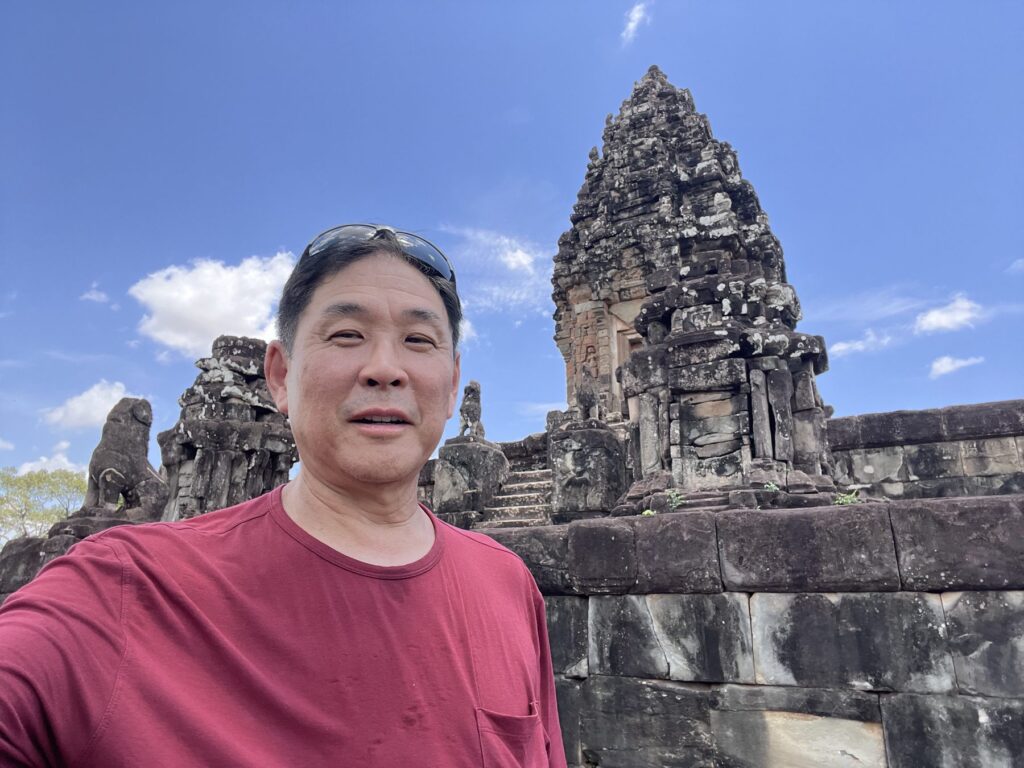
My first visit was on Maya Exploration Center’s zenith sun tour. Our local guide was Kanha Phum, who has guided MEC groups in Angkor going back to Ed Barnhart’s earlier tours, with Kanha’s colleague Bon Chem helping with the group.
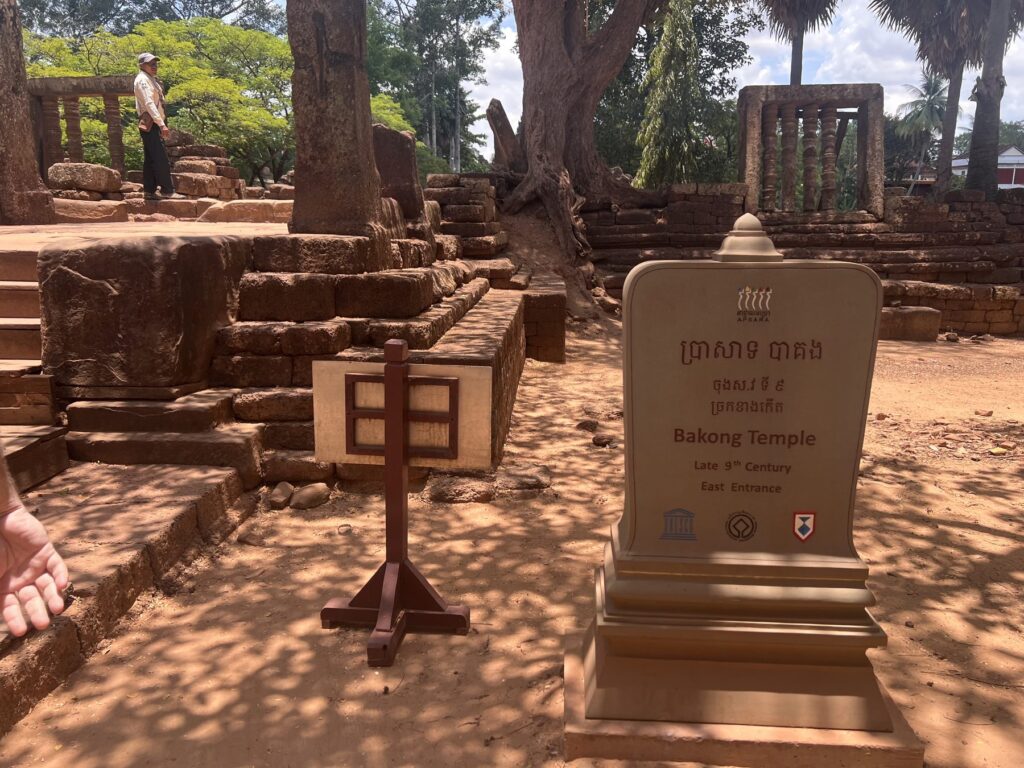
By the time we walked the causeway and reached the Bakong sign it was 12:11. Solar noon that day was 12:02.
SOLAR NOON SHIFTS A FEW MINUTES THROUGH THE YEAR. CHECK IT FOR YOUR DATE.
APRIL 25, 2025 / 12:15 PM
A beam, but at an angle.
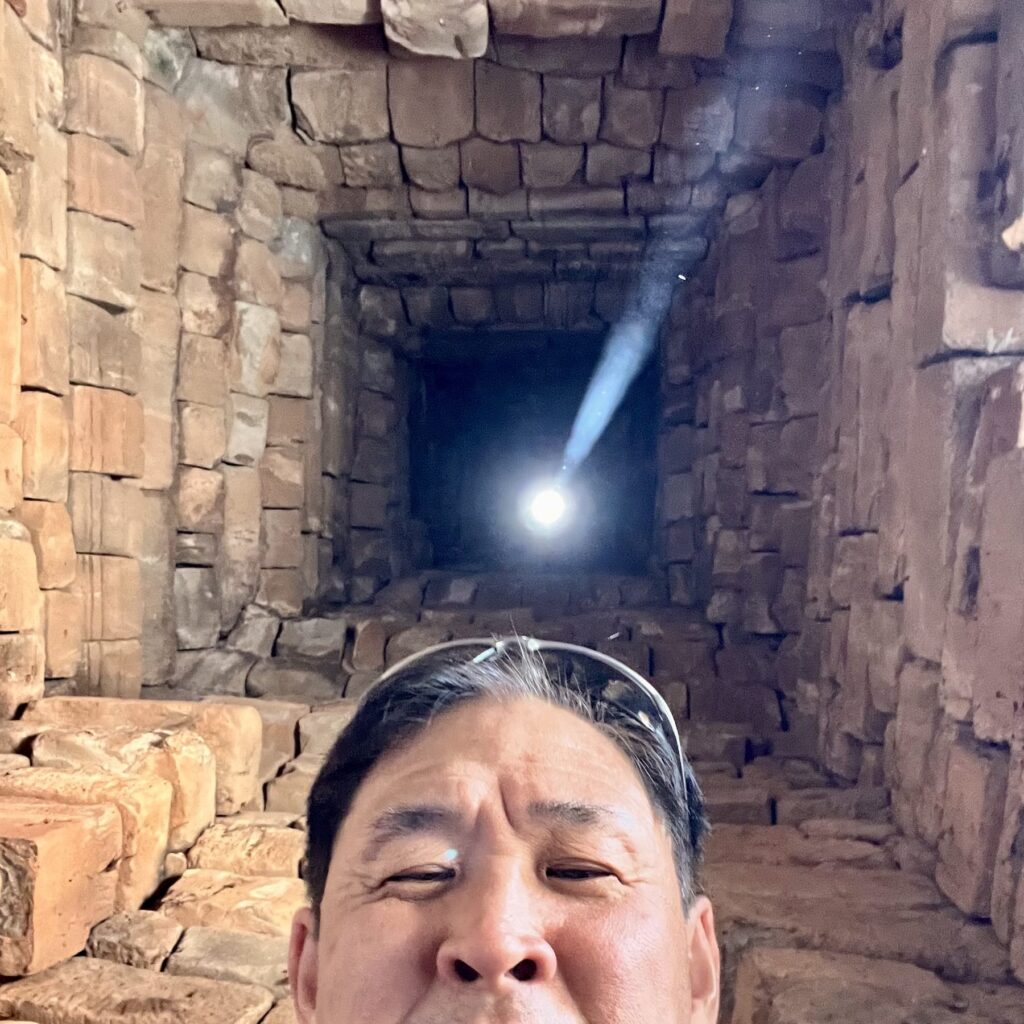
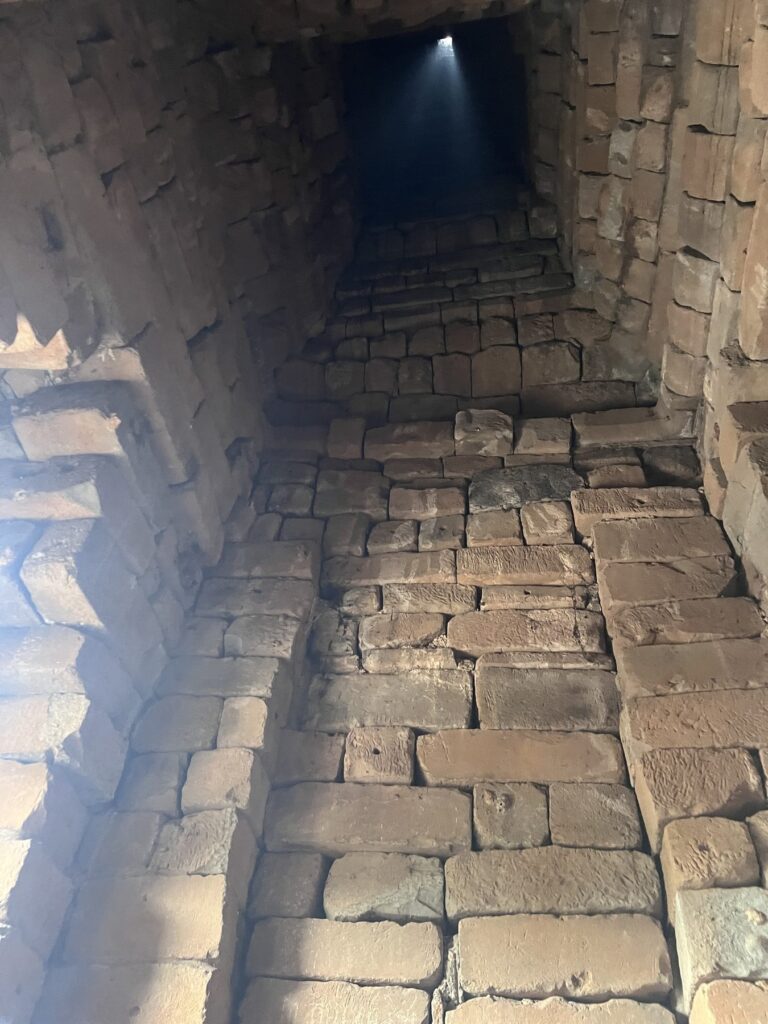
I climbed into the central chamber and there it was: a bright beam coming through the opening at the top. But it was already slanting across the stone wall instead of dropping straight down.
Still pretty cool. Just not what I came for. So I made a mental note to come back.
APRIL 25, 2025 / 12:30 PM
The view from the top.
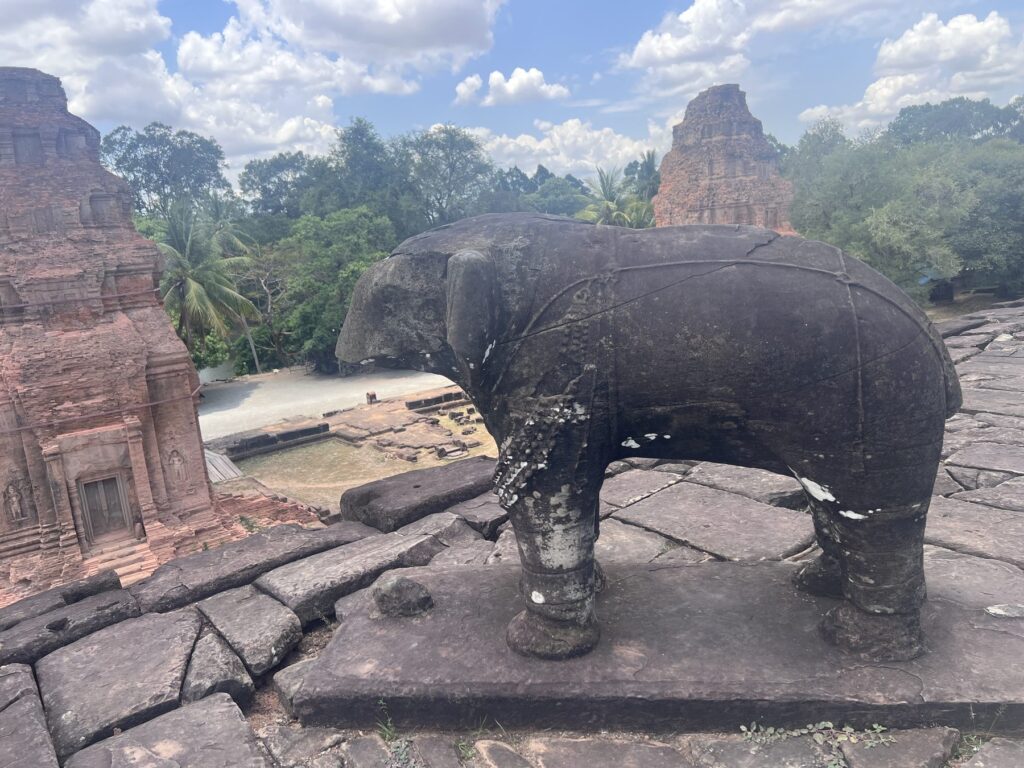
Up on the top level, Bakong opens up. Stone elephants still stand guard at the corners of the lower tiers, worn down but you can still make out the ears and tusks. From up there you look across brick towers, palm trees and a working monastery right next door.
AUGUST 18, 2025 / 11:30 AM
Back, and early this time.
After the April tour I kept in touch with Kanha. For the August zenith I booked him directly for a private tour. Just the two of us.
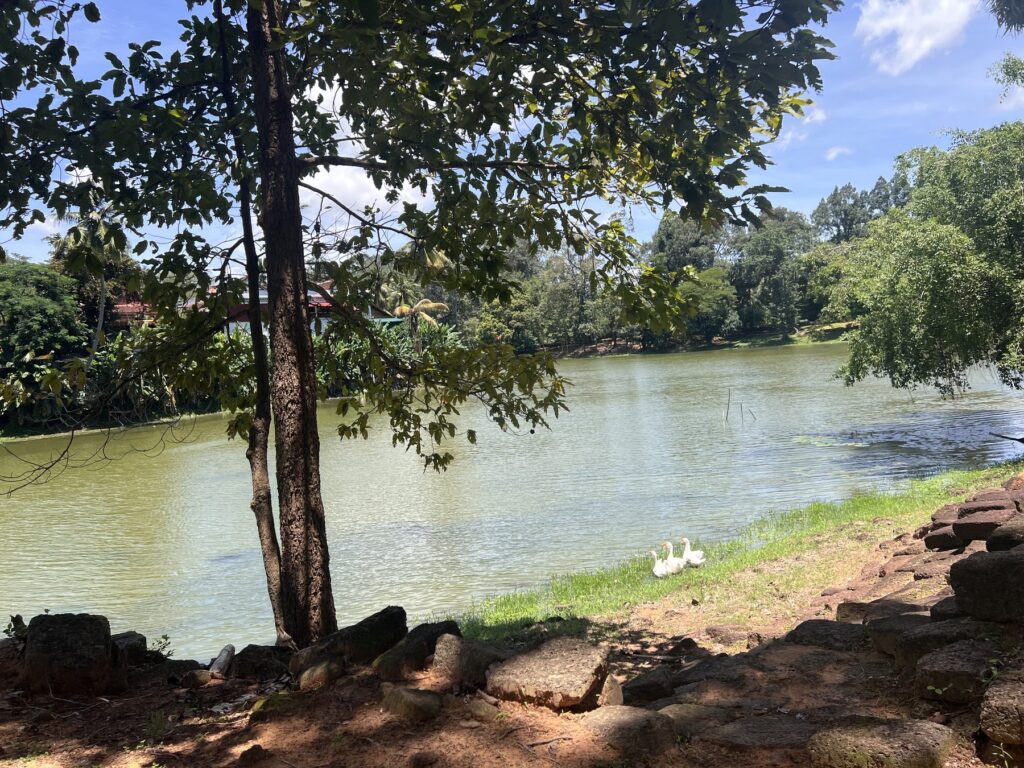
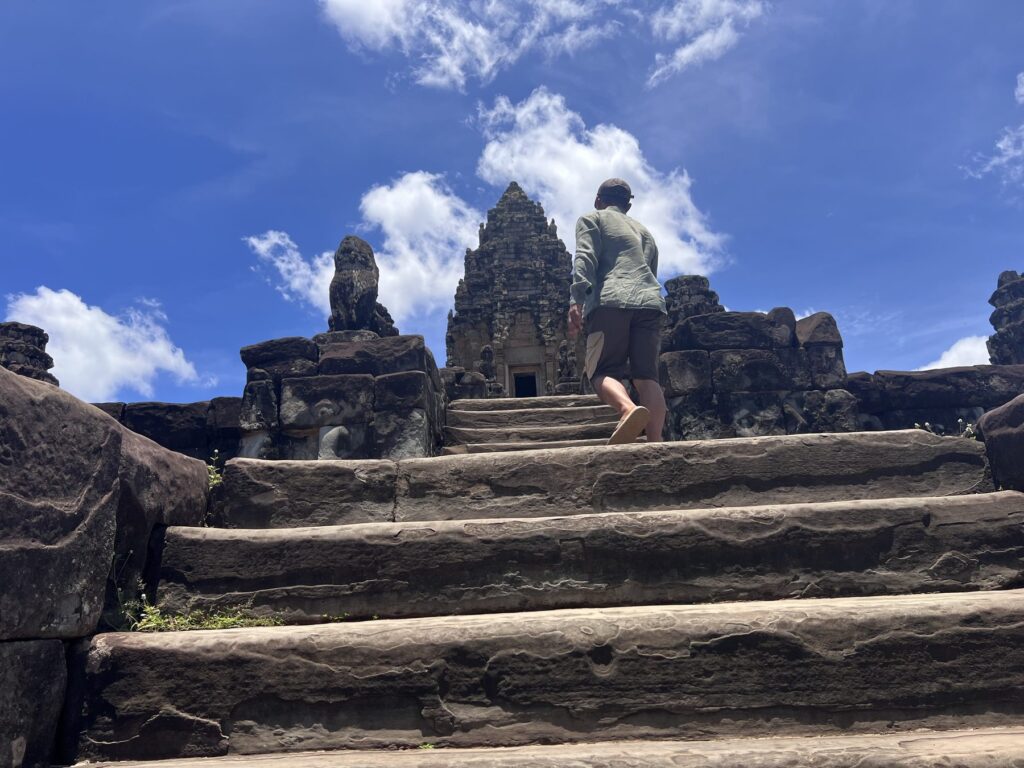
We got there at 11:30 with plenty of time. A quick walk past the moat and the ducks, then up the stairs and into the central tower to wait.
GET THERE BY 11:30. THE CLIMB AND FINDING THE CHAMBER MIGHT TAKE LONGER THAN YOU THINK.
AUGUST 18, 2025 / 12:05 – 12:12 PM
Straight down.
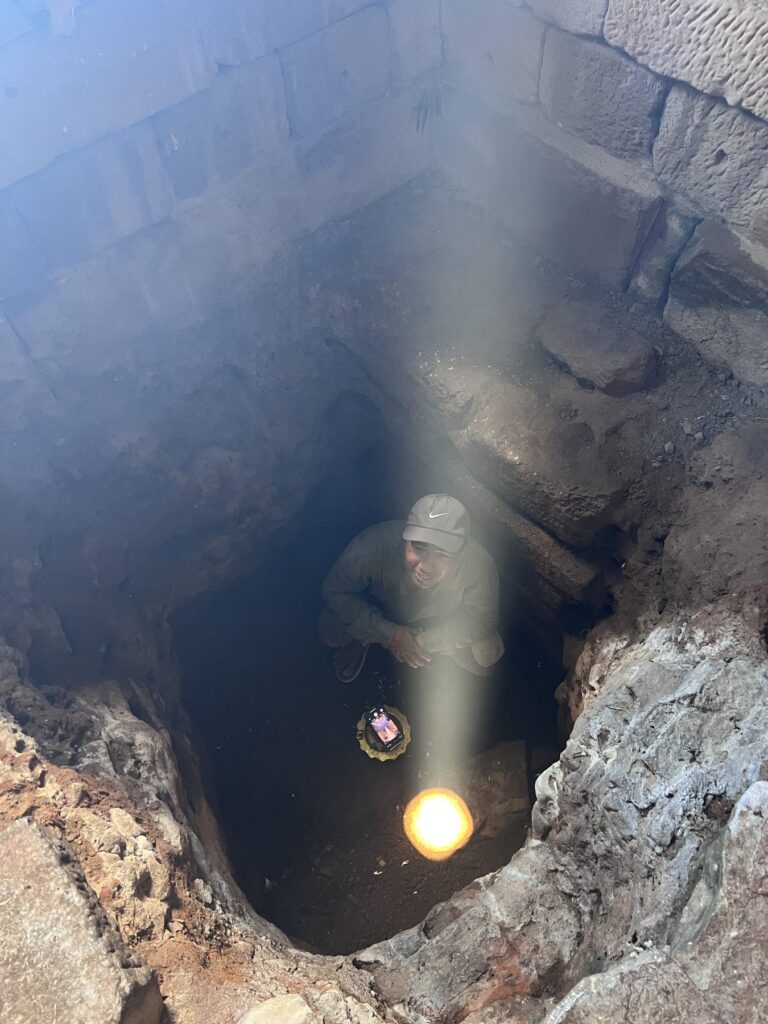
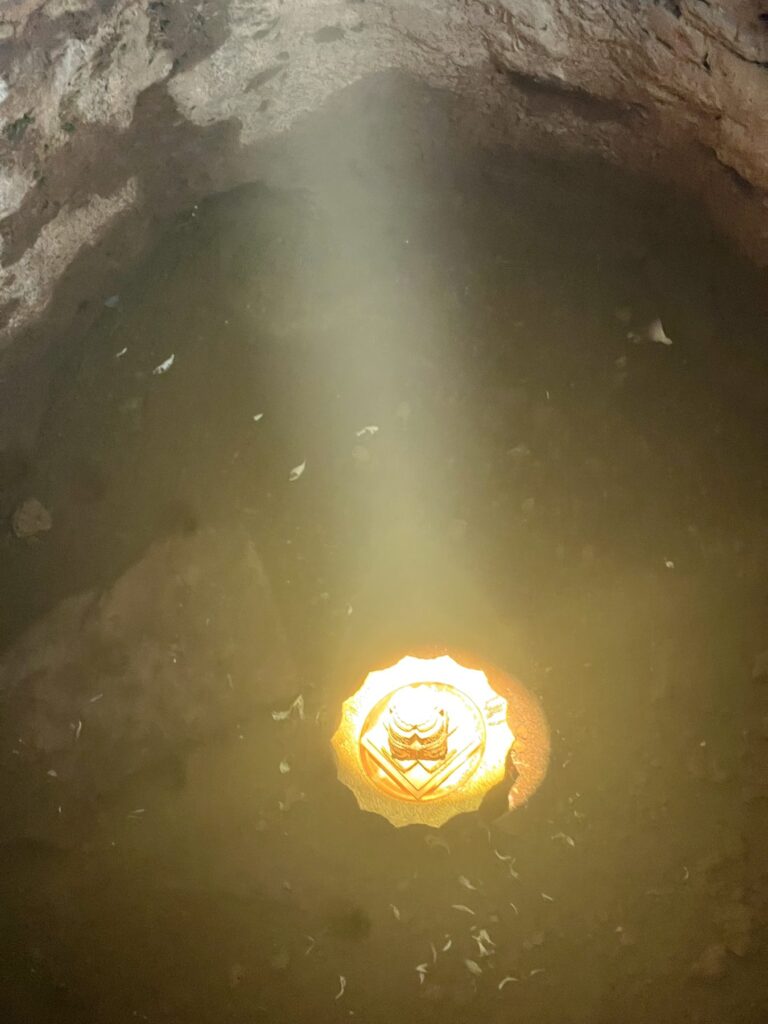
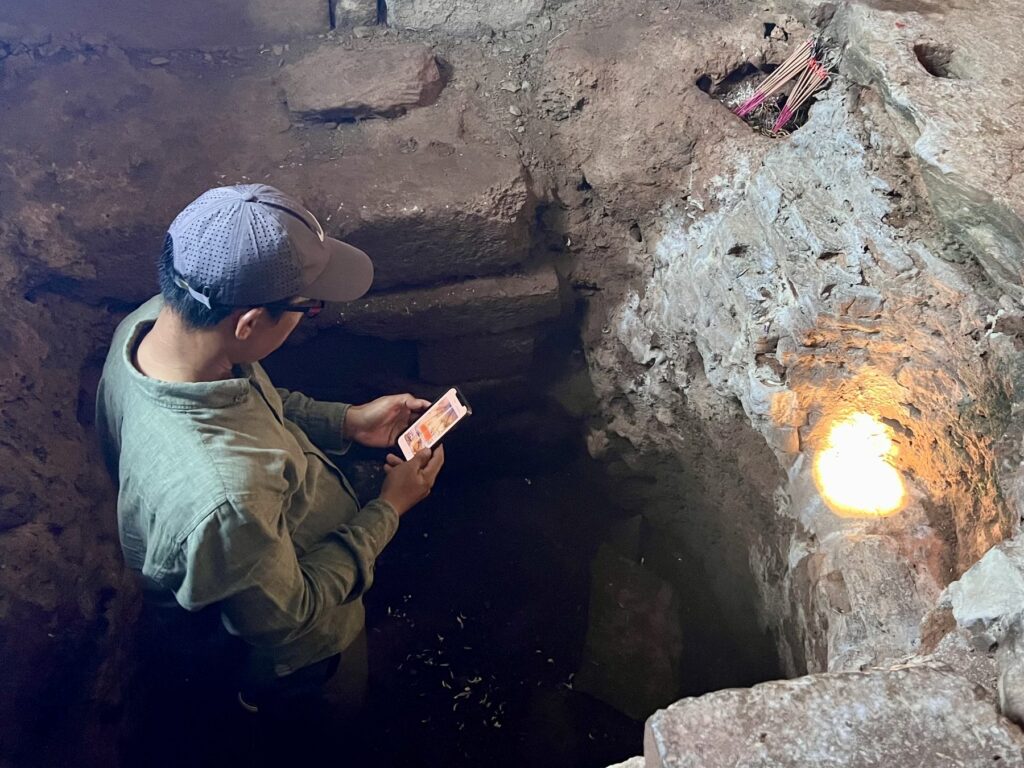
A little after 12, the beam stopped leaning and dropped straight through the tower into the pit in the middle of the floor. Kanha climbed down into it. For about a minute it was a perfect vertical line, roof to floor.
FIELD NOTES
Standing
in the light.
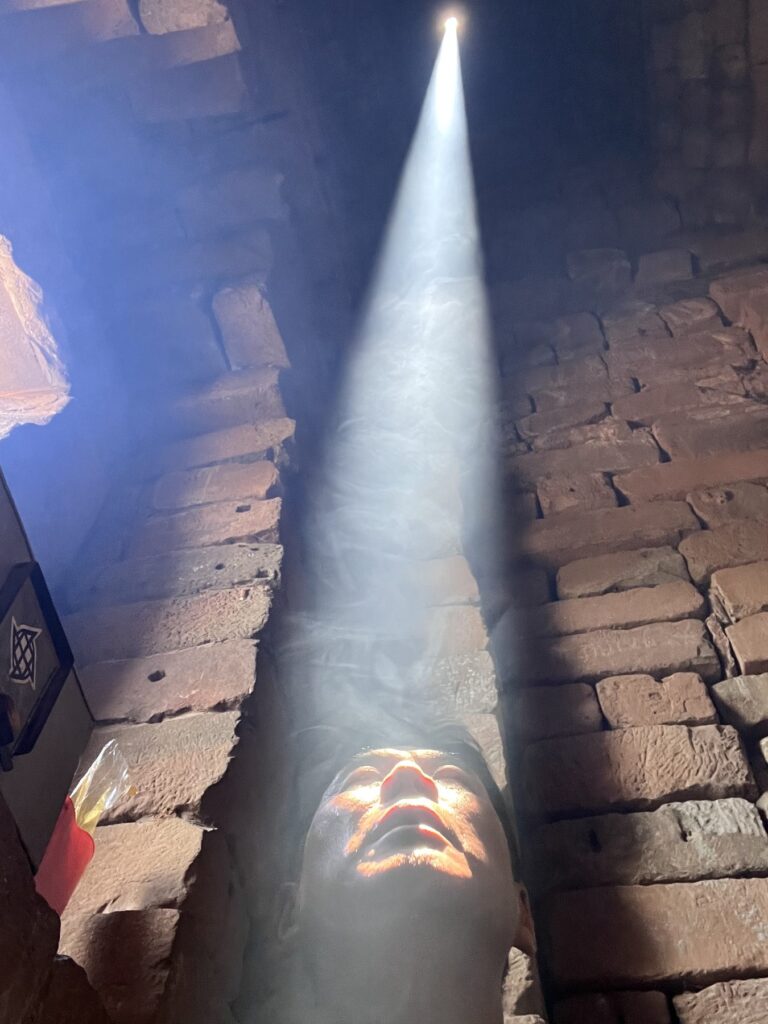
Watching the beam is one thing. Standing in it is another. Kanha and I took turns in the pit while the sun was overhead.
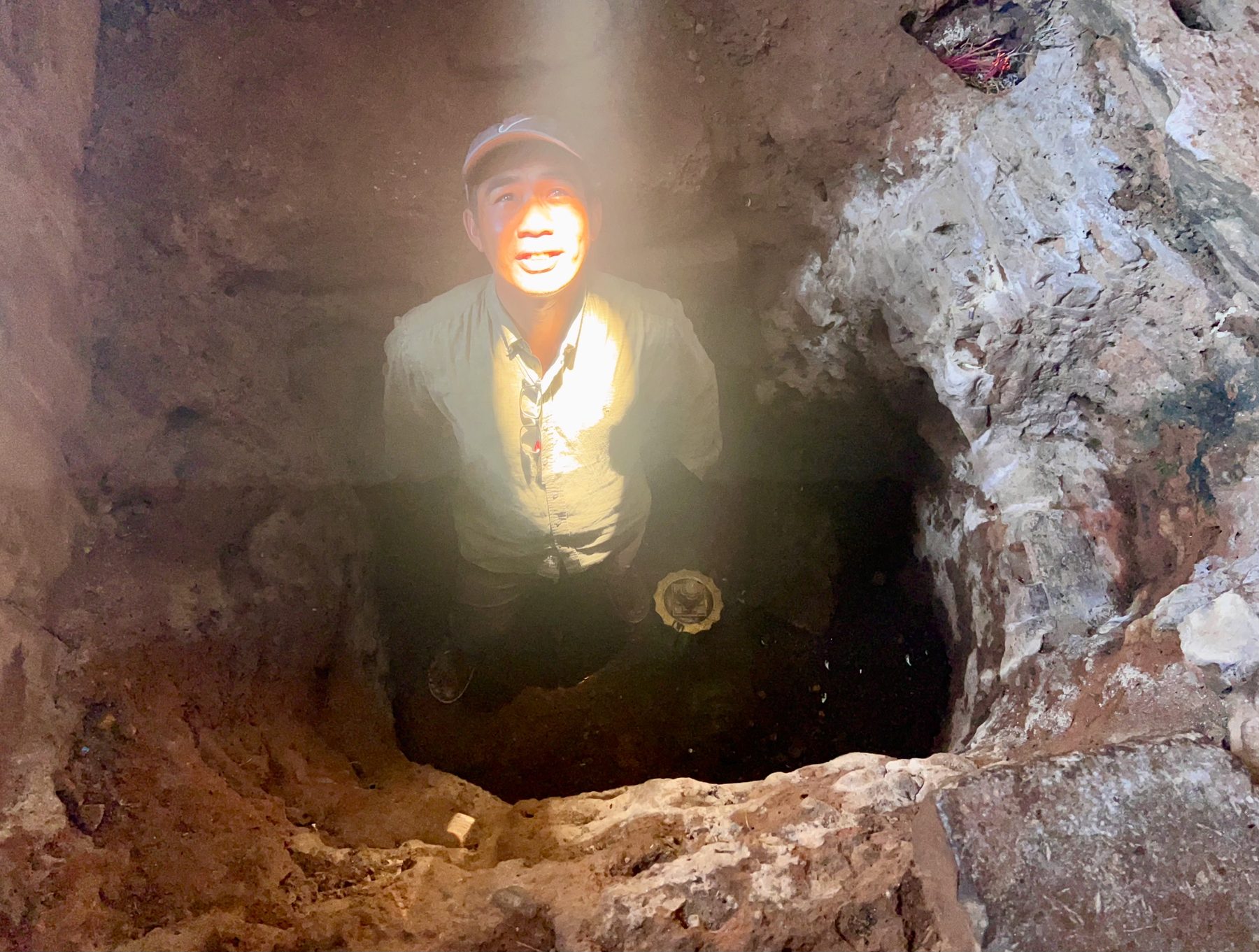
You feel it on
the top of your head.
The beam lands right on the top of your head. You feel the heat of the sun concentrated into one small spot inside a dark stone chamber. At that point it stops being an abstract alignment. You get why ancient builders would make an opening like this: not just for symbolism, but so people could actually feel it.
MY TURN
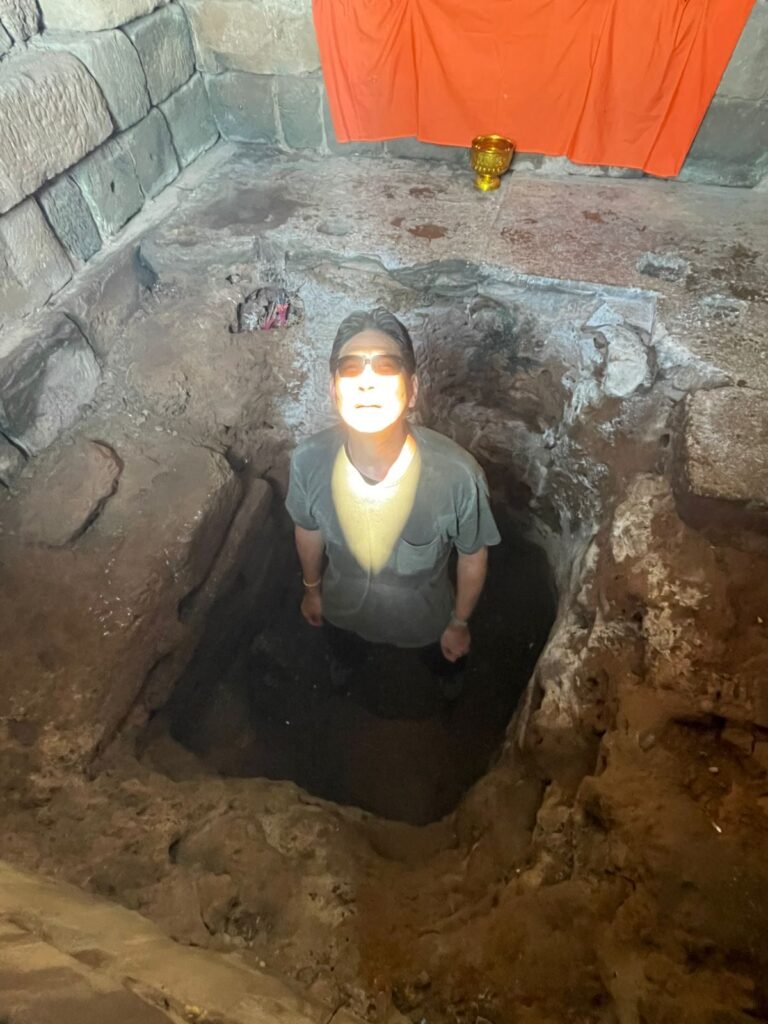
Lit up in the pit.
Kanha took this one from above.
TWENTY MINUTES LATER
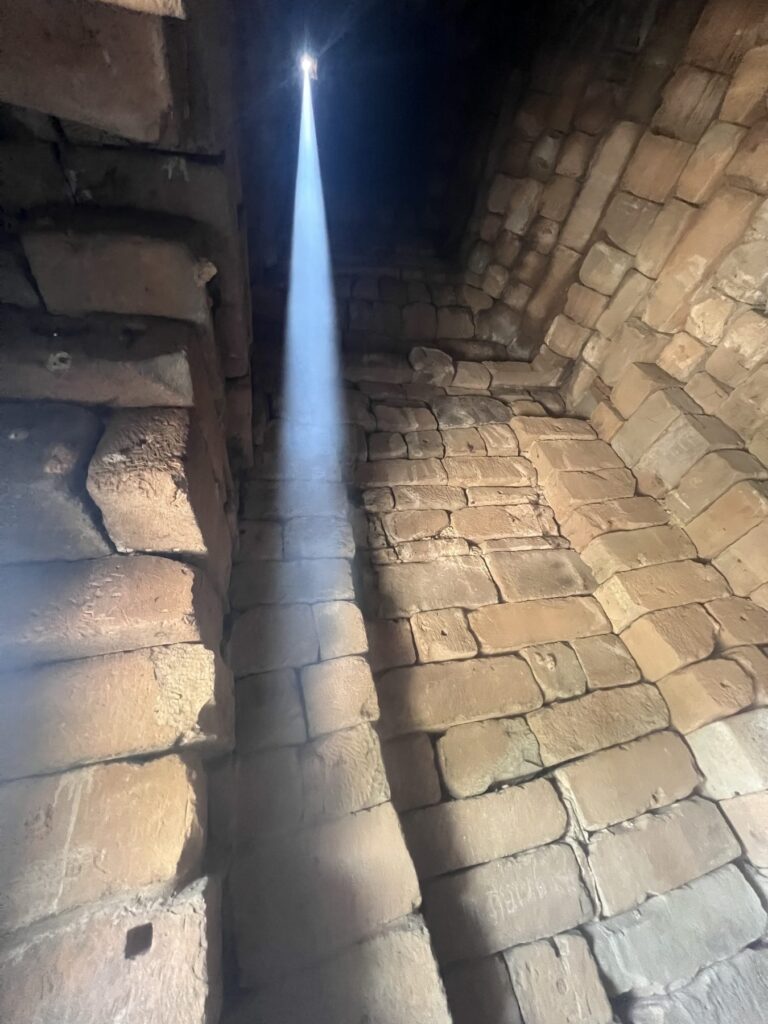
Already leaning.
By 12:32 the beam had swung back onto the wall. That’s how short the window is.
2
zenith days a year at Bakong
13°
north, Bakong’s latitude
~1
minute when the beam is truly vertical
881
AD, when Bakong was dedicated
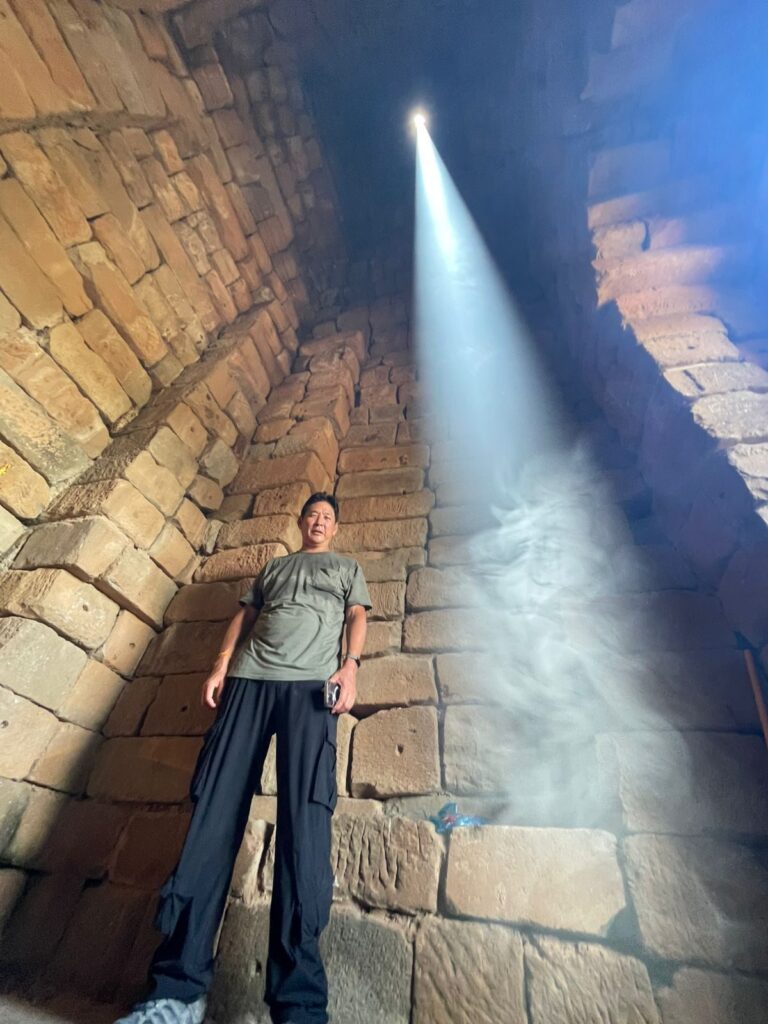
Watch the beam
The zenith beam
at Bakong.
Filmed on my August 2025 visit, inside the central tower, as the sun moved into position overhead.
Go with someone who knows the timing.
Kanha and Bon guided my April visit with the MEC group, and in August it was just Kanha and me. Kanha knows Bakong well, got the timing spot on, and explained what was happening inside the tower as it happened. You can reach him at cambodiabackroads.com.
BEFORE AND AFTER THE BEAM
The rest of Bakong.
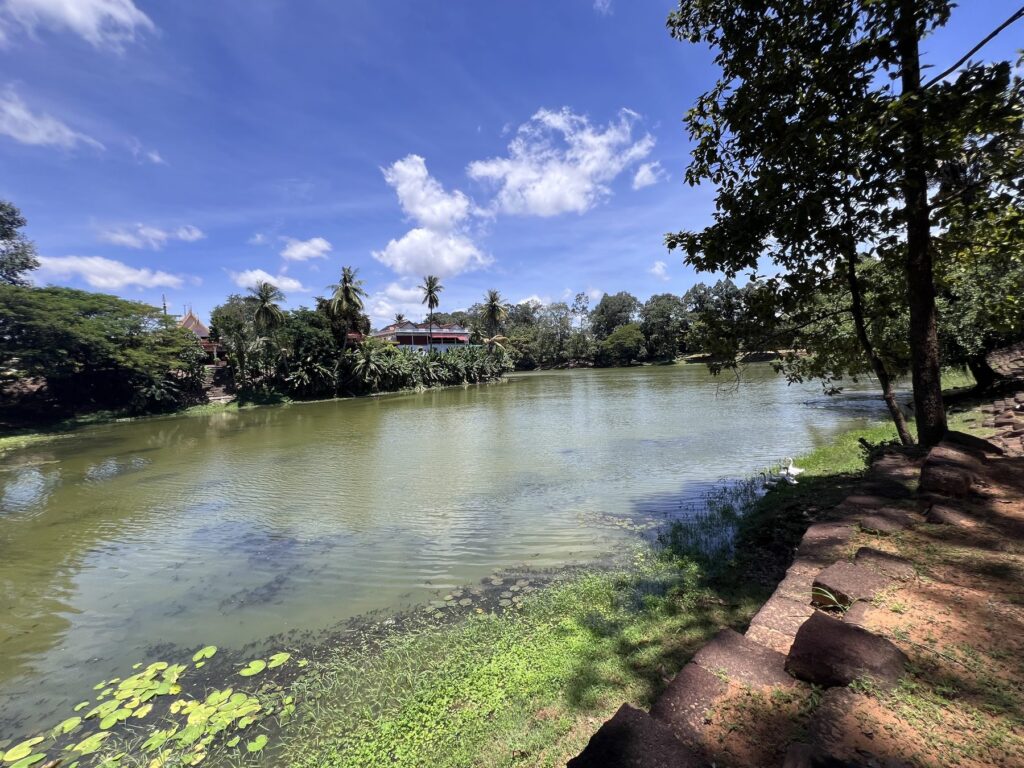
Cross the water first.
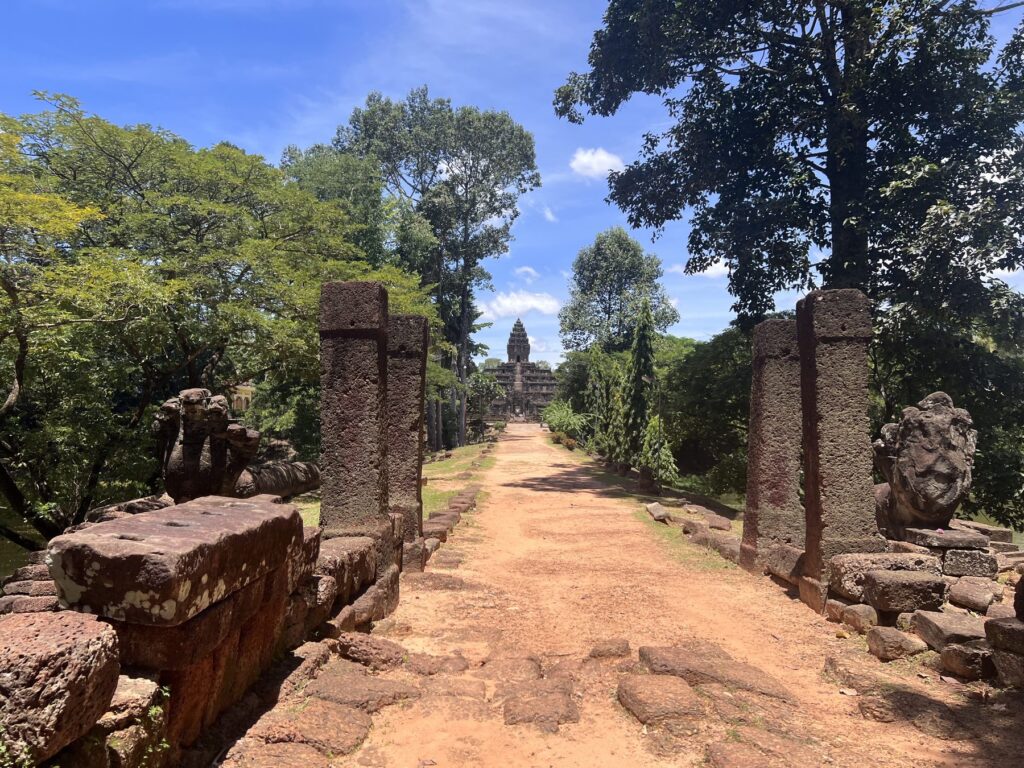
Bakong is surrounded by a moat, and you walk in on a long causeway lined with naga railings. In Khmer temple design, the moat stands for the cosmic ocean and the temple for Mount Meru, so crossing it is part of the experience. Angkor Wat later did the same thing on a much bigger scale.
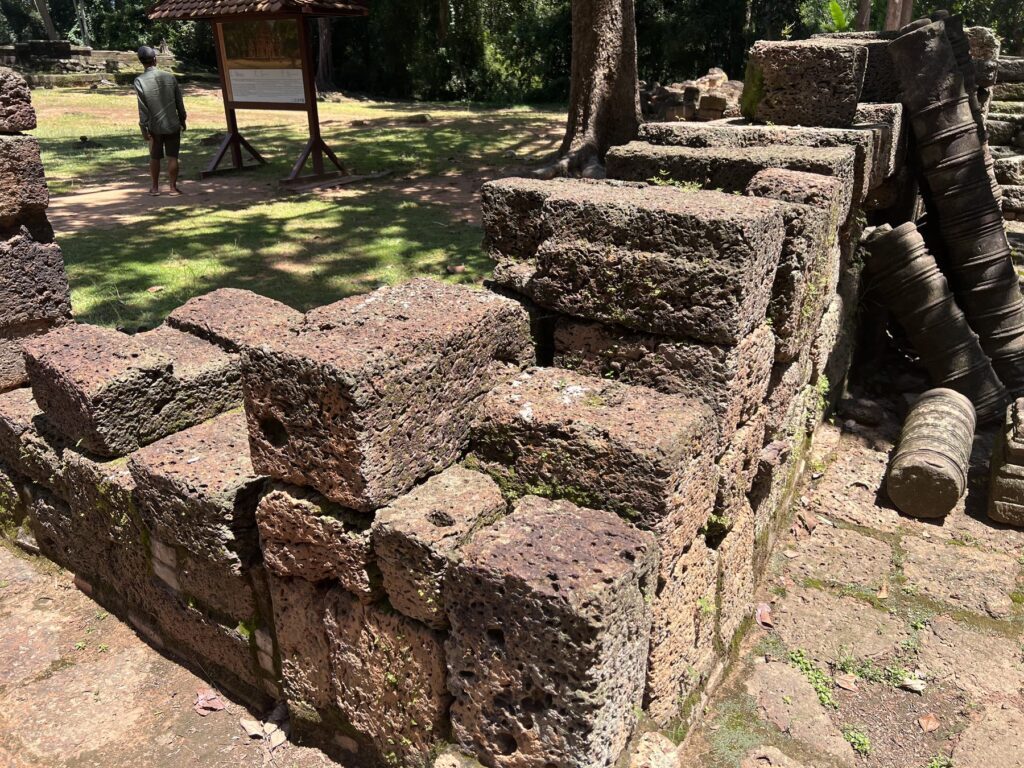
Red stone, falling apart.
The red-brown blocks everywhere are laterite, an iron-rich stone that’s soft when it’s cut and hardens in the air. The Khmer used it for the heavy stuff: foundations, platforms and walls. Sandstone was saved for the carving. A lot of the outer walls have collapsed, which makes it easy to see how they were built.
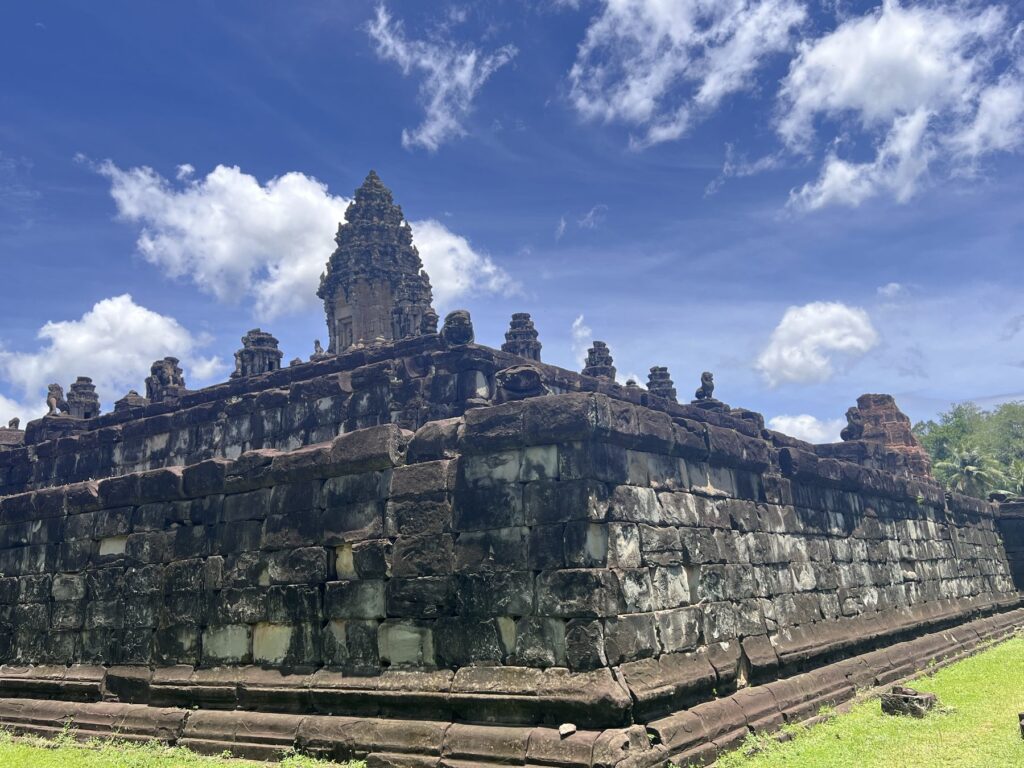
Climb the pyramid.
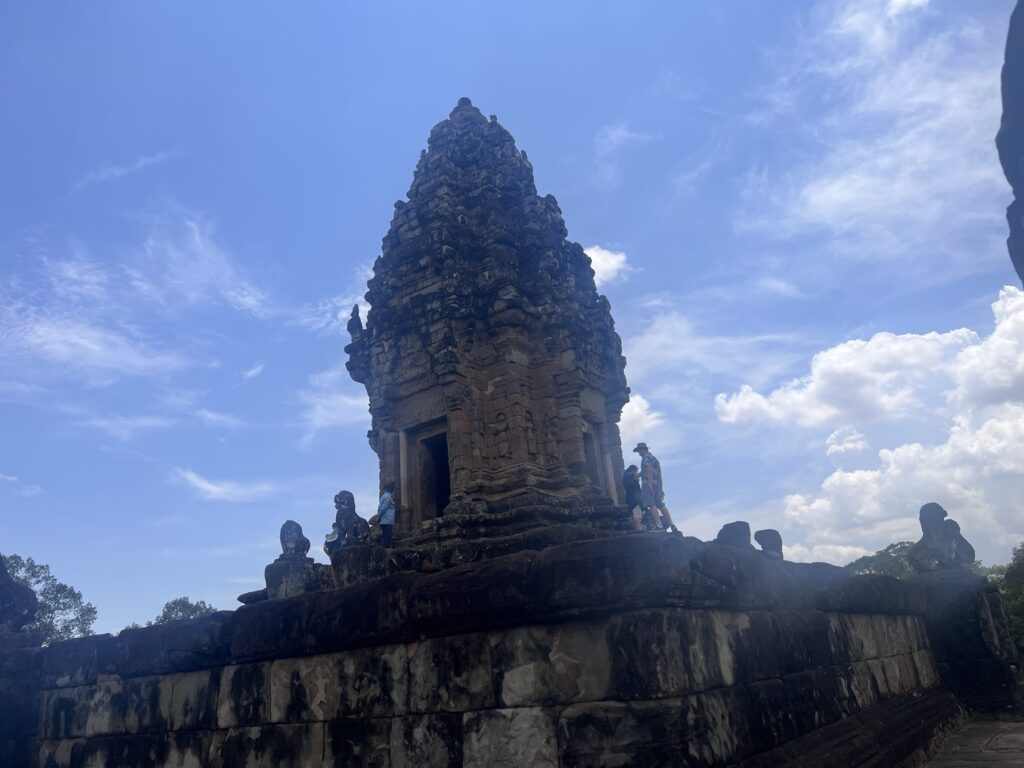
The temple rises in five square levels, each smaller than the one below, with stone elephants on the corners of the lower tiers. The stairs are steep. At the top is the central tower, and inside it is the chamber where the beam comes down.
SACRED GEOMETRY OR ENGINEERING?
Was the beam the point?
Some people say the beam is just what happens when you build a tower representing the axis of the universe and leave a small opening at the top. When the sun passes overhead, light drops straight down.
I lean the other way. To get a vertical beam instead of a slanted one, the opening has to sit very close to the tower’s centre line. The builders didn’t have modern survey gear. They had shadows, geometry and a lot of patient observation, and they built the effect into stone. Either way, the result is the same: stone, light and you, lined up for a minute.
BEFORE YOU GO
What I’d tell a friend.
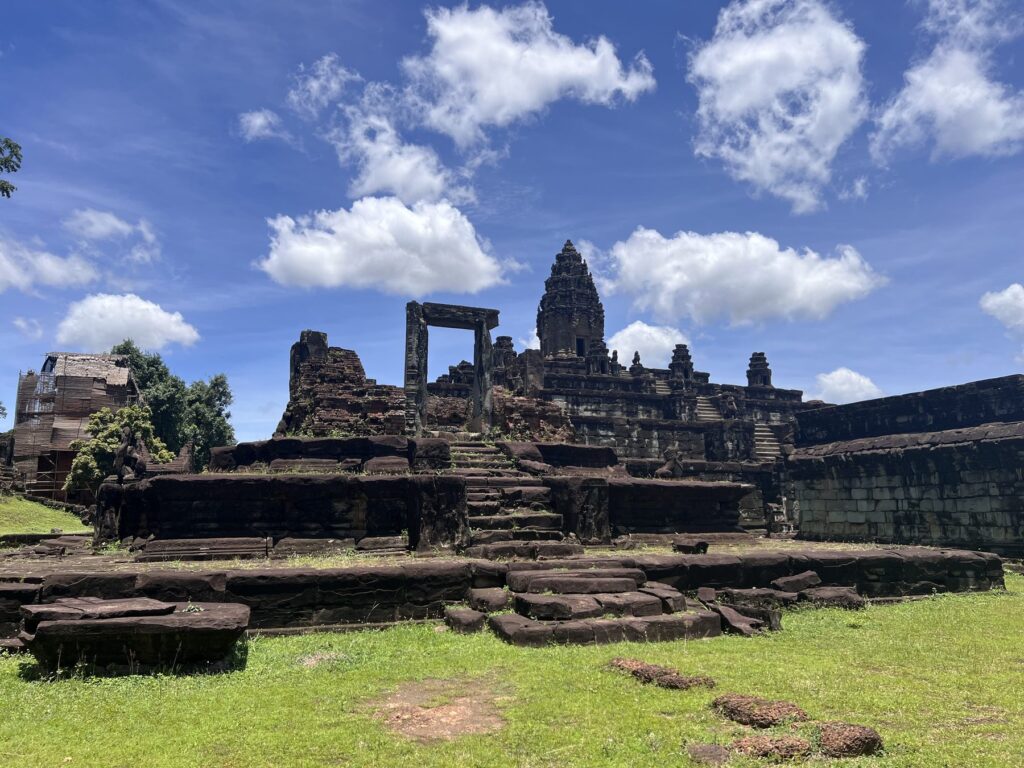
Be early, not on time.
Aim to arrive by 11:30. It takes a while to walk in, climb up and find the chamber, and you want your eyes adjusted to the dark before the beam goes vertical.
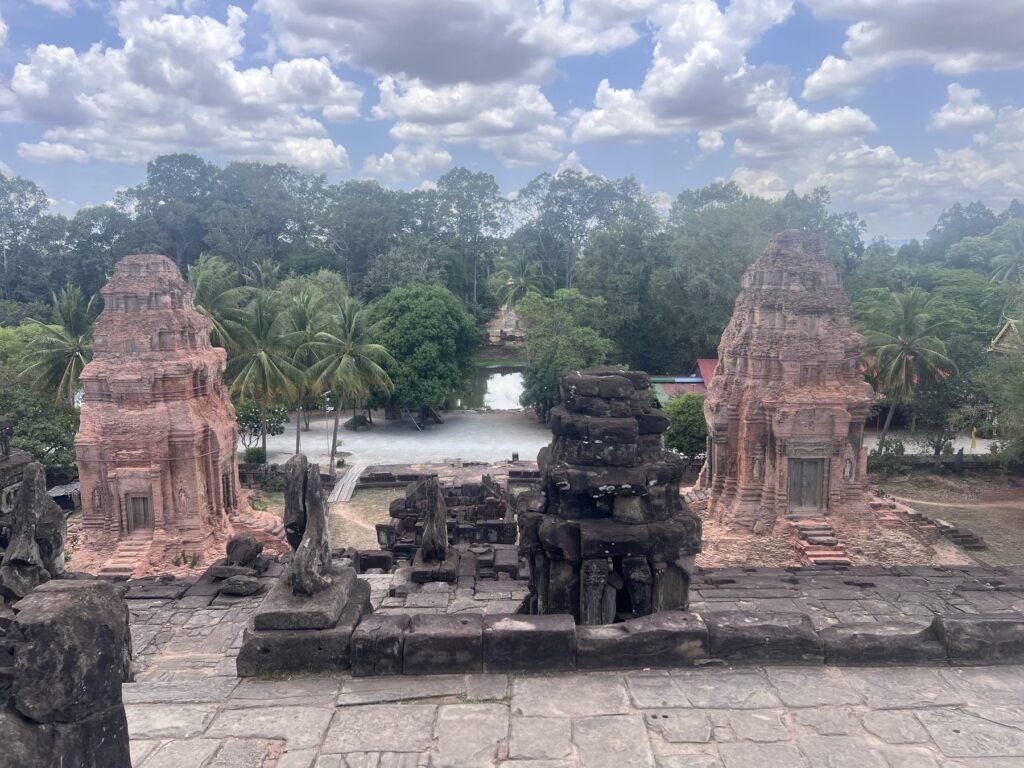
Go inside, not just up.
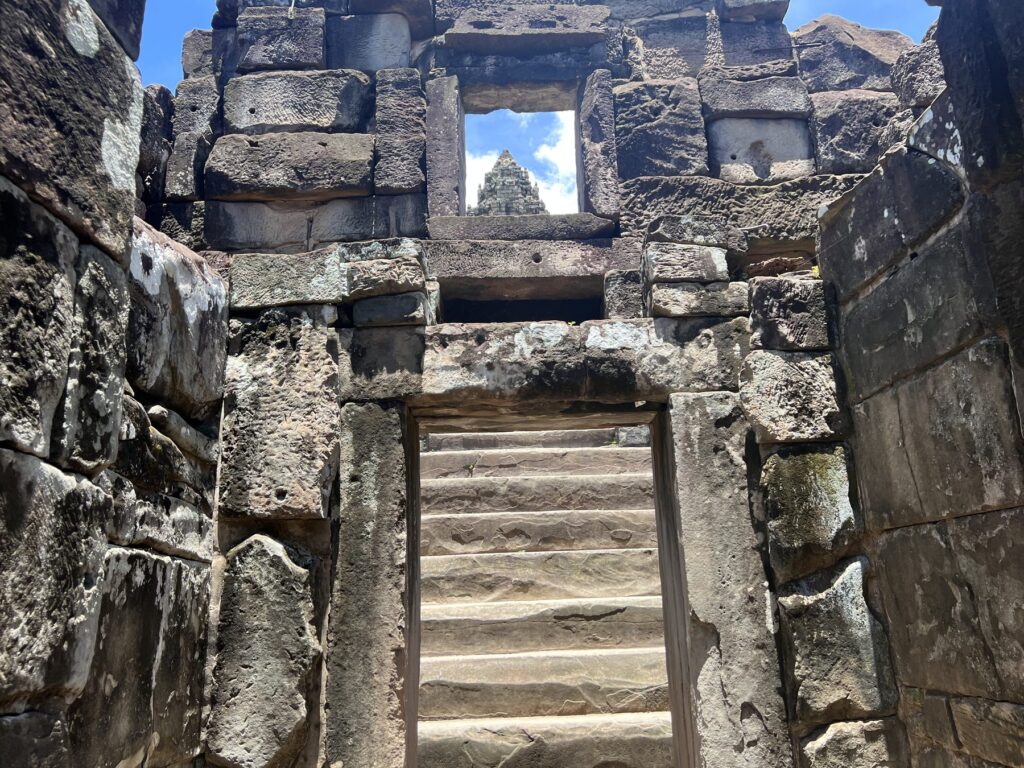
The view from the top is great, but the beam is inside the central tower. Find the doorway and wait inside.
Bring a guide.
The window is a few minutes. A guide who has done this before will get the timing right, and there are other Angkor-area temples with sun effects they can work into the same trip.
Remember to tip your guide accordingly.
Frequently asked QUESTIONS
Bakong zenith sun FAQ.
What is the zenith sun at Bakong?
It’s the moment the sun is directly overhead. Light drops through a small opening at the top of Bakong’s central tower and forms a vertical beam inside the dark sanctuary below.
When is the zenith sun at Bakong?
Twice a year, around April 25 and August 17. Solar noon is about 12:02 PM in April and 12:08 PM in August. The beam is still close to vertical a day or two either side.
What time should I arrive at Bakong for the zenith beam?
By 11:30 AM. That leaves time to walk in, climb the pyramid and be inside the central chamber before the beam goes vertical.
How long does the beam last?
There’s a beam for roughly 5 to 10 minutes around solar noon. It’s truly vertical for about a minute.
Do you need an Angkor Pass for Bakong?
Yes. Bakong is part of the Angkor Archaeological Park, and entry is included with the standard Angkor Pass.
How far is Bakong from Siem Reap?
About 13 km east, in the Roluos Group. A private car is easiest. A tuk-tuk works too if you allow extra time.
Is Bakong crowded?
It gets far fewer visitors than the main Angkor temples. On my August zenith visit it was just me and my guide in the chamber.
Was the zenith beam at Bakong intentional?
Nobody knows for sure. My take is that an opening that lines up this precisely with the overhead sun was very likely designed that way.