
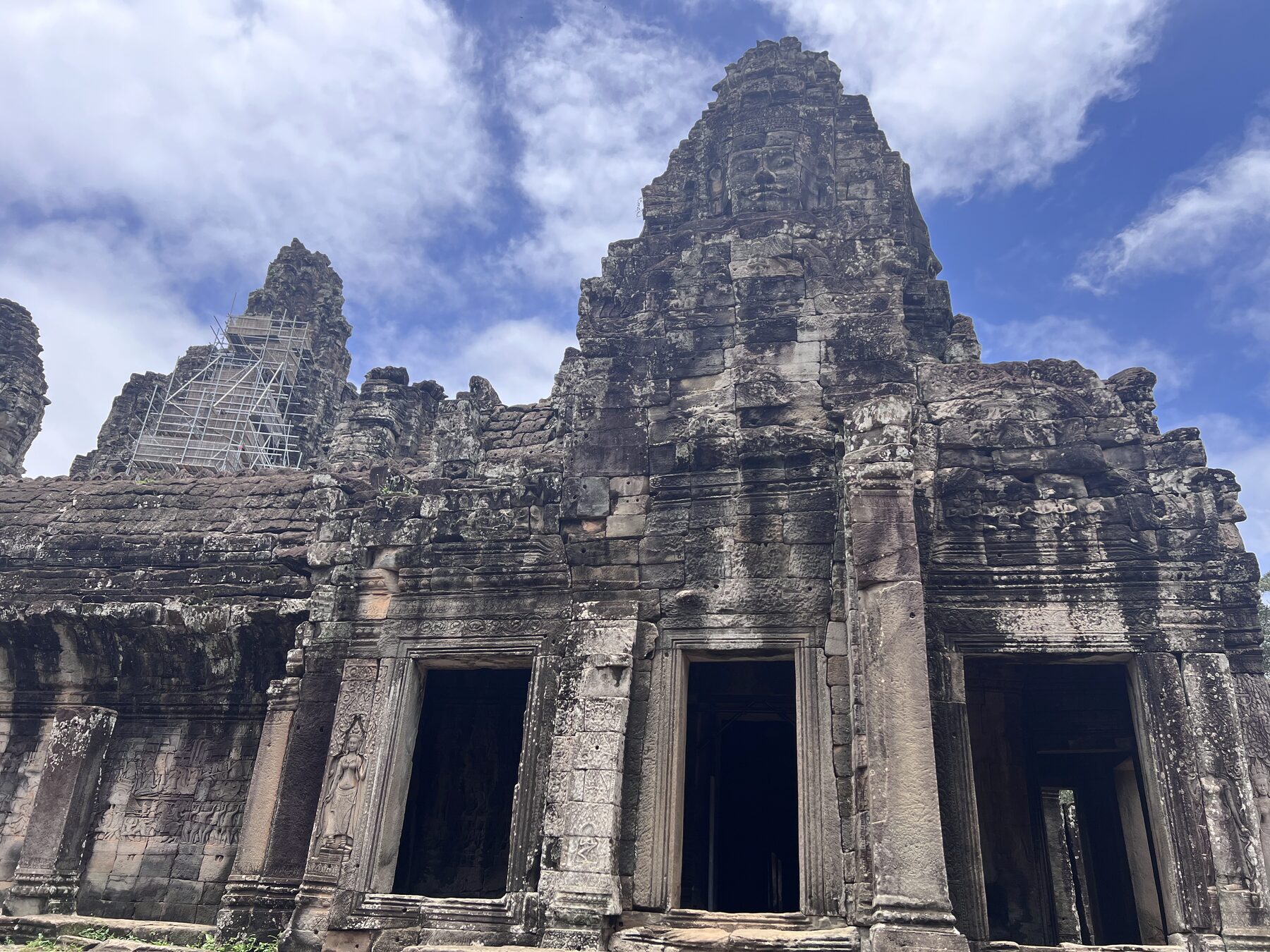
ANGKOR THOM · CAMBODIA
Bayon Temple.
Stone faces and zenith light.
I went to the Bayon three times in 2025. In April I was running around looking for a zenith light beam. In June I slowed down and actually looked at the temple. In August I came back with Kanha, a little better prepared.
ANGKOR THOM · SIEM REAP
I WENT: APRIL, JUNE & AUGUST 2025
THE SHORT VERSION
What is Bayon Temple?
Bayon sits right in the center of Angkor Thom, the ancient walled city inside the larger Angkor archaeological park. It’s one of the major temples, so you really can’t miss it. It was built under King Jayavarman VII toward the end of the 12th century, and it’s best known for the enormous smiling faces carved into its stone towers.
Twice a year, in April and August, the sun passes directly overhead. Around that moment, sunlight shines through the openings at the tops of the towers and down into the chambers below. That’s the zenith passage, and it’s what brought me here the first time.
Is the Bayon zenith passage worth seeing?
Yes, if you get there early and pick the right room. The beam is visible for about 15 minutes but only looks straight down for about one, and not every chamber gives you a good show. And leave time for the faces. There’s a lot at Bayon that’s easy to walk past when you’re busy looking for something else.
Bayon at a glance
WHERE
Center of Angkor Thom, in the Angkor archaeological park near Siem Reap
BUILT
Late 12th century, under King Jayavarman VII
KNOWN FOR
Huge smiling stone faces on its towers
ZENITH PASSAGE
Twice a year, in late April and mid-August, around noon
BEAM TIME
Visible for about 15 minutes, looks vertical for about one
MY VISITS
April 2025 on the MEC zenith tour, June solo by tuk-tuk, August with Kanha Phum with Cambodia Backroads
The exact zenith day depends on the temple’s latitude. Check before you plan around it.
THREE VISITS
April, June
and August.
Each visit was a different kind of trip, and I saw a different Bayon each time.
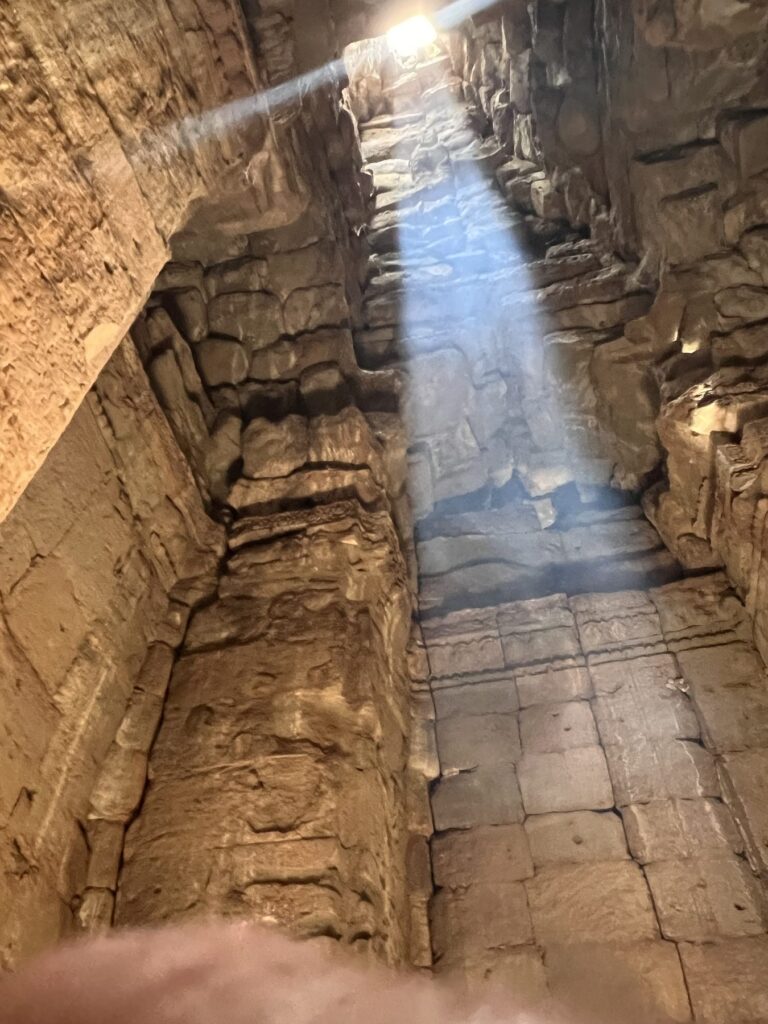
APRIL · ZENITH TOUR
Chasing the beam
With Maya Exploration Center, arriving a little late and scrambling between chambers.
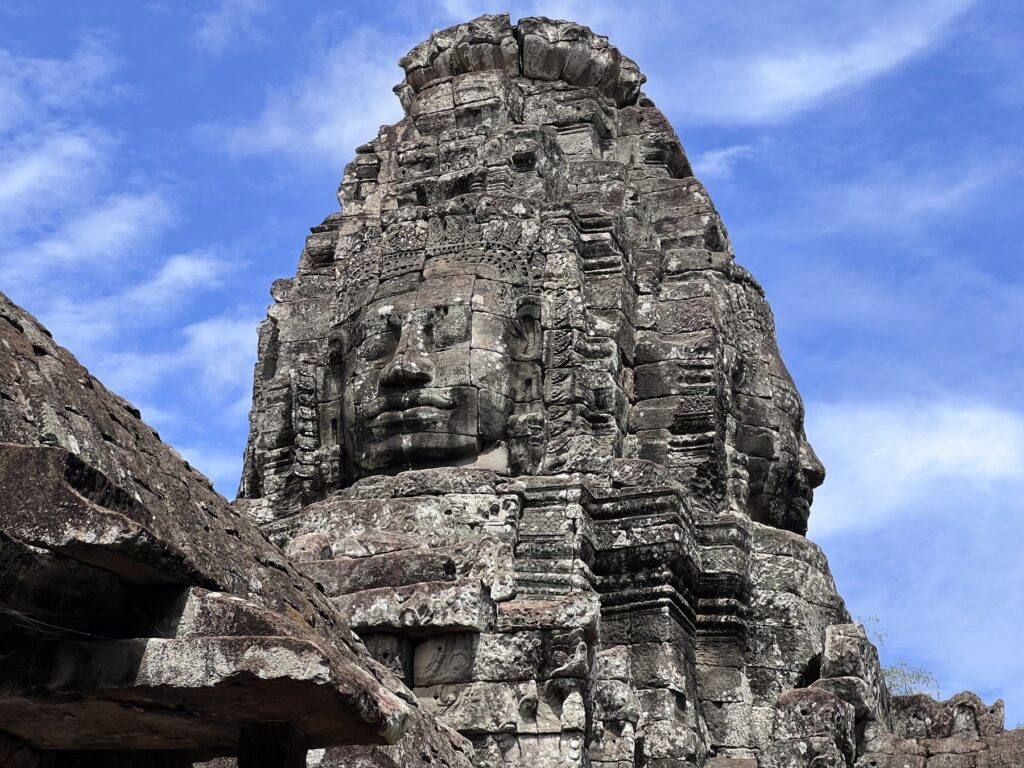
JUNE · ON MY OWN
Looking at the faces
By tuk-tuk, with no light beam to chase and all the time I wanted.
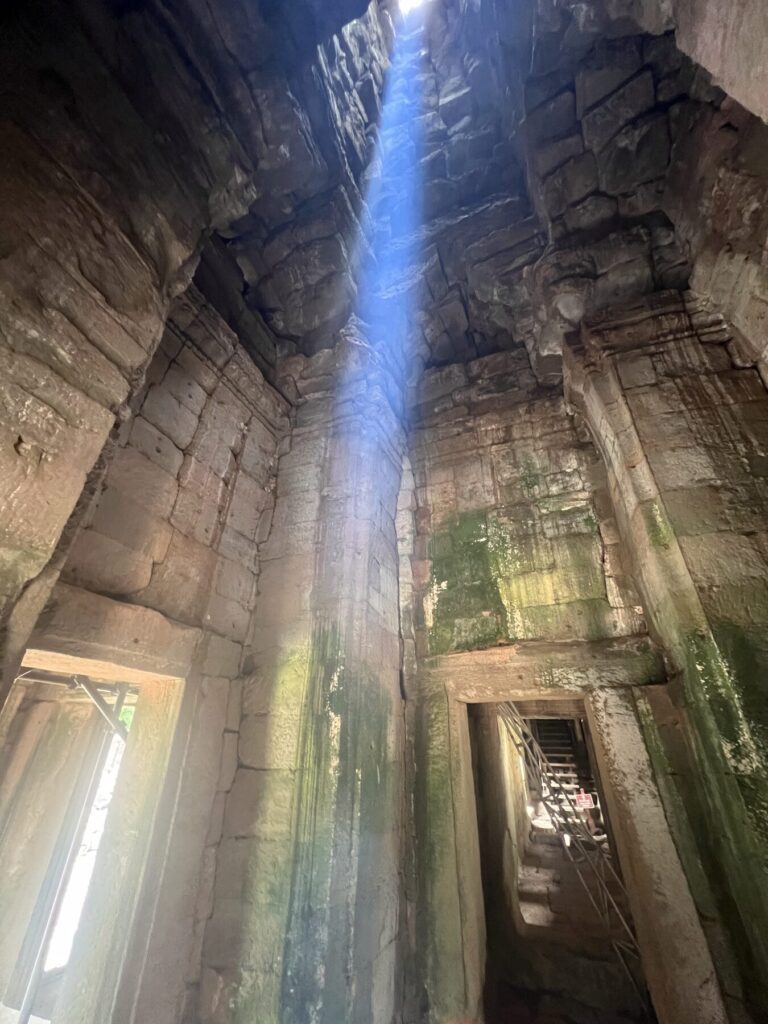
AUGUST · WITH KANHA
The right room
Early, prepared, and with incense to light up the shaft.
APRIL / THE ZENITH TOUR
Scrambling for a beam.
My first visit was with Luke Caverns and Maya Exploration Center on the Angkor zenith passage tour. We arrived a little late, and everybody scattered to different chambers looking for a good spot.
Bayon is a large, maze-like temple, with corridors, steps and raised stone thresholds to navigate. Getting from one chamber to another takes time, especially when you’re not sure where you’re going and the sunlight isn’t going to wait.
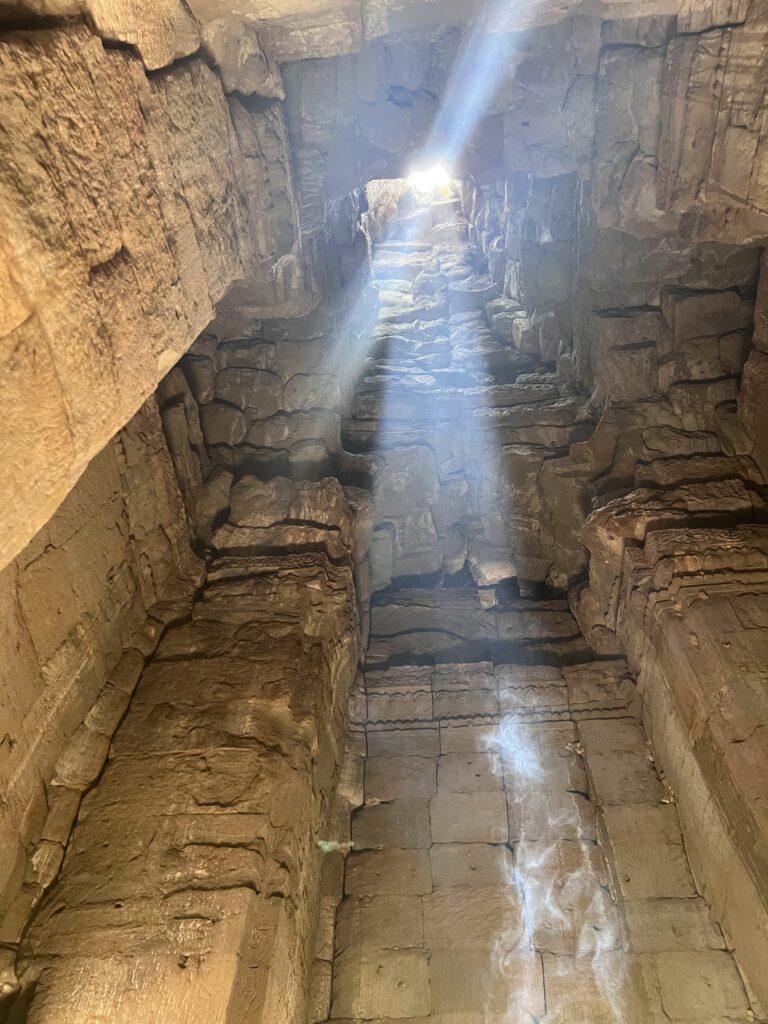
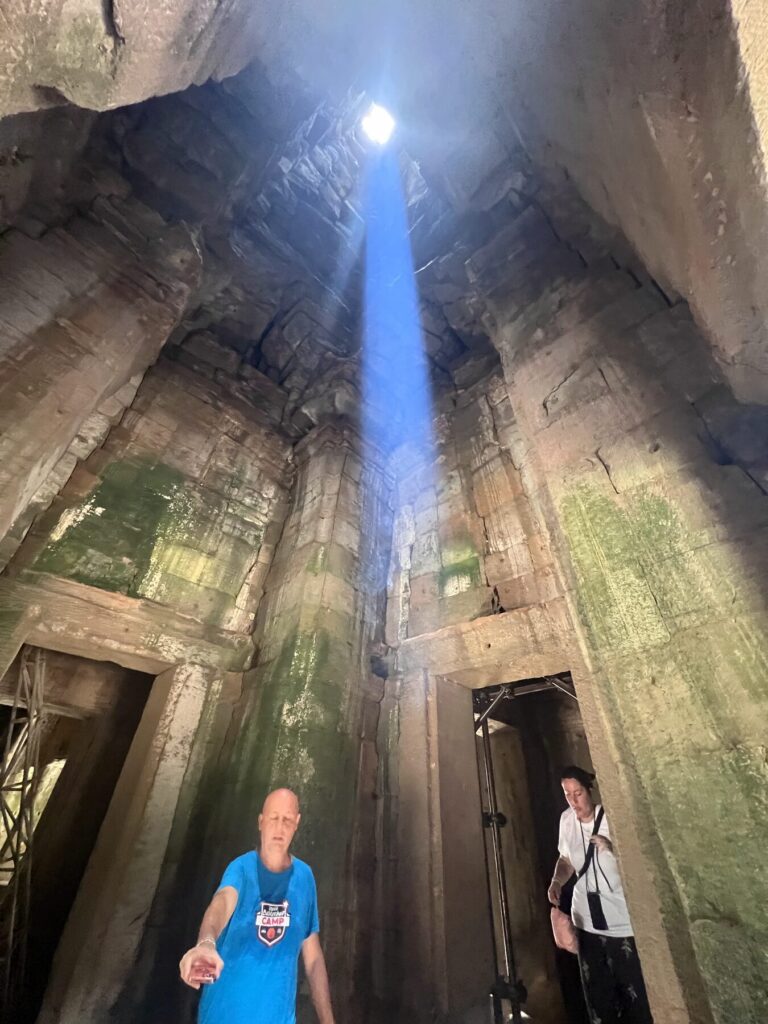
We caught about five minutes of the light shaft, and since we came late, it was already past vertical. I was happy to see it, but much of the time I was scrambling around trying to find a better spot.
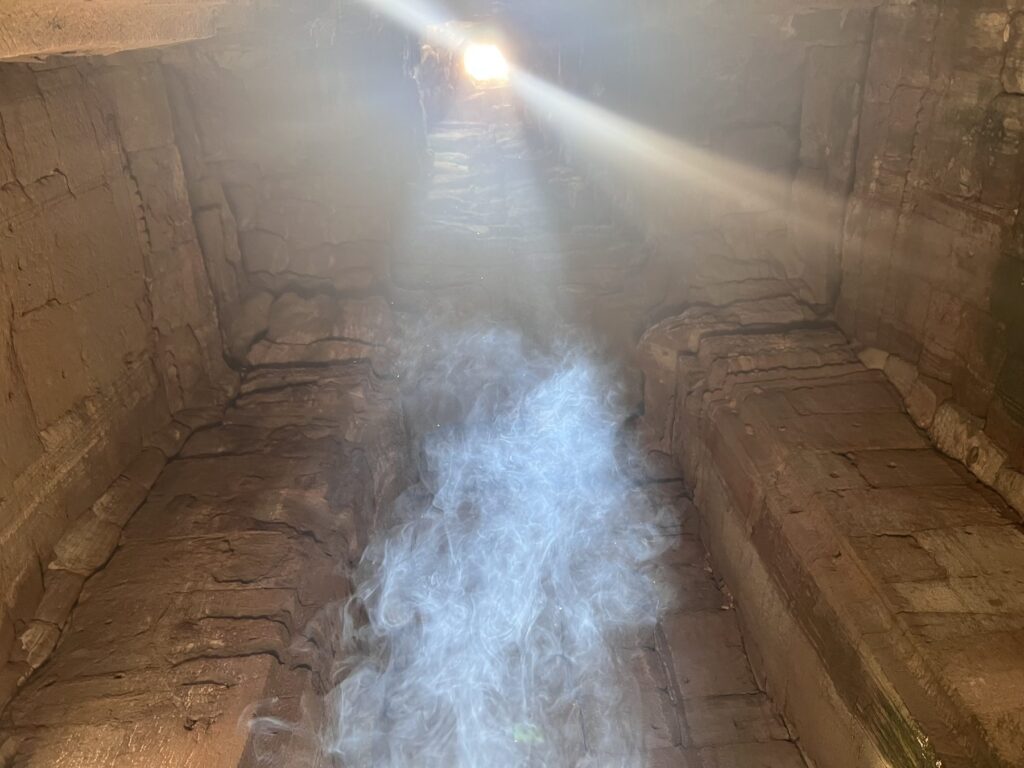
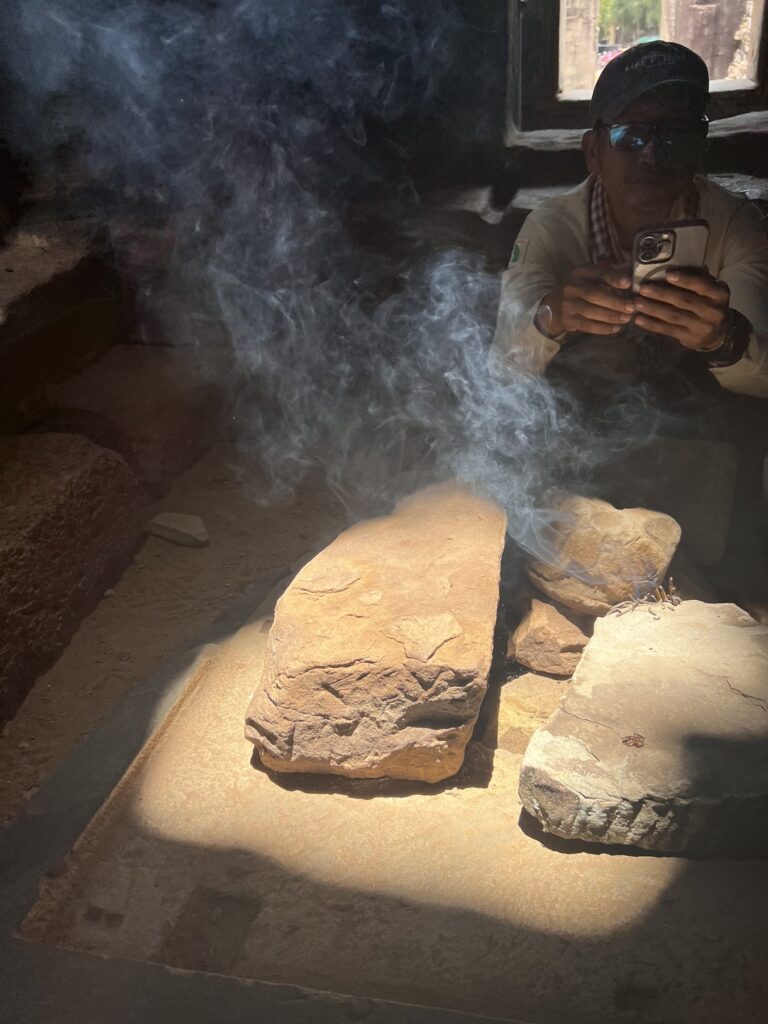
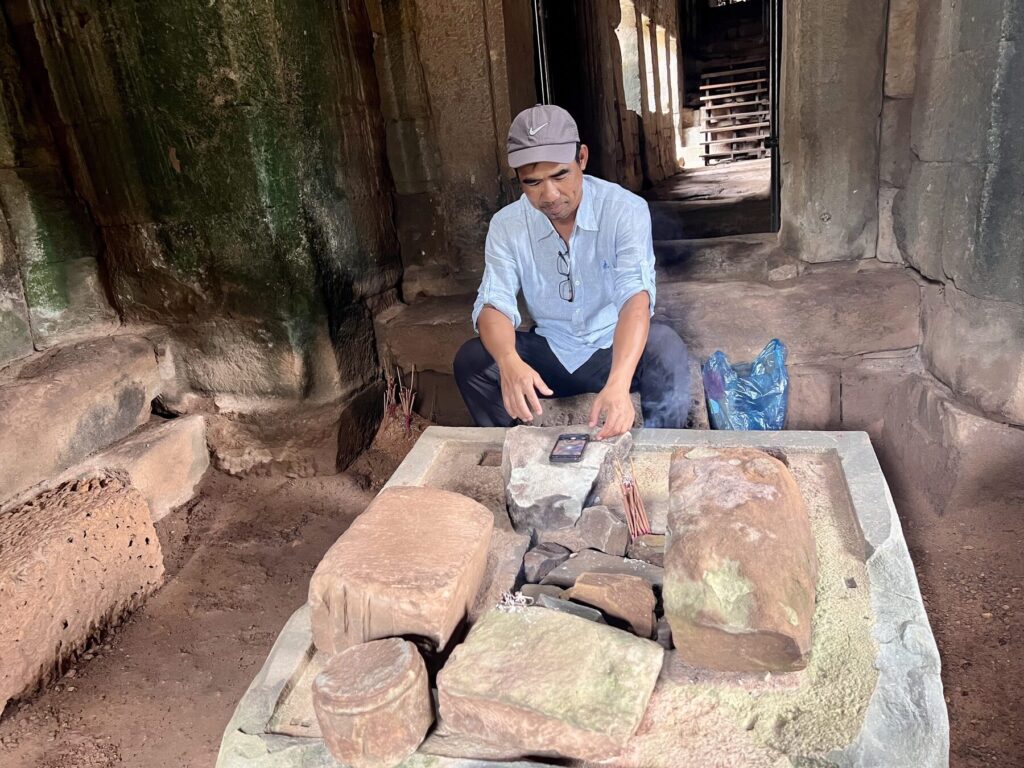
We didn’t bring any incense, but people burn them all the time. The people moved on, but their incense sticks were still smoking on the altar. That smoke is what made the beam show up in the air.
THE BAYON IS A MAZE. KNOW WHICH CHAMBER YOU’RE HEADING FOR BEFORE NOON.
WHY THE ROOM MATTERS
Every opening
is different.
There are plenty of openings overhead, but they don’t all produce the same effect.
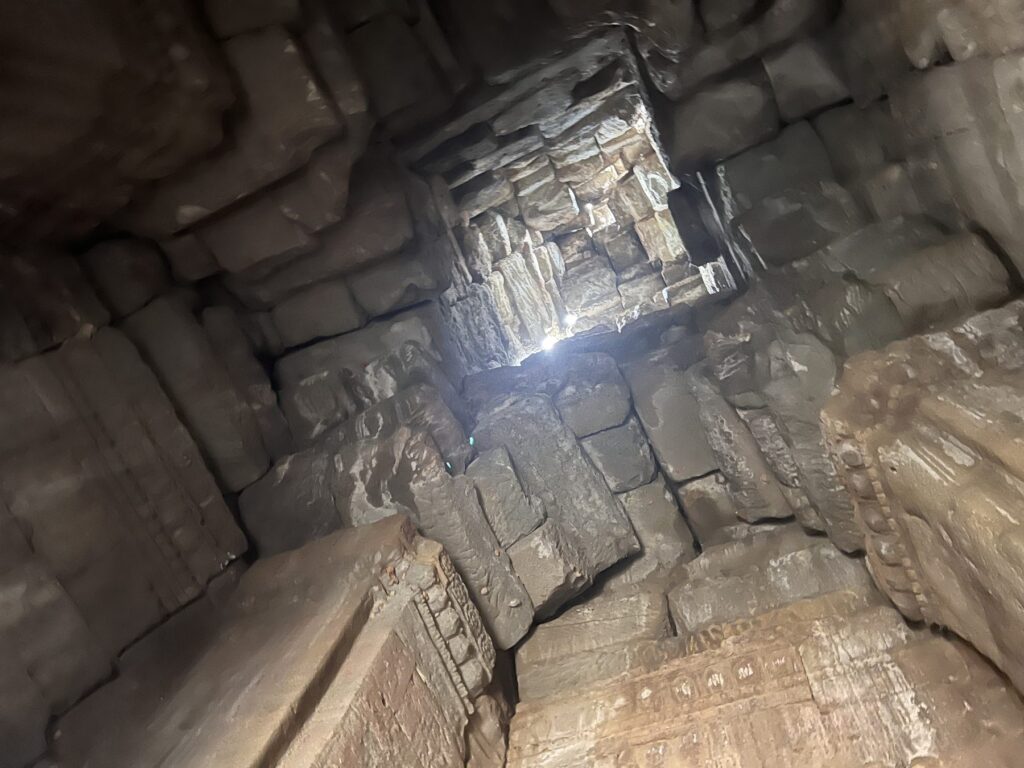
The tops are incomplete
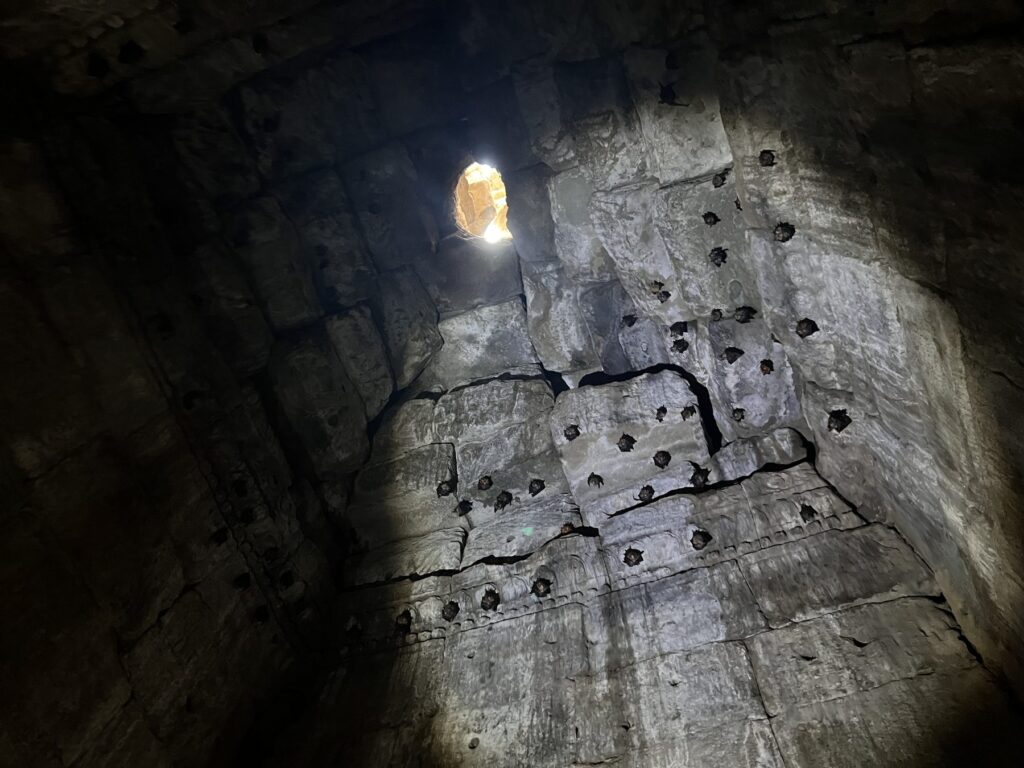
During their earlier observations at Bayon, Ed Barnhart and Christopher Powell reported that none of the towers kept their uppermost capstones. What’s left lets sunlight through openings of different shapes and sizes, so one chamber can give you quite a different show from the next (MEC zenith passage research).
Small openings, better beams
Most of the ones I saw were medium-sized and irregular, producing a wider, less visible beam. In some rooms the patch of sunlight was faint on the floor. The smaller openings gave a tighter, brighter shaft and a more concentrated patch below. Naturally, those were the rooms we were trying to find.
How the beam moves
At the Bayon, a beam appears at an angle, swings to center and past it, then disappears. Every opening is different, so beams show up and fade at different times in different rooms. You can see one for about 15 minutes, and for about a minute it looks straight down. A few minutes either side of that, the angle is obvious.
At Bakong, with one small opening, you can watch the spot of light slowly move across the floor. At the Bayon there’s no clean spot to follow, so the movement is harder to see.
Come back a week or so before or after the zenith dates and it’s a different story. The sun is far enough off center that a small opening won’t throw a beam at all, and a bigger one might only put a patch of light at the edge of the floor or up on the wall.
Why the beam stops short
Bayon has a lot of door openings, so there’s much more light interference than in a single-chamber temple. That’s why in some photos the beam seems to stop short before it reaches the floor. All those doors also let the wind in to blow the smoke away.
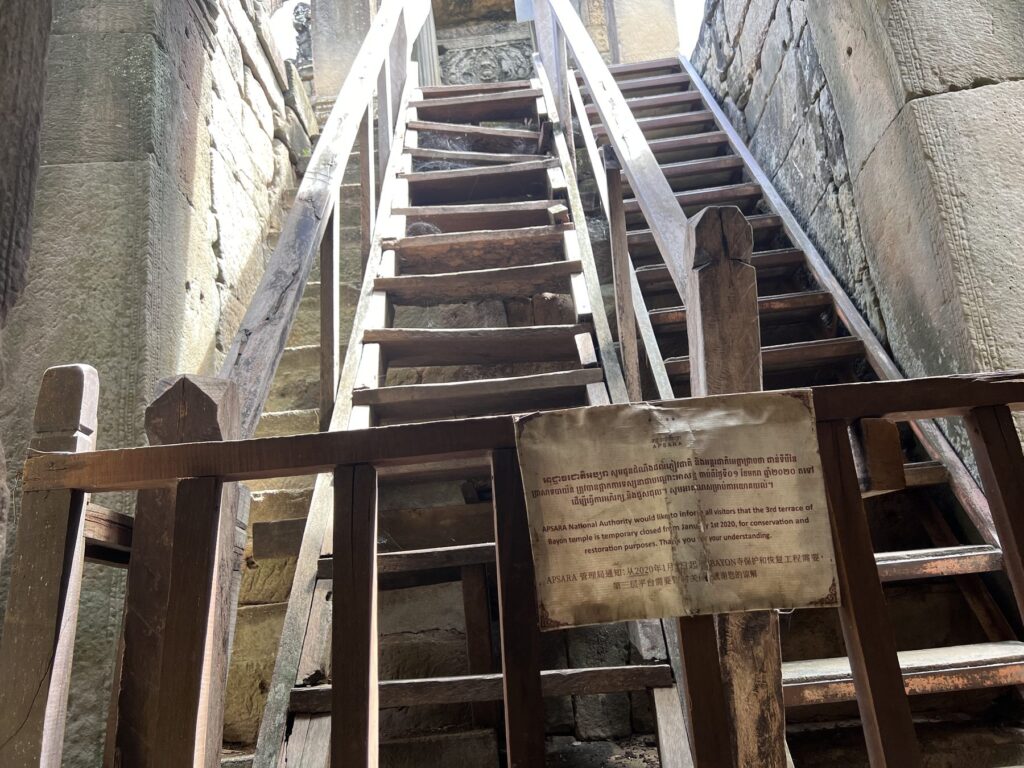
The best tower was closed
The central tower is the best place to see the zenith effect. It’s been closed for conservation for several years when I visited, so we had to find a good beam in one of the other chambers.
JUNE / SOLO VISIT
Slowing down for the faces.
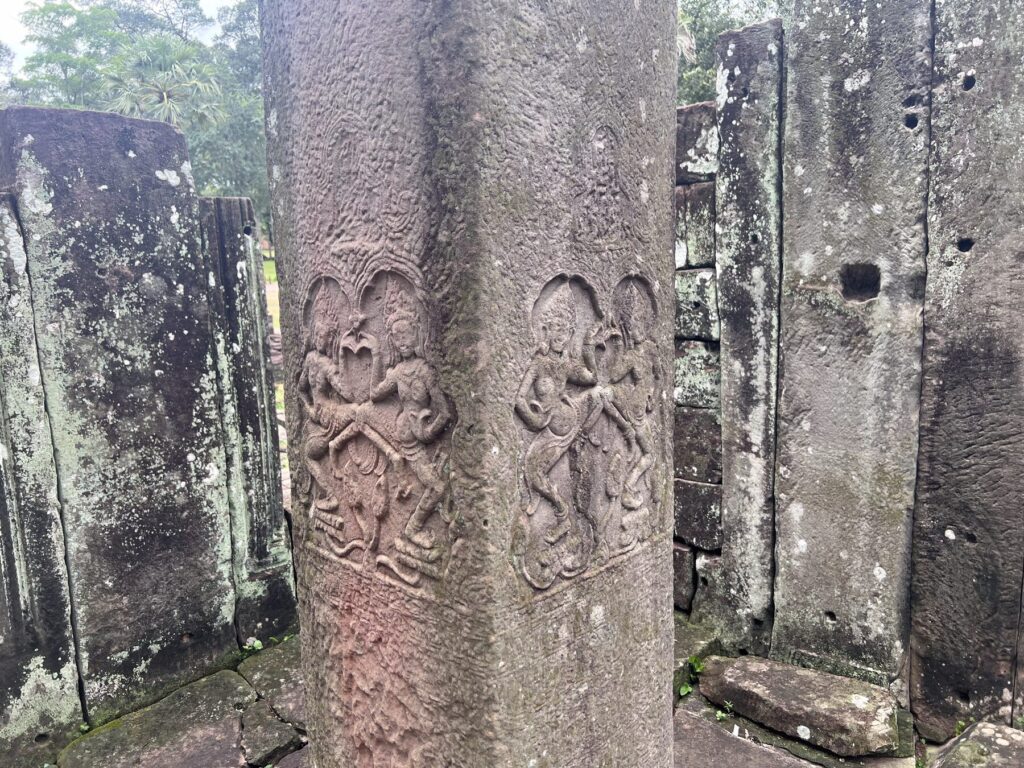
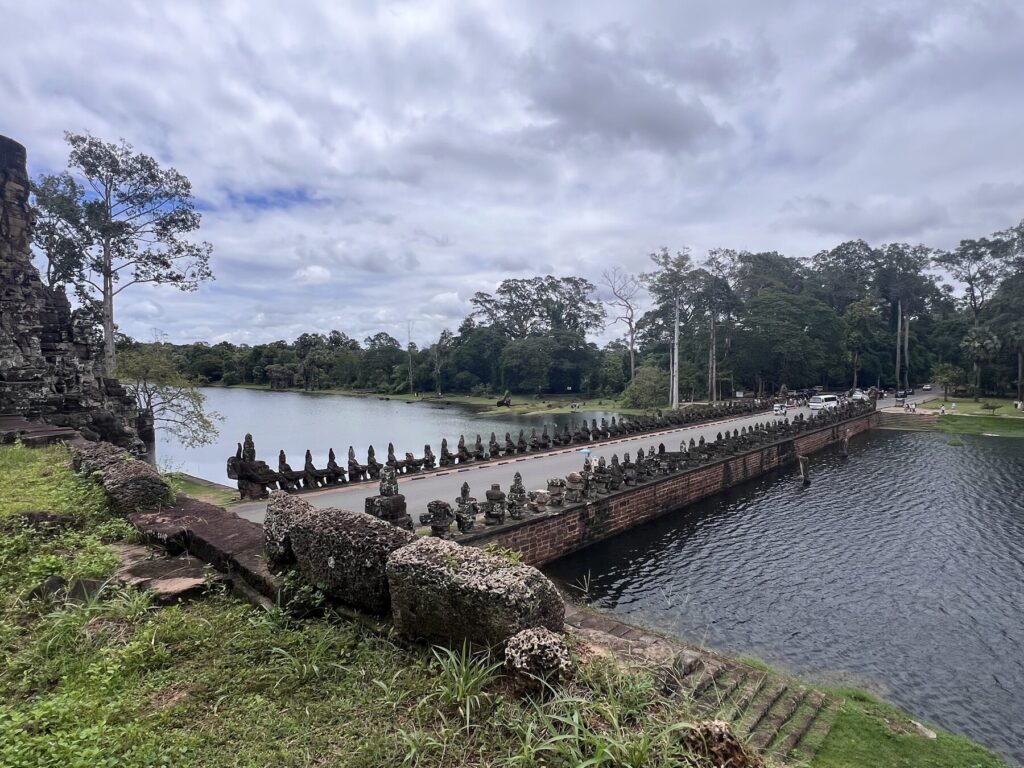
When I came back in June, it was by tuk-tuk. I made a list of places I wanted to see, and at each one I went in by myself while the driver waited outside. At Bayon, I could finally spend time looking at the temple itself.
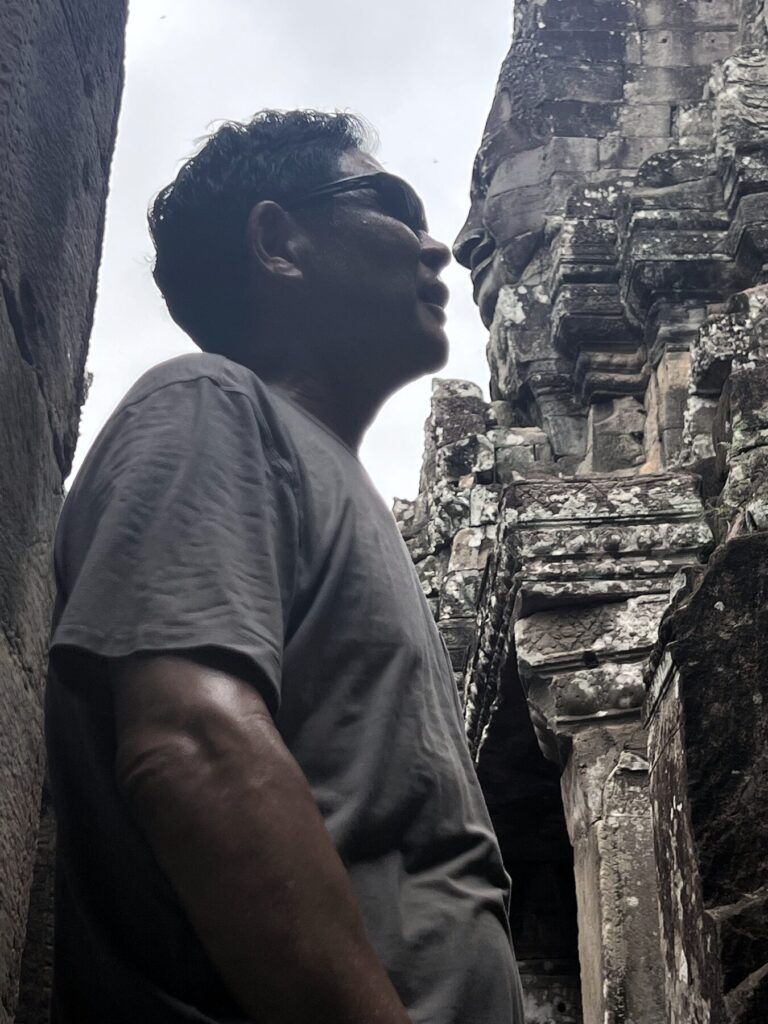
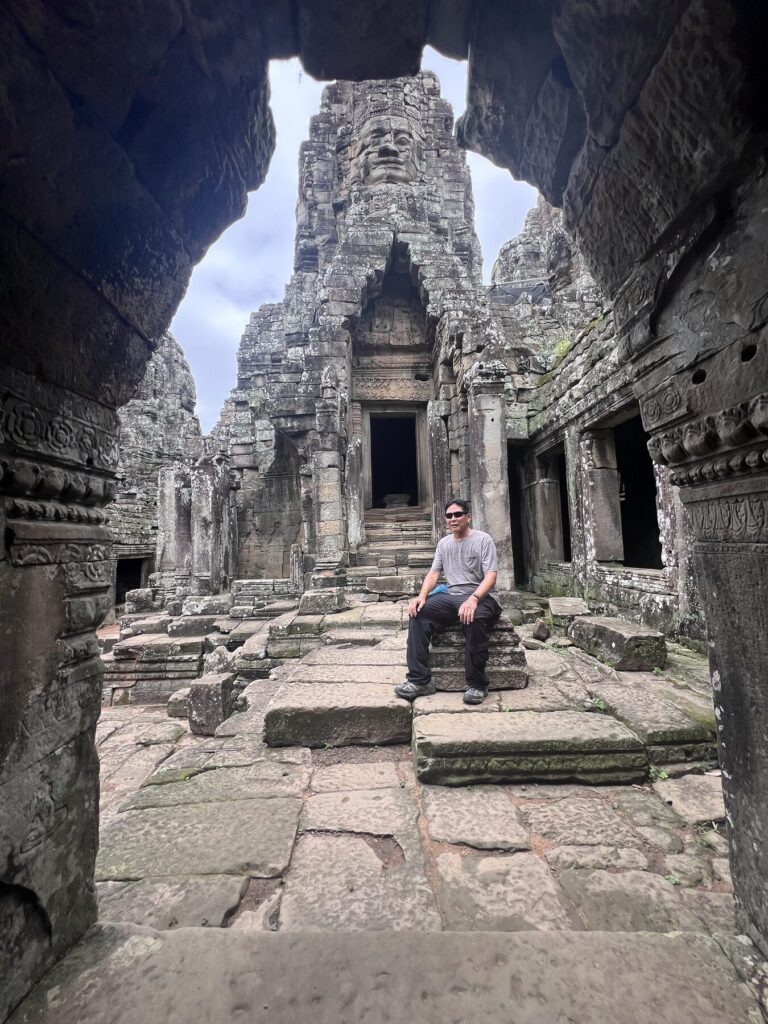
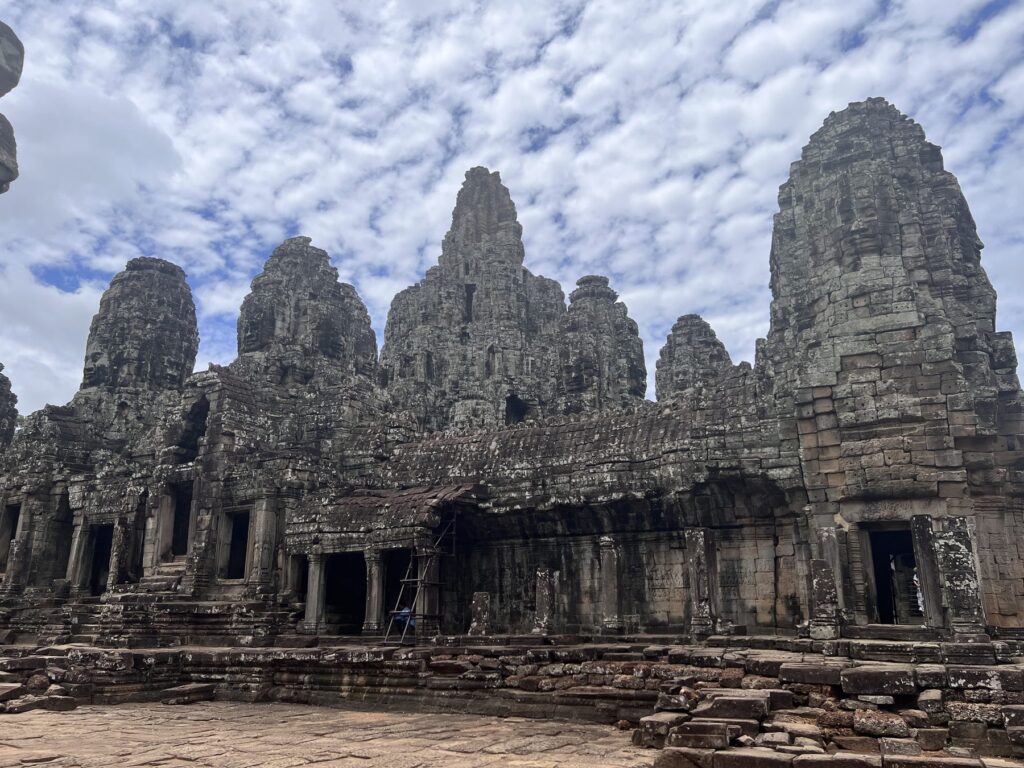
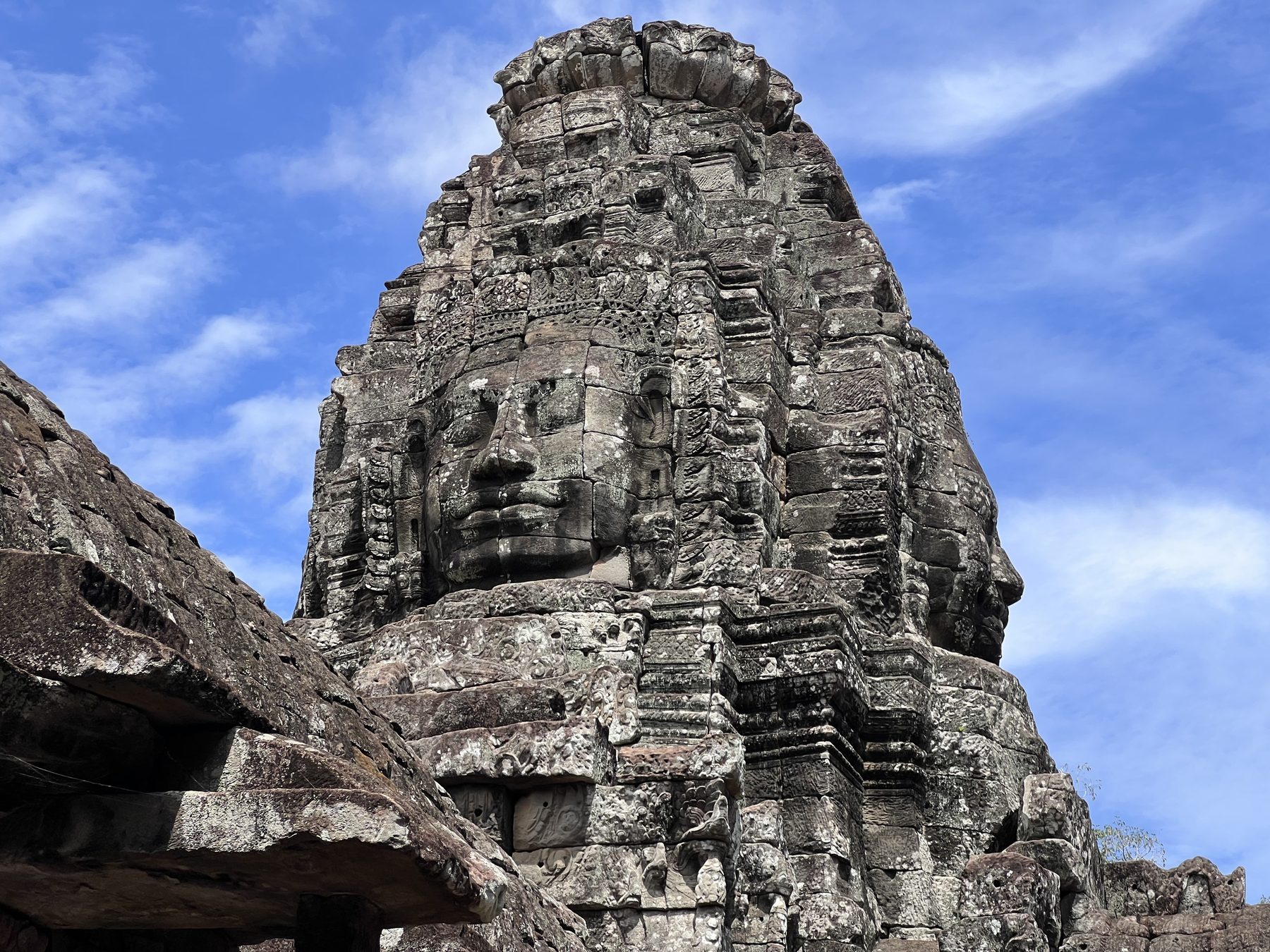
The stone faces are nice and all, but I found them harder to pick out than the photos suggest. There’s so much texture in the weathered stone, and so many towers crowded together, that the faces blend into everything around them. You have to stop and intentionally look.
Once you do, you appreciate the wonder of it. These huge faces are built from separate blocks of stone, yet the eyes, mouths and expressions all come together. I could take my time looking up at them, without wondering whether I was missing a better light beam somewhere else.
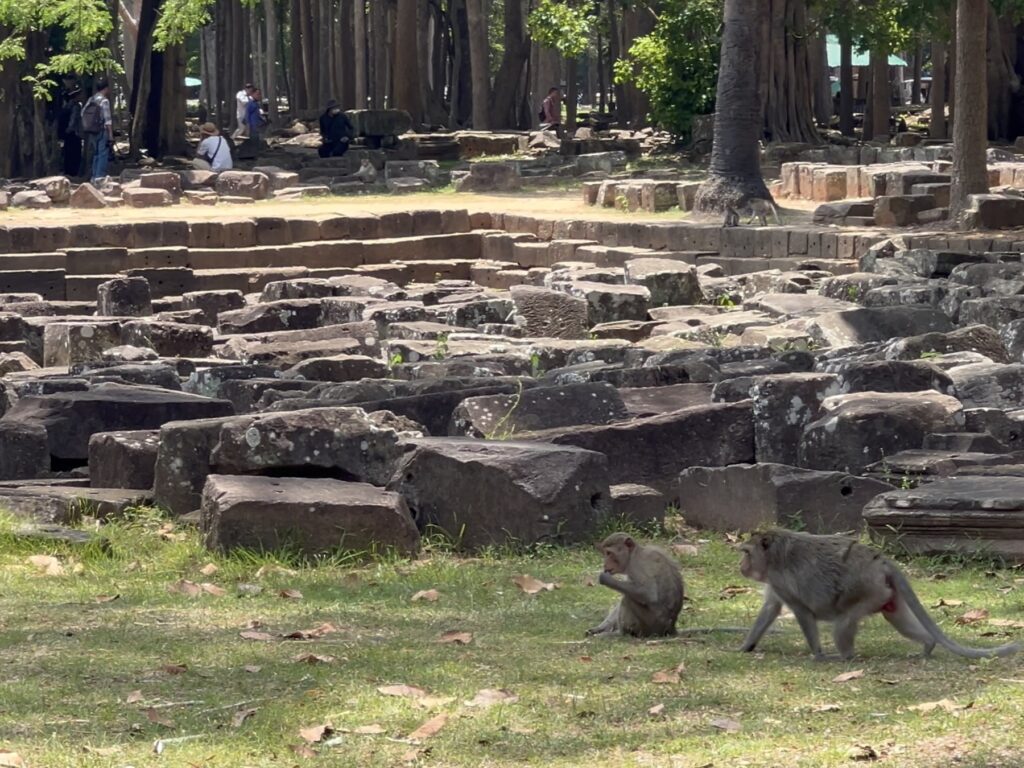
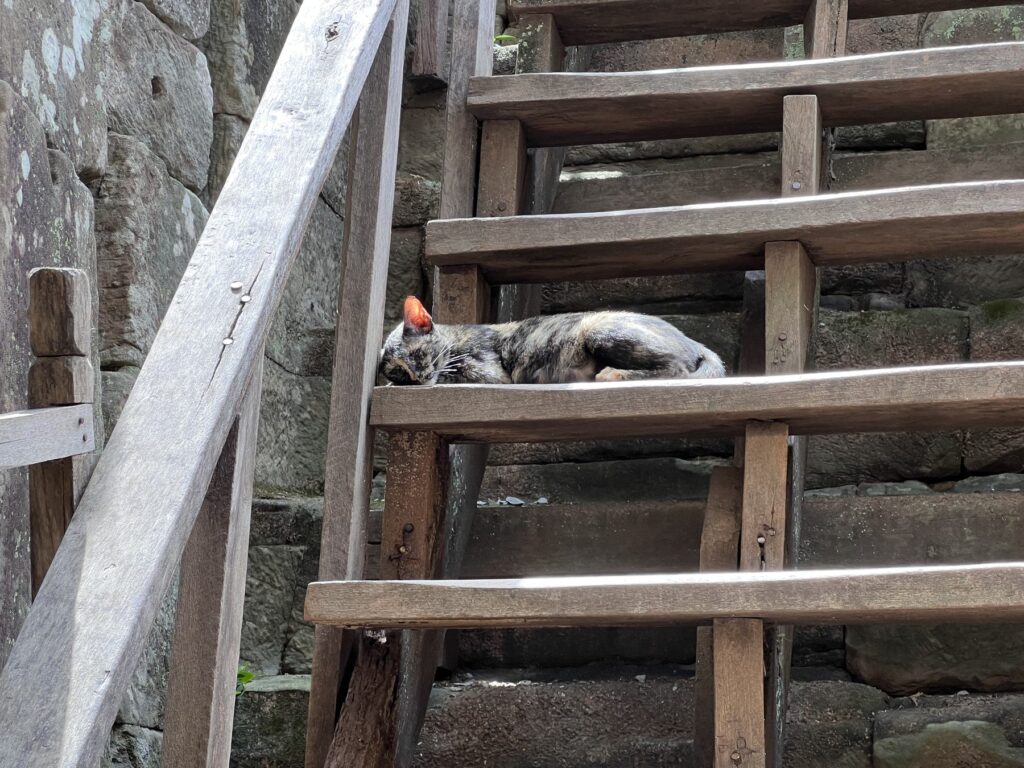
THE MONKEYS HANG OUT IN THE OPEN AREA WITH TREES OUTSIDE, ON THE WAY TO THE RESTROOM BUILDING.
THE FACES
You have to stop and look.
Huge faces built from separate blocks of stone, blending into the towers until you really look.
AUGUST
THE SECOND ZENITH
Better prepared
the second time.
Same temple, very different visit.
AUGUST / ARRIVING EARLY
Kanha knew the room.
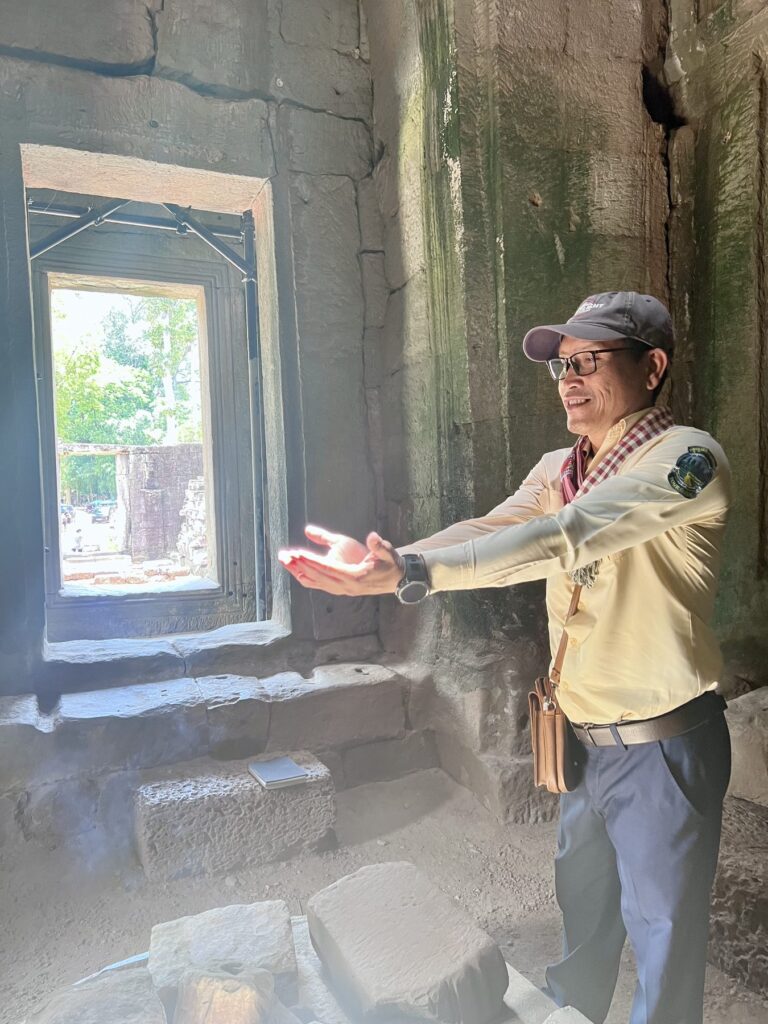
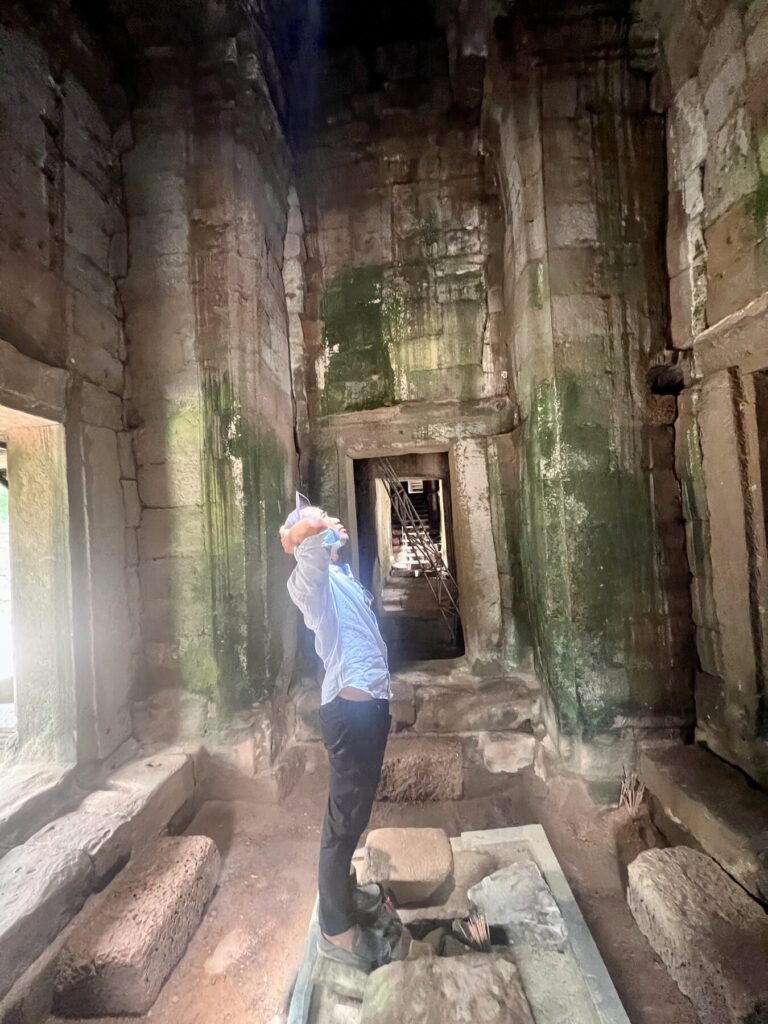
In August, I came back with Kanha Phum, who had been one of our local guides on the April tour. We came a little early, and he led me straight to a great room for the zenith passage.
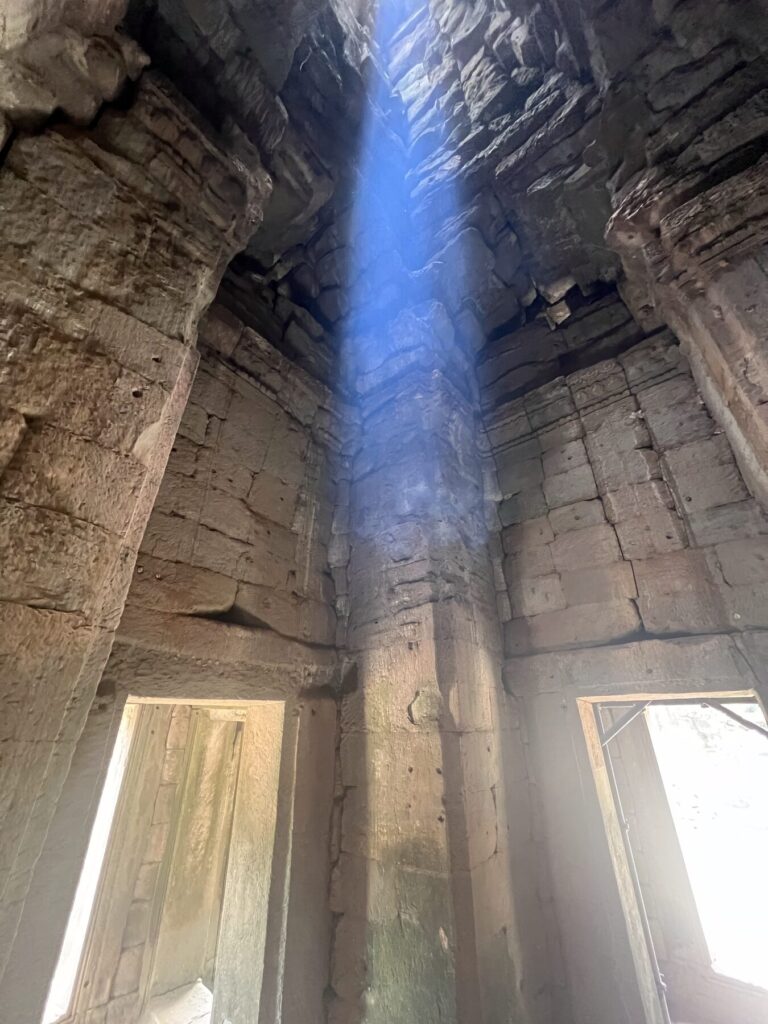
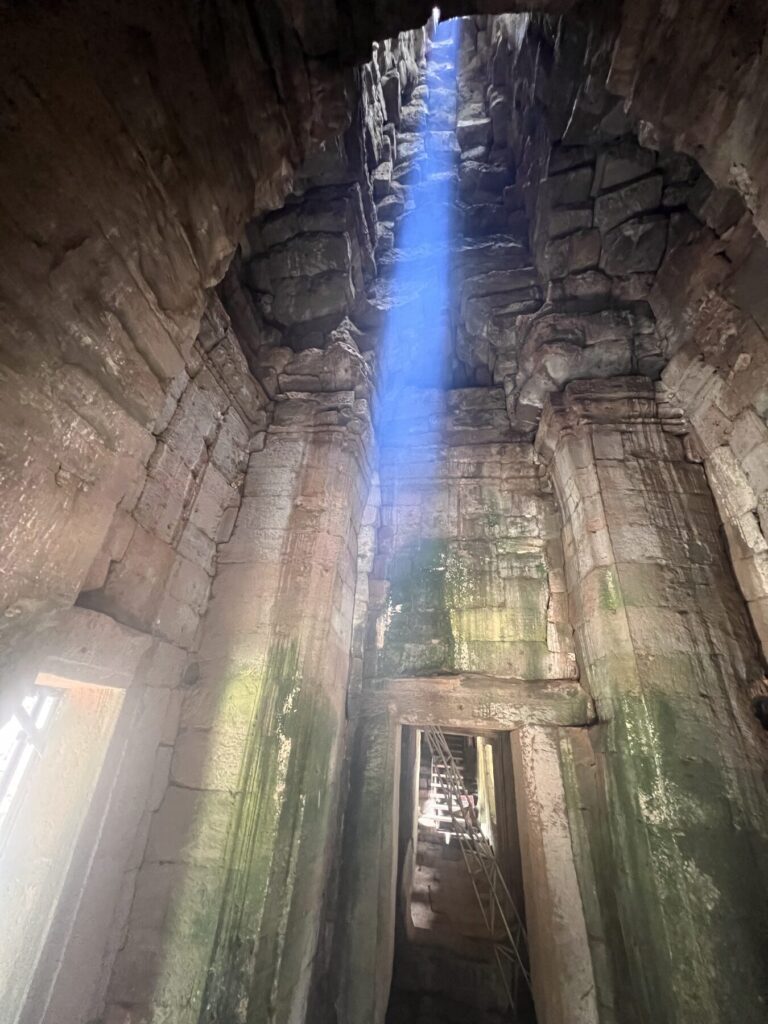
Knowing where to go made things much easier. This time I could settle in and watch the light instead of rushing between chambers, and since we were early, I got to see the beam line up vertical, which I’d missed in April.
AUGUST / THE INCENSE
Smoke shows the path.
Kanha also brought incense sticks and lit them in the room. The smoke made the shaft of sunlight much more visible, showing its whole path from the opening above down to the floor.
We hadn’t brought any incense on the April tour, and it made a big difference to what I could see.
IF YOU WANT TO SEE THE BEAM, YOU NEED SOMETHING IN THE AIR.
This time, I could settle in and watch the light instead of rushing between chambers.
Alex, techzelle
IF YOU GO
Bayon zenith
tips.
What I’d tell a friend heading to the Bayon for the zenith passage.
- Get there early. Give yourself time to find a good chamber before noon. Running late is how you miss the vertical moment, like I did in April.
- Find a small opening. Smaller holes give a tighter, brighter shaft. Medium, irregular ones give a wide, faint patch.
- Go with someone who knows. A guide who know about zenith and the rooms saves you the scramble.
- Bring something for the air. Without smoke, the beam is hard to see. Incense made all the difference. There are two types of incense, smoky and non-smoky, so be sure to buy the right type.
- Watch your step. Corridors, steep steps and raised thresholds slow you down between chambers.
- Come back for the faces. Chasing the light and looking at the temple are two different visits.
- Bayon for groups, Bakong for small ones. Bayon has lots of towers, so a group can spread out. Bakong is one central tower, and after 8 people it starts getting crowded. On your own or with a small group, its small opening, one door and dark chamber give a cleaner beam that sweeps slowly across the floor.
3
visits in 2025
2
zenith passes a year
15 min
of visible beam
12th c.
built under Jayavarman VII
Frequently asked QUESTIONS
Bayon temple FAQ.
What is Bayon Temple known for?
The enormous smiling stone faces carved into its towers. It sits in the center of Angkor Thom and was built under King Jayavarman VII toward the end of the 12th century.
Where is Bayon Temple?
In the center of Angkor Thom, the ancient walled city inside the Angkor archaeological park near Siem Reap, Cambodia.
What is the zenith passage at Bayon?
Twice a year, in April and August, the sun passes directly overhead at noon. Sunlight then shines through the openings at the tops of the towers and down into the chambers below.
When is the zenith passage at Bayon?
In late April and mid-August, around noon. I saw it on April 26 and August 17, 2025. The exact day depends on the temple’s latitude, so check before you go.
How long does the Bayon zenith beam last?
You can see a beam for about 15 minutes. It appears at an angle, swings to center and past it, then disappears, and for about a minute it looks straight down. A week or so before or after the zenith dates, a small opening won’t show a beam at all, and a bigger one only puts light near the edge of the floor or on the wall.
Which tower is best for the zenith passage?
According to Ed Barnhart, the central tower is the best place to see it, but it was closed for conservation when I visited. Look for chambers with smaller openings overhead, which give a tighter, brighter beam.
Is Bayon or Bakong better for the zenith passage?
Bayon is better on a group tour, since it has lots of towers for people to spread out. Bakong is a single tower with a small opening, one door and a dark chamber, so the beam is cleaner and you can watch the spotlight sweep slowly across the floor, but about 8 people fills it up.
How do you make the zenith beam visible?
Smoke. On my August visit, Kanha lit incense in the room, and the smoke showed the whole shaft of light from the opening down to the floor.
Can you visit Bayon on your own?
Yes. In June I went by tuk-tuk with a list of places, and went in by myself while the driver waited outside.