
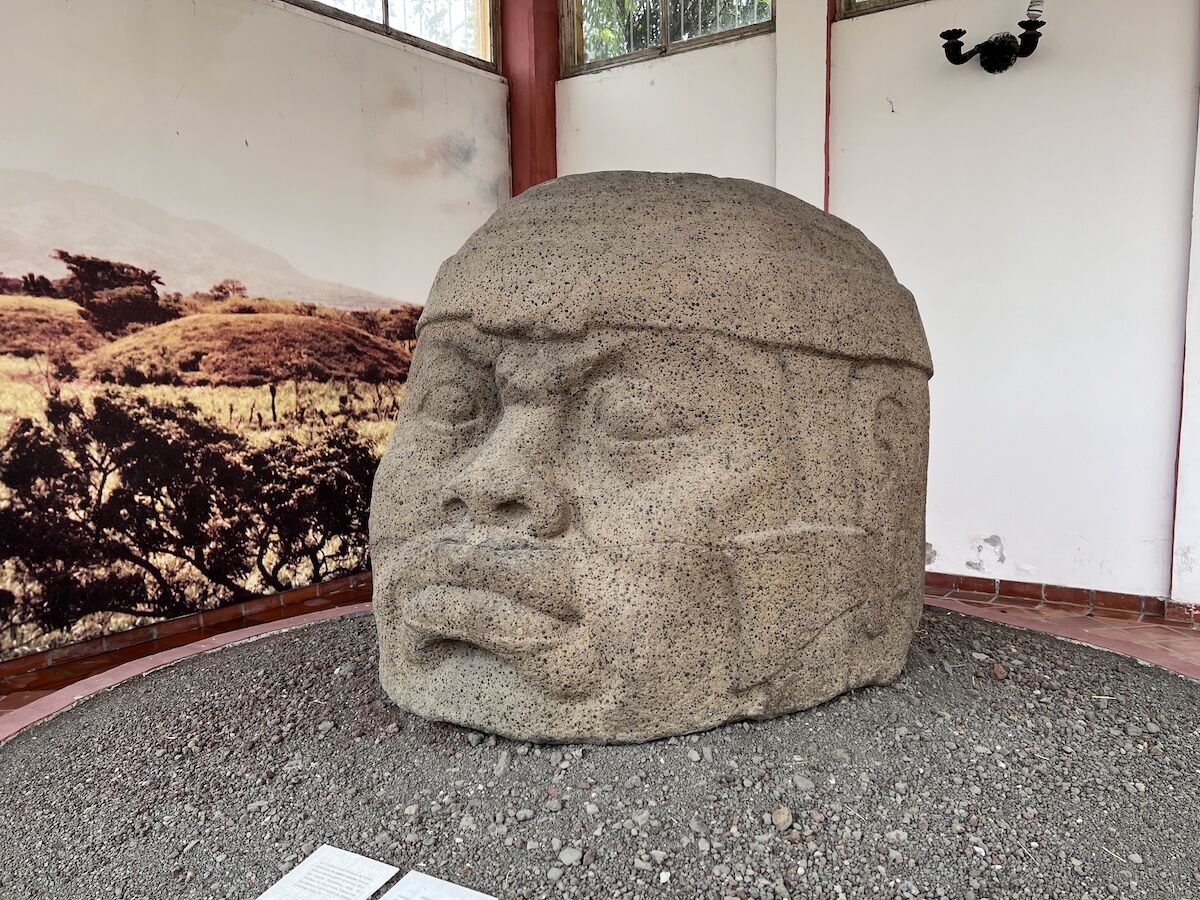
3D Tour: Olmec Head, Tres Zapotes Monument Q
Walk into a quiet room and come face to face with a real Olmec colossal head. No glass, no barriers. Just you and a massive stone face staring back.
Tres Zapotes Monument Q is one of the famous colossal heads carved by the Olmec civilization along Mexico’s Gulf Coast, believed to portray a powerful ruler.
Monument Q weighs about 8.5 tons and shows the familiar Olmec style: a broad face, thick lips, and deeply carved features. The head wears a distinctive headdress with a front ornament and seven plaited strands tied with tassels.
The sculpture was discovered in the 1940s at Nestepe Hill near the site of Tres Zapotes. It was moved to the Museo Regional Tuxteco in 1951, where it remains today.
Like the other Olmec heads, Monument Q was carved from basalt from the Tuxtla Mountains. Transporting and carving stones of this size required coordinated labor and careful planning, raising ongoing questions about how Olmec engineers organized quarrying and transport long before metal tools.
Quick Facts: Tres Zapotes Monument Q
- Location: Museo Regional Tuxteco, Santiago Tuxtla, Veracruz, Mexico
- Size: 1.45 meters (4.8 ft) high, 1.34 meters (4.4 ft) wide, and 1.26 meters (4.1 ft) deep
- Weight: 8.5 tons
- Age: Middle Formative Period (900–500 BCE)
- Originally Found: Nestepe Hill, near Tres Zapotes, Veracruz, Mexico
- Material: Basalt from Tuxtla Mountains

The Olmec Face
Monument Q shows classic Olmec features: deep-set eyes, a broad nose, thick lips, and a strong jaw. The carved creases around the nose and mouth give the face a tense, focused expression.
Many researchers believe the colossal heads portray rulers, making this a possible portrait of an Olmec leader.
The Headdress of Monument Q
Monument Q has one of the more detailed headdresses among the Olmec heads. A front ornament sits above the forehead, while seven carved plaits run down the back, each tied with tassels.
These elements may represent a hairstyle or ceremonial headgear associated with Olmec rulers.
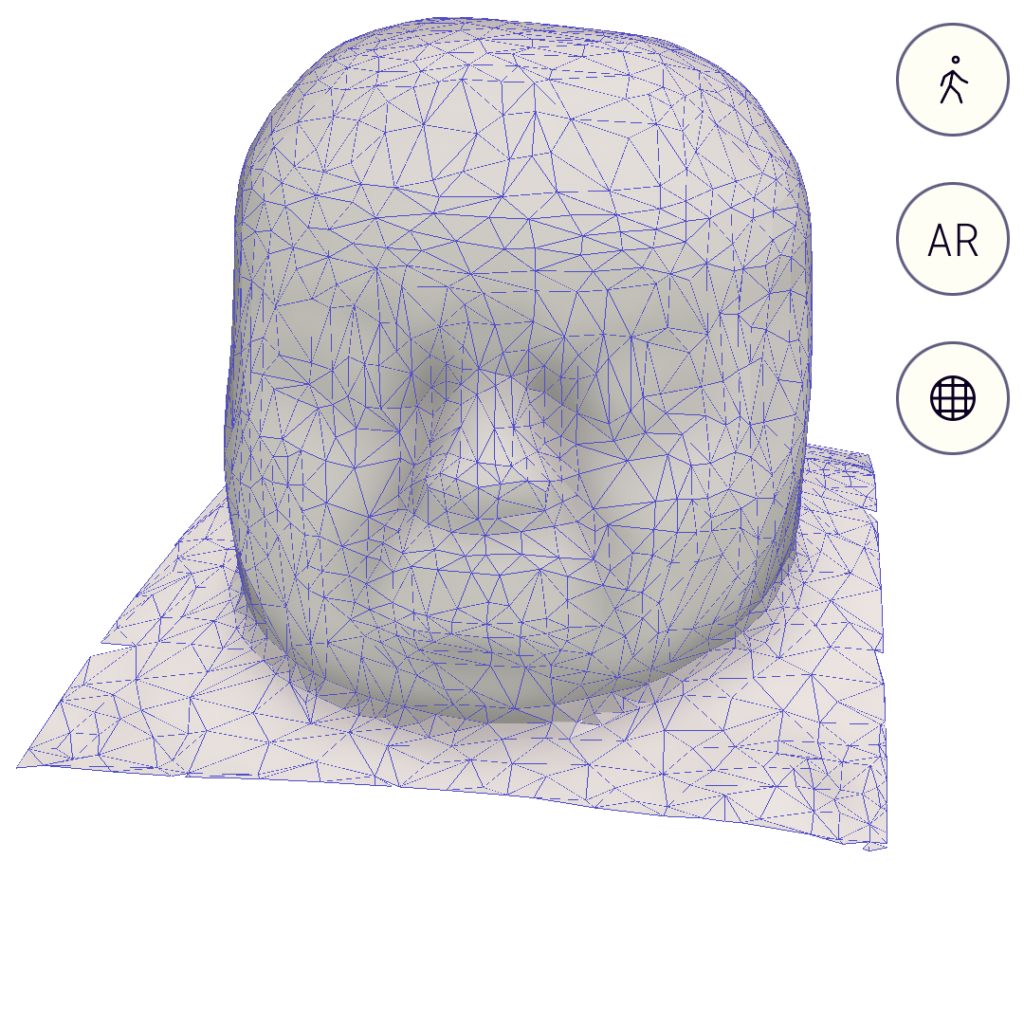
3D Scan of Tres Zapotes Monument Q
Explore the 3D model in detail using this interactive viewer—rotate, zoom, and pan to view from every angle:
From Nestepe Hill to the Museo Regional Tuxteco
Tres Zapotes Monument Q was discovered in the 1940s during land clearing on Nestepe Hill near the ancient site of Tres Zapotes. It was moved to the Museo Regional Tuxteco in Santiago Tuxtla in 1951, where it remains today.
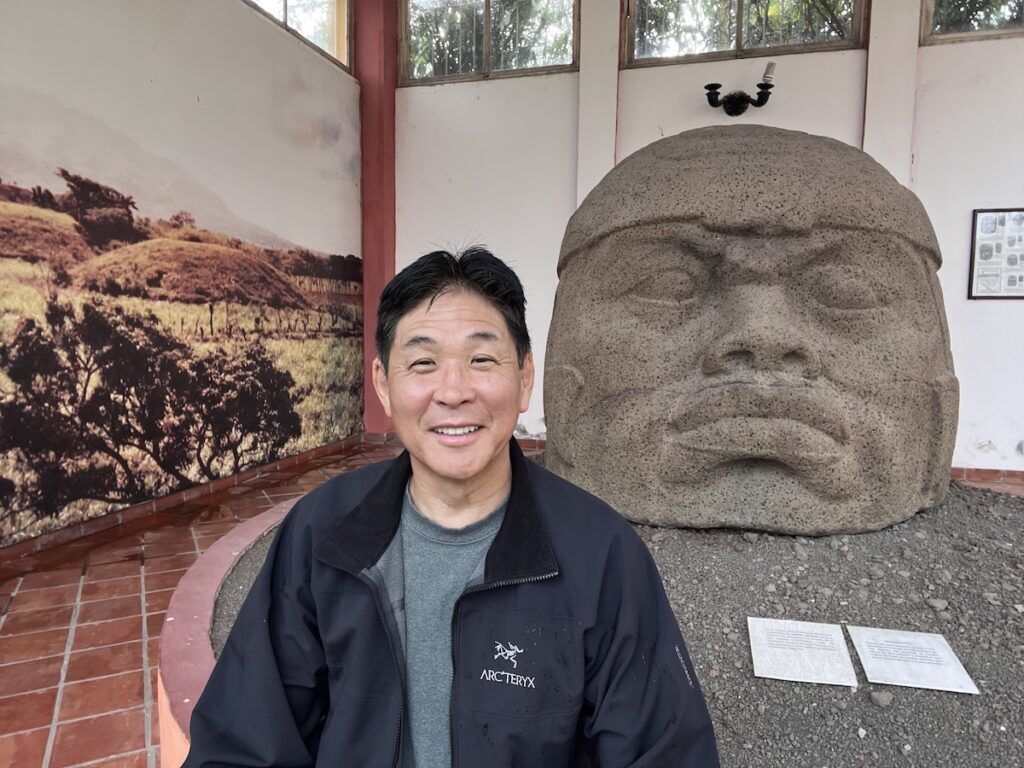
The move placed the sculpture indoors, where visitors can stand just a few feet away and see the carving details up close.
Basalt from the Tuxtla Mountains
Most Olmec colossal heads, including Monument Q, were carved from basalt from the nearby Tuxtla Mountains. Moving stones weighing several tons across rivers and lowland terrain would have required organized labor long before metal tools
Why Is It Called Monument Q?
Archaeologists labeled the sculpture Tres Zapotes Monument Q as part of the catalog system used to identify monuments at the Tres Zapotes site. Letters were assigned to some discoveries to distinguish them within the growing list of monuments found in the area.
Other Olmec sites use different naming systems. For example, the colossal heads at San Lorenzo are numbered rather than lettered.
Visit Tres Zapotes Monument Q in Person
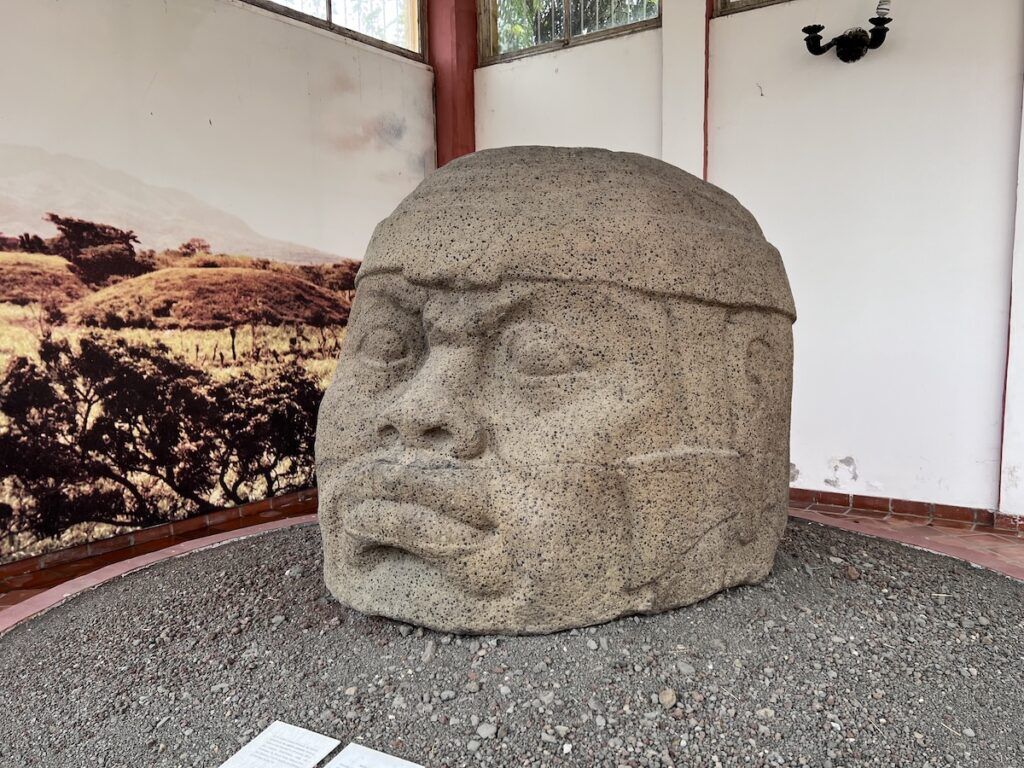
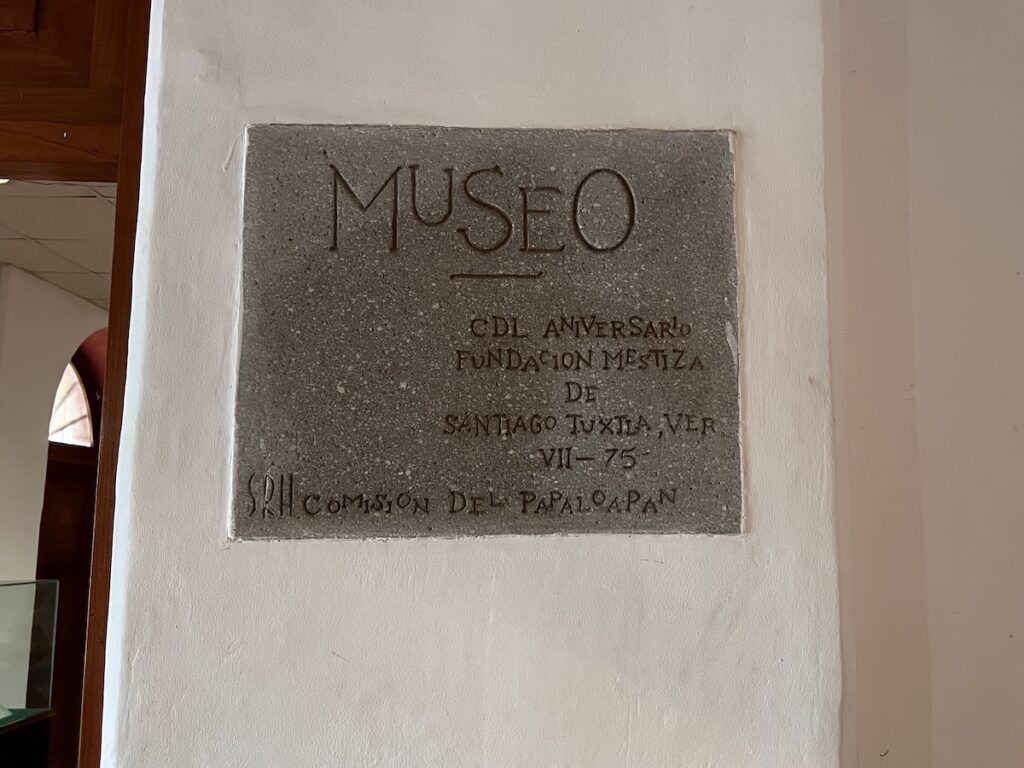
Tres Zapotes Monument Q is displayed inside the Museo Regional Tuxteco in Santiago Tuxtla, Veracruz. The head sits in a small museum room where visitors can walk right up to it and study the carving details from just a few feet away.
Several other Olmec colossal heads are also located around Santiago Tuxtla, making the town one of the best places in the world to see these sculptures up close.
Tres Zapotes Monument Q Summary
Tres Zapotes Monument Q is one of the Olmec colossal heads discovered near the ancient site of Tres Zapotes in Veracruz, Mexico. Carved from basalt from the nearby Tuxtla Mountains, the sculpture shows the classic Olmec facial style along with a distinctive headdress featuring carved plaits tied with tassels.
Today the head is displayed inside the Museo Regional Tuxteco in Santiago Tuxtla, where visitors can stand just a few feet away and study the carving details up close.
Seen this head in person, or hoping to visit someday? Let us know in the comments.
You can also explore the other Olmec 3D Scans to examine these ancient sculptures from every angle.
Part of the MEC Luke Caverns Olmec Tour
Those are 7 Quetzal feathers on back of head not seven intricately carved plaits of hair.
Thanks for the clarification!