
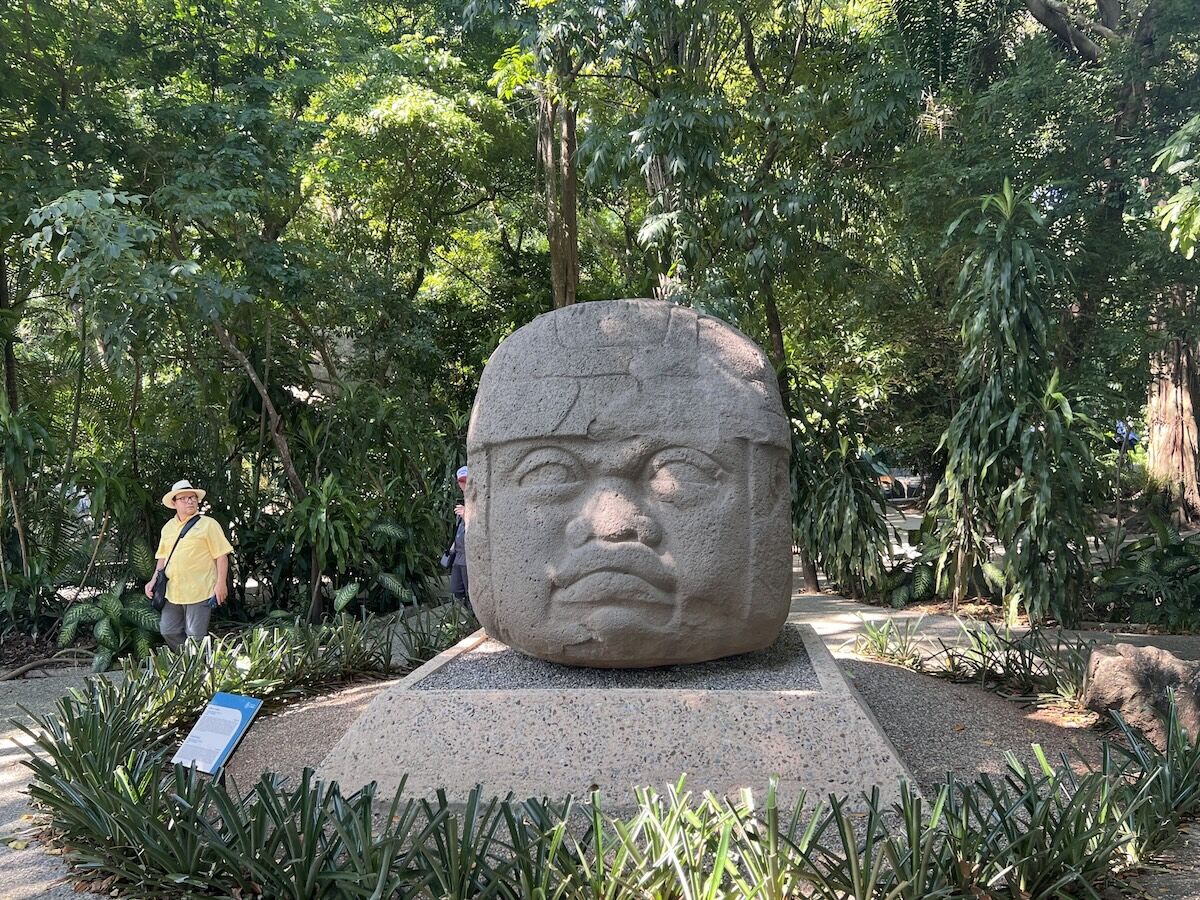
3D Tour: Olmec Head, La Venta Monument 1
La Venta Monument 1 is one of the most famous Olmec colossal heads ever discovered. Often called “The Great Head,” this massive basalt portrait is widely believed to represent a powerful ruler from one of Mesoamerica’s earliest civilizations.
The monument was originally carved and displayed at the ancient city of La Venta, but it was moved in the 1950s to Parque-Museo La Venta in Villahermosa, Tabasco for preservation. At the La Venta archaeological site, two full-scale replicas now mark the area where the head once stood, showing how these colossal sculptures appeared within the Olmec ceremonial center.
Quick Facts: La Venta Monument 1
Location: Parque-Museo La Venta, Villahermosa, Tabasco, Mexico
Size: 2.41 metres (7.9 ft) high by 2.08 metres (6.8 ft) wide by 1.95 metres (6.4 ft) deep
Weight: 24 tons
Age: Middle Preclassic (900–400 BCE)
Originally Found: La Venta, Tabasco, Mexico
Material: Basalt from the Tuxtla Mountains

“The Great Head”
La Venta Monument 1 is often called “The Great Head.” The massive basalt portrait shows the familiar Olmec style: a broad face, thick lips, and a tightly fitted headdress. Most researchers believe the colossal heads represent real rulers, carved to preserve the image and authority of powerful leaders.
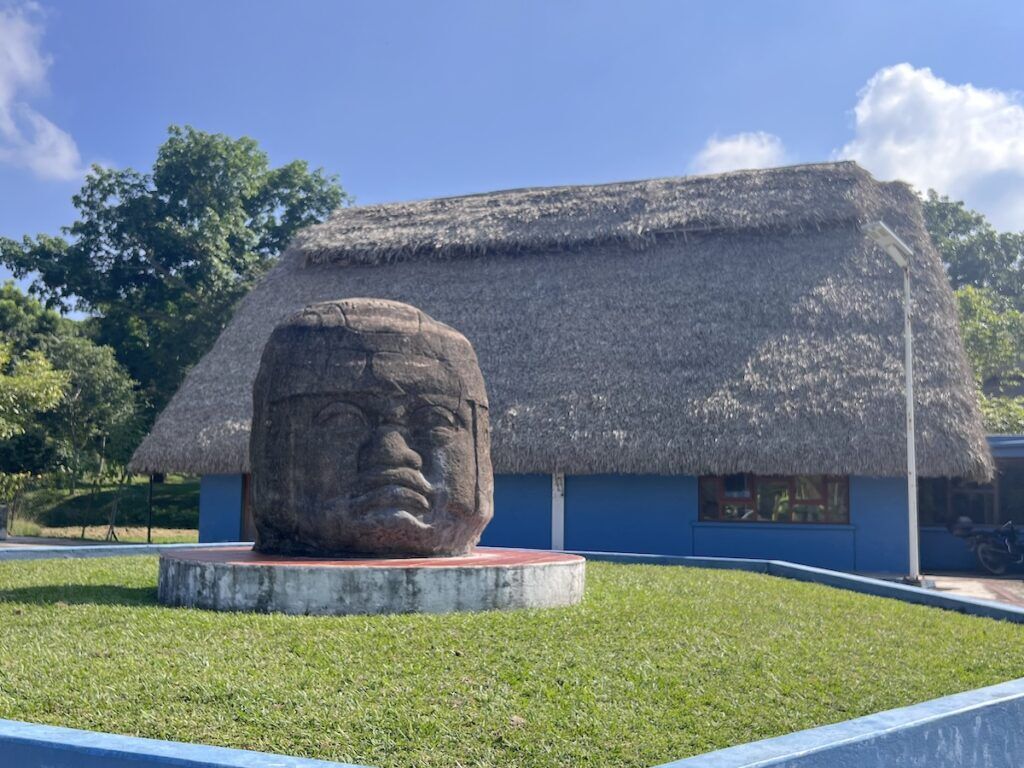
The sculpture displayed outside the front of Parque-Museo La Venta is a replica. The original La Venta Monument 1 is located deeper inside the park, where many of the monuments from the ancient city are arranged in a landscaped jungle setting. A full-scale replica also stands at the La Venta archaeological site, showing how the head would have appeared in its original ceremonial environment.
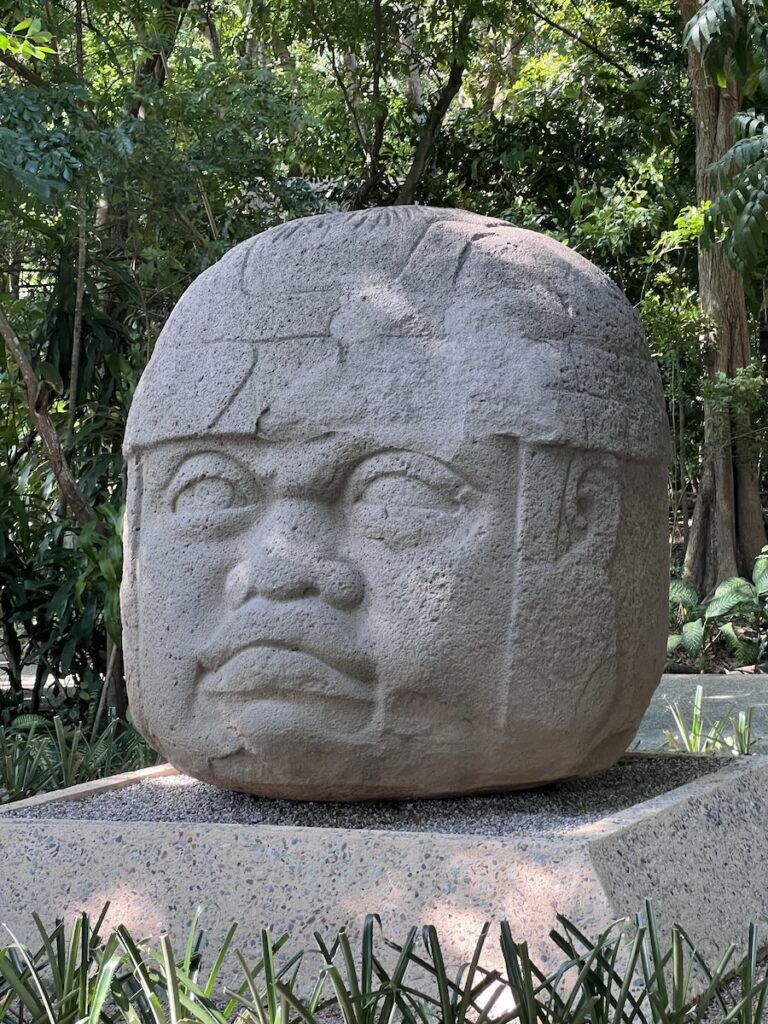
The Face of La Venta Monument 1
The face of La Venta Monument 1 follows the familiar Olmec style: a broad, flat nose, full lips, and heavy eyelids carved deep into the stone. The expression feels calm but powerful, with the wide cheeks and strong jaw giving the portrait a solid, grounded presence.
Each Olmec head has slightly different facial details, which is one reason archaeologists believe they represent real individuals. Monument 1’s features are bold and symmetrical, making it one of the most recognizable faces among the known Olmec colossal heads.
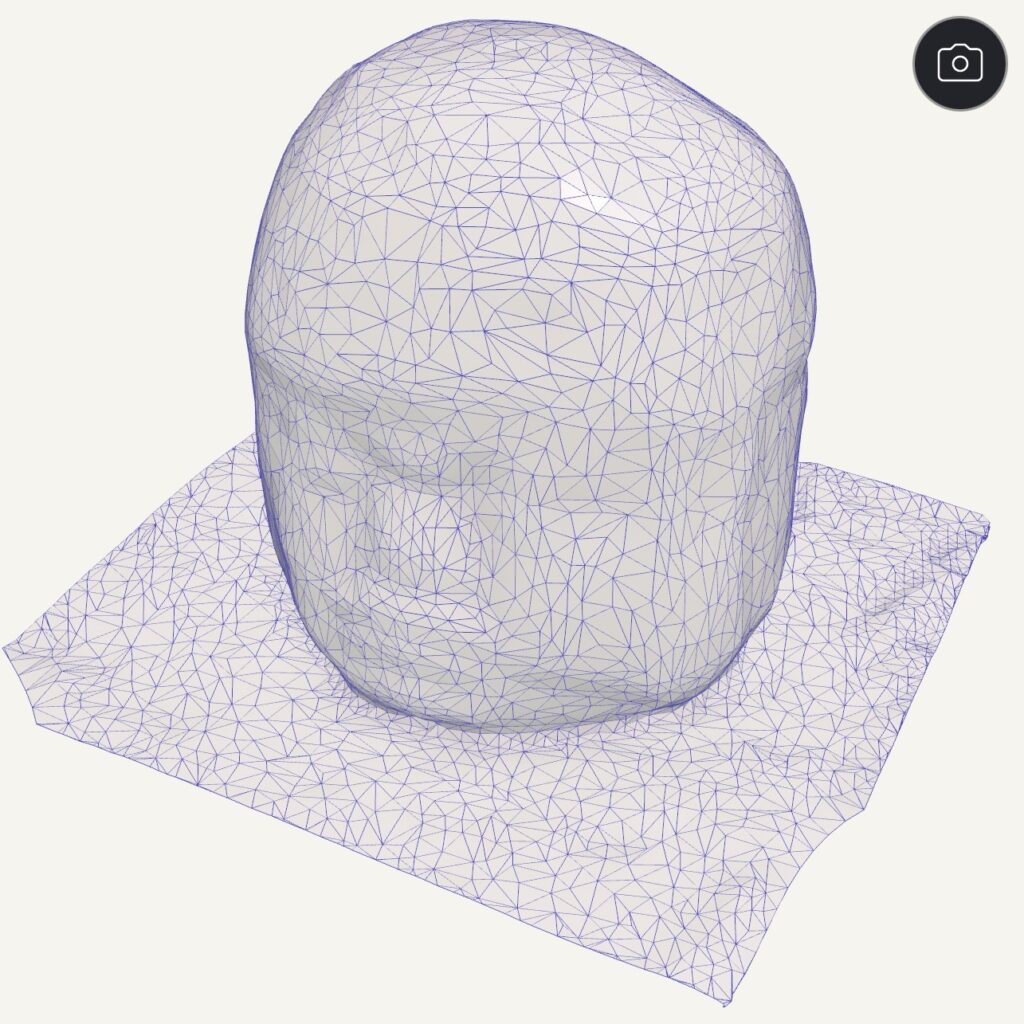
3D Scan of La Venta Monument 1
This 3D scan shows the replica at the La Venta archaeological site. Use the interactive viewer to rotate, zoom, and pan around the sculpture from every angle.
From La Venta to Parque-Museo La Venta
La Venta Monument 1 was discovered at the ancient Olmec site of La Venta. To protect the sculpture, it was later moved to Parque-Museo La Venta in Villahermosa, where many of the site’s major monuments are now displayed.
The park brings together dozens of sculptures that originally formed the ceremonial center of La Venta. Relocating the monuments helped preserve them while still allowing visitors to examine the carvings up close.
Basalt from the Tuxtla Mountains
The stone used for La Venta Monument 1 came from the Tuxtla Mountains, more than 80 km (50 miles) away. The Olmecs quarried large basalt boulders there and transported them across rivers and lowland terrain before carving began.
Moving stones this size required planning, manpower, and coordination. The exact method is still debated, but the result is clear: the Olmecs were capable of organizing large engineering efforts long before metal tools or draft animals.
Discovery of Monument 1
La Venta Monument 1 was discovered during excavations at the ancient Olmec site of La Venta in Tabasco, Mexico. Archaeologists working at the site uncovered several massive stone heads that once formed part of the city’s ceremonial center.
These discoveries helped confirm that the Olmecs created monumental portrait sculptures centuries before later civilizations like the Maya and Aztec. Monument 1 became one of the best known examples, showing the scale and skill involved in Olmec stone carving.
Do the Olmec Heads Represent Rulers?
Most archaeologists think the Olmec colossal heads portray individual rulers. Each sculpture has distinct facial features, suggesting the artists were carving the likeness of specific people rather than a generic face.
The scale of the monuments also supports this idea. Quarrying, transporting, and carving basalt blocks weighing many tons required large organized labor teams. Monuments of this size were likely created to honor powerful leaders in Olmec society.
Why Visit La Venta Monument 1?
Seeing La Venta Monument 1 in person gives a completely different sense of scale than photos. The head weighs many tons, and standing next to it makes the effort behind Olmec stone carving much easier to understand.
The original monument can be seen at Parque-Museo La Venta in Villahermosa, where several sculptures from the ancient city of La Venta are displayed together. If you visit the La Venta archaeological site, you’ll also find a full-scale replica placed near the ruins to show how a colossal head would have appeared in its original ceremonial setting.
A Colossal Head Worth Seeing
La Venta Monument 1 is one of the most famous Olmec colossal heads. The massive basalt portrait shows the distinctive Olmec style and is widely believed to represent a powerful ruler from one of Mesoamerica’s earliest civilizations.
The original sculpture can be seen at Parque-Museo La Venta in Villahermosa, while replicas appear both at the La Venta archaeological site and near the entrance area of the museum park. Whether you explore it in person or examine the 3D scan, Monument 1 gives a clear sense of the scale and skill behind these remarkable Olmec monuments.
Let us know what you think about this Olmec head. Have you seen it in person or want to see it? Let us know in the comments below
Otherwise, check out Olmec Head, Tres Zapotes Monument Q or the other Olmec 3D Scans
Part of the MEC Luke Caverns Olmec Tour